Kami
The Myth of SisyphusThe gods occupy a decisive but deliberately unstable position in the book’s moral and mythological landscape. They appear as powers that punish human defiance, authorize futile labor, and invite hope beyond the human condition; yet the book’s central movement is toward silencing their authority. Against them, the human being claims the limited world of bodily life, consciousness, and self-made fate. In this reversal, the gods matter less as objects of worship than as the measure of what the absurd hero must refuse.
Divine Authority and Punishment
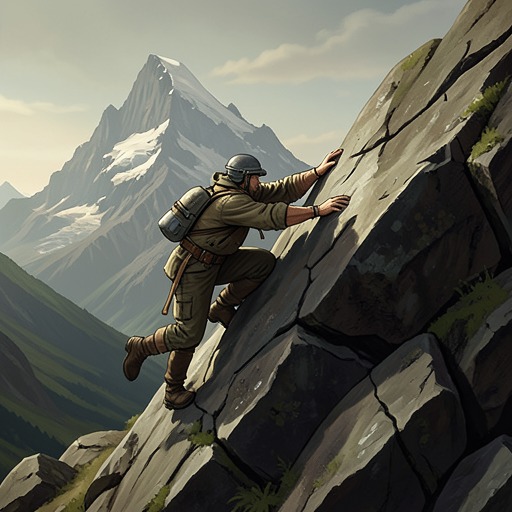
The clearest image of the gods’ power is the sentence imposed on Sisyphus. They condemn him to roll a rock ceaselessly to the top of a mountain, only for the stone to fall back under its own weight. The punishment is presented as the most dreadful possible because it joins labor to futility and removes any hope of completion. Sisyphus’s entire body is committed to an achievement that is immediately erased, making divine justice appear as the institutionalization of meaningless repetition.
The sentence follows Sisyphus’s refusal to remain within the limits established by the divine order. He is accused of treating the gods lightly and of stealing their secrets. When Jupiter carries off Ægina, Sisyphus offers the knowledge of the abduction to Æsopus in exchange for water for the citadel of Corinth, choosing a human benefit over obedience to heaven. His defiance is therefore practical as well as intellectual: he prefers water, the condition of earthly life, to the authority of the celestial thunderbolts.
Sisyphus also puts Death in chains, leaving Pluto’s underworld deserted and silent. The gods cannot tolerate this interruption of their order, so the god of war frees Death from the hands of her conqueror. The episode makes divine power dependent on the restoration of mortality itself: once Death is released, the gods can recover their control over the boundary between life and the Underworld.
A second violation occurs when Sisyphus, near death, tests his wife’s love by ordering her to cast his unburied body into the public square. After awakening in the Underworld, he persuades Pluto to let him return to earth to punish her. But once he again sees the face of the world and experiences water, sun, warm stones, and the sea, he refuses to return. Appeals, warnings, and signs of anger fail; only a decree of the gods, carried out by Mercury, can seize him by the collar and drag him back to the darkness. The gods thus appear as custodians of a boundary that Sisyphus repeatedly crosses, while his disobedience expresses an attachment to earthly existence stronger than fear of divine retribution.
Gods Against the Absurd Hero
The book identifies Sisyphus as the absurd hero precisely through his relation to the gods. His scorn of them, hatred of death, and passion for life are treated as the three forces that produce his punishment. The gods make his labor unbearable, but they also unintentionally create the conditions for his victory: because the sentence is openly futile, Sisyphus can see it without illusion. His punishment becomes the scene in which divine power is exposed as limited and human consciousness becomes superior to fate.
The decisive moment comes during Sisyphus’s descent after the rock has fallen. The upward effort is imposed and repetitive, but the return is a pause in which he knows what awaits him. In that interval he contemplates the punishment rather than merely undergoing it. The gods control the mountain, the rock, and the sentence, but they do not control the meaning Sisyphus gives to his condition. His consciousness turns the imposed fate into his own burden, and his superiority lies in recognizing it without appeal.
When the absurd man contemplates his torment, he silences the idols. The phrase does not merely reject a particular mythology; it describes the abolition of any higher voice that would convert suffering into a promised plan. Once the universe is restored to silence, the calls and invitations of the earth become audible. The gods’ disappearance therefore does not leave an empty world. It returns the world to human perception, where bodily life, memory, effort, and the faces of others replace supernatural explanation.
Sisyphus’s fate belongs to him because it is no longer interpreted as a destiny imposed from above. His rock becomes his thing, and his labor becomes the form through which he possesses his days. The gods retain the power to make the rock fall and to force the labor to begin again, but they no longer possess the final interpretation of the labor. Their authority ends where lucid consciousness begins.
Hope, Transcendence, and the Return of the Gods
The gods reappear in the discussion of writers and philosophers whose works begin from the absurd but eventually move toward supernatural hope. Kierkegaard, Chestov, and Kafka’s heroes are described as embracing the God who consumes them. Their humility allows hope to enter because the absurdity of existence becomes evidence of a reality beyond it. The very persistence with which they repeat their paths becomes a warrant for the possibility that life has an outcome after all.
This movement is criticized as an evasion of the absurd. Kafka refuses his god moral nobility, evidence, virtue, and coherence, but does so only in order to fall into the god’s arms. The absurd is first recognized and accepted, yet it ceases to be absurd once it becomes a passage toward transcendence. The gods therefore represent not only external rulers but also the temptation to convert lucidity into a promise of escape from the human condition.
The distinction is crucial. A hope that allows escape from the human condition may be spiritually uplifting, but it abandons the discipline of remaining within what can be known. The book argues that the moral value of lucidity cannot be diminished by calling it sterile. In a world where everything is given and nothing is explained, supernatural meaning is not a discovery forced by the evidence; it is a leap. The gods return whenever the mind refuses to endure an existence without a final explanation.
Divine Silence and Human Limits
The book’s wider argument opposes the gods’ limitless authority to the Greek conception of measure. Greek thought is valued because it does not negate either the sacred or reason and because it balances shadow with light. Its justice implies a limit. The ancient warning that even the sun must not overstep its measures presents the gods and their agents of justice as guardians of proportion, but the warning also establishes a standard by which modern excess can be judged.
Modern history, by contrast, attempts to replace human nature with situation and ancient harmony with the disorderly advance of chance or reason’s pitiless progress. Values are placed at the end of action rather than existing as limits before it, so every struggle can expand indefinitely. In this setting, the old divine boundary has not simply vanished; it has been ignored. The result is a world of competing messianisms, clashing empires, and power without a brake.
Nature remains as a counterforce to this human overreach. Calm skies and their reasons oppose the madness of history, even while the possibility remains that the atom may catch fire and history end in the triumph of reason and the agony of the species. The gods do not provide the answer to this danger. Instead, the continued existence of limits becomes the lesson: whoever exceeds them will be struck down, whether or not modern people still accept the divine language in which the warning was once expressed.
Ritual, Violence, and Secular Gods
The book also transfers the structure of worship from traditional divinity to modern collective practices. At the boxing hall, the audience gathers around the ring as though in a temple, while the fighters become objects of devotion and violence becomes a temporary religion. The beginners attack one another without technique, eager to prove their courage by damaging each other, and the crowd watches the ritualized sacrifice of bodies beneath the lights.
The contest between Amar, the tough fighter from Oran, and Perez, the slugger from Algiers, carries the inherited quarrel between the two cities. The audience treats the match as a struggle between absolute opposites: good and evil, winner and loser, right and wrong. When the judges produce a draw, two thousand lungs accuse them of corruption because an outcome without a single victor violates the crowd’s Manichean logic. Yet the fighters’ embrace reverses the audience’s judgment, and the same spectators who condemned the judges suddenly applaud. The scene shows a communal faith capable of both fanaticism and recognition, but its gods are bodily and immediate, with cauliflower ears rather than supernatural power.
Afterward, the crowd disappears beneath a silent sky, exhausted by the struggle it has collectively enacted. Force and violence are called solitary gods because they offer miracles only in the present and contribute nothing to memory. Like the temples of Violence and Necessity once standing side by side at Corinth, the boxing hall gives conflict a sacred architecture while simplifying experience into opposing absolutes. The comparison suggests that modern people have not abolished worship; they have relocated it into institutions, rivalries, crowds, and repeated physical rites.
The World Beyond the Gods
Against divine punishment, boredom, and modern violence, the book repeatedly returns to the material world. Oran’s citizens wall themselves away from the sea, and the city becomes a yellow circular enclosure in which the Minotaur is boredom. Yet outside the walls, at Canastel, Santa-Cruz, and the beaches, sun, wind, flowers, dunes, and sea continue their indifferent dialogue. Nature does not redeem suffering through a god’s plan, but its persistence contests the enclosure created by human habit.
The same fidelity to the earthly world appears in the comparison with Ulysses. Offered a choice between immortality and the land of his fathers, he chooses the land and death with it. That decision is presented as a simple nobility: fidelity to a finite condition rather than longing for an existence beyond it. The rejection of immortality is also a rejection of the gods’ most seductive promise, since eternal life would sever the hero from the world whose limits give his life its shape.
The final alternative to divine authority is neither despair nor a new absolute. It is admission of ignorance, rejection of fanaticism, acceptance of the limits of the world and of man, attachment to the beloved face, and fidelity to beauty. The gods may impose rocks, release Death, demand obedience, or offer transcendence, but the book leaves its heroes at the foot of the mountain, in the human world, where the struggle itself must suffice. Their silence is not emptiness. It is the space in which a person can become master of the days that remain.