
The Line’s Economic and Human Cost
The Narrow Road to the Deep NorthThis thread follows how the railway’s quotas convert hunger, illness, and labour into a system that consumes prisoners while presenting itself as progress.
increasing Bearing strength in each event
 decreasing
Bearing strength in each eventdecreasingA Quota Becomes a Weapon
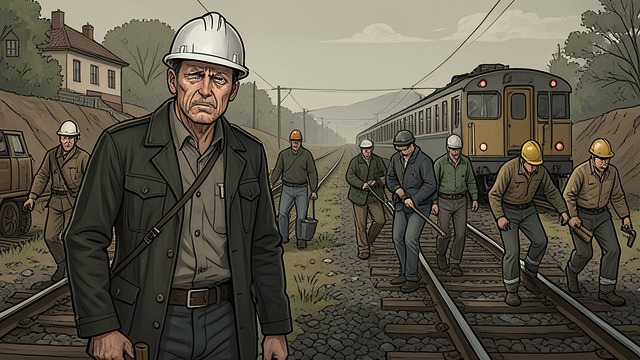
Production by Coercion
Rising Demands
The Japanese engineers set work targets that exceed the prisoners’ diminishing capacity. Stronger men are pressured to set a pace the sick cannot match.
Captivity Deepens
The quota makes labour appear measurable and orderly while concealing the bodily cost. Every increase transforms another part of the camp into a worksite.
The Speedo
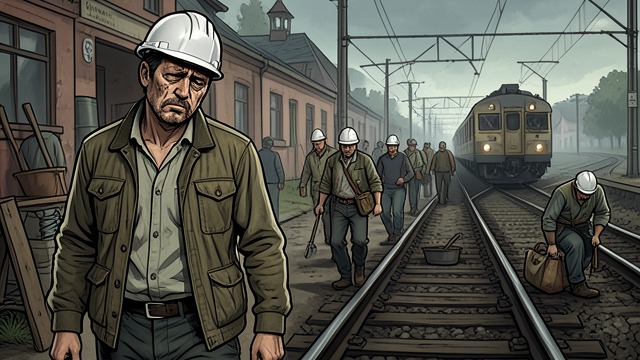
The Speedo Begins
No Rest Days
The Speedo removes rest days, lengthens shifts, and assigns men to day and night work. The distinction between fit and sick collapses into a distinction between sick and dying.
Labour Without Limit
The order treats exhaustion as disobedience. The prisoners are pushed forward even when the work has ceased to have any relation to human capacity.
Tools Replaced by Bodies
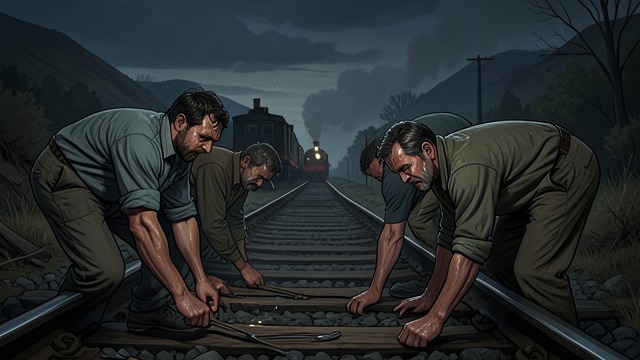
Human Power as Equipment
Material Shortages
The railway project lacks adequate tools, machinery, food, and medicine. Orders nevertheless demand faster completion.
The System’s Answer
Prisoners are made to supply the missing force with their hands and backs. The railway’s engineering logic converts human beings into expendable equipment.
A Finished Railway
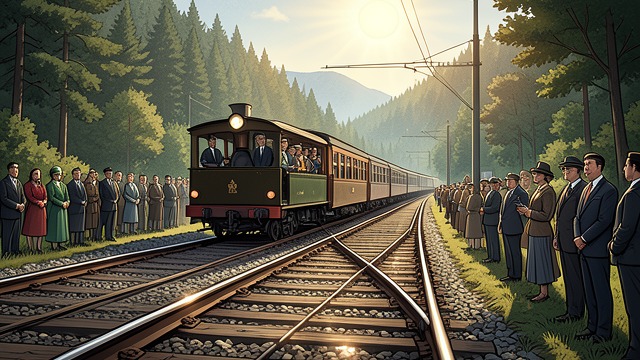
Completion on Display
A Public Achievement
The first train runs along the completed route carrying Japanese and Thai dignitaries. The spectacle confirms the engineering success sought by command.
The Hidden Ledger
The line passes over the cost in death and forced labour. Commemoration celebrates the construction while leaving the builders largely unnamed.
A Project Unmade
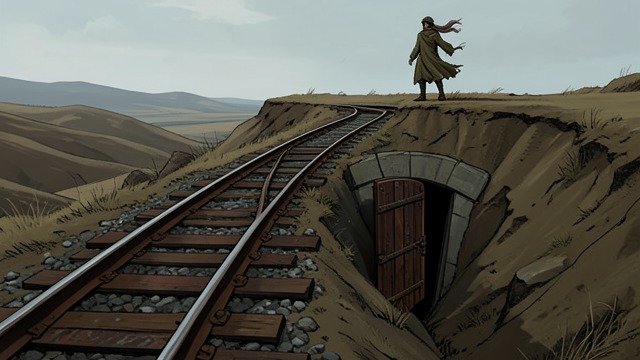
The End of Utility
Imperial Purpose Ends
Japan’s defeat removes the railway’s strategic purpose. Sections are abandoned or taken apart, and the line begins to break down.
Impermanence Exposed
Nature absorbs the embankments, bridges, and graves. The structure that demanded immense sacrifice proves temporary, while its moral cost remains difficult to count.
As railway work intensifies before the monsoon
At the start of the rainy season, when work becomes continuous
During the monsoon, as machinery and supplies fail to arrive
25 October 1943, during the first full-length train journey
After the war, as the railway is dismantled and overgrown
