
The Line’s Rise and Ruin
The Narrow Road to the Deep NorthThis thread traces the railway from imperial ambition through forced construction to abandonment and the jungle’s gradual reclamation.
increasing Bearing strength in each event
 decreasing
Bearing strength in each eventdecreasingThe Imperial Plan
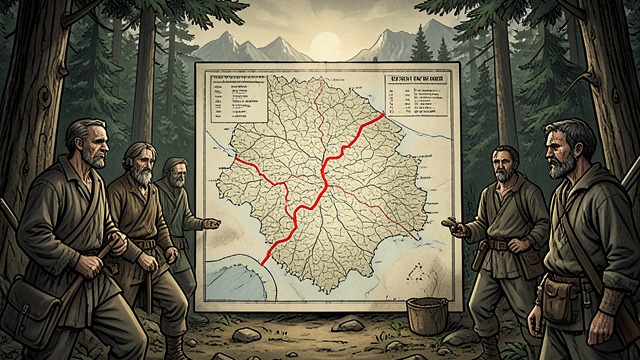
The Imperial Plan
Strategic Urgency
The Japanese Empire needs a supply route to Burma as Allied control of the seas constrains its movement. The railway is ordered without adequate time, machinery, or material.
A Human Foundation
Prisoners and Asian labourers become the resources that make the plan possible. The grand project is thus conceived through coercion before the first track is laid.
Hand-Built Track
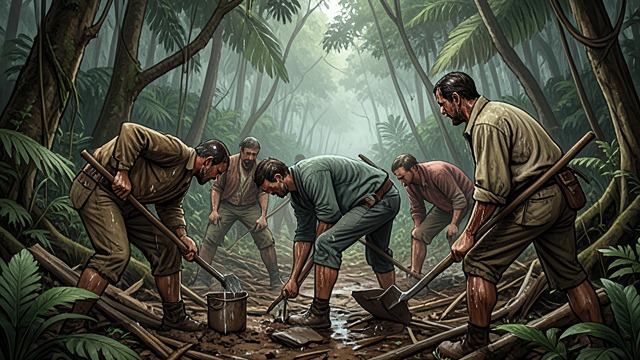
Hand-Built Track
Work Without Machines
Prisoners clear teak forest, cut rock, haul earth, and carry sleepers with crude tools. Their labour turns the surveyed route into a physical line through the jungle.
Scale and Cost
The project depends on the bodies of Allied POWs and Asian labourers. The railway’s apparent engineering achievement is inseparable from the coercion and deaths that sustain it.
The Deadline Tightens
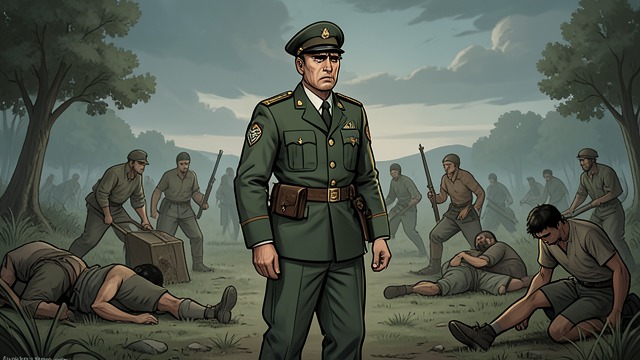
The Deadline Tightens
Impossible Orders
Major Nakamura receives a larger cutting to complete and a deadline moved forward. Railway Command Group provides no corresponding supply of tools or machinery.
Labour as Material
He is told to finish even if prisoners die. The command transforms a logistical failure into a human one, making bodies the substitute for equipment.
The First Train
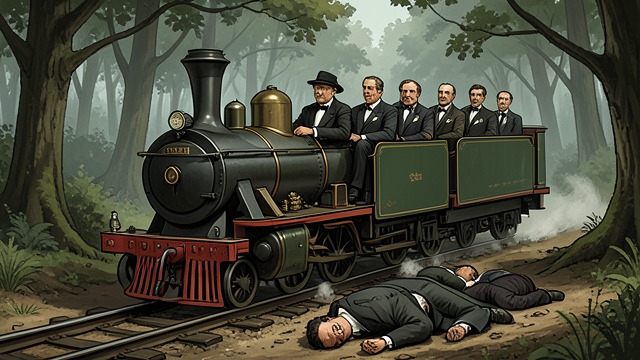
The First Train
Ceremony Over Graves
Locomotive C 5631 travels the length of the completed railway with dignitaries aboard. It passes through a landscape containing the remains of those who built the route.
What the Plaque Omits
The achievement is commemorated without naming the labourers or acknowledging the horror of construction. Completion becomes a public story that conceals its cost.
Jungle Reclaims the Track
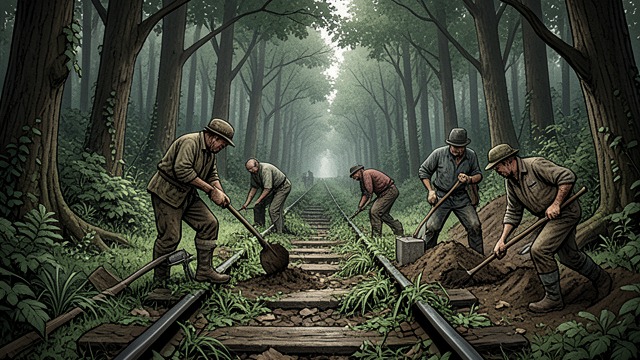
The Line Disappears
Abandonment
After the war, the railway loses its military purpose. Sections are dismantled, sold, or abandoned as bridges and embankments begin to fail.
Return of Life
Seeds, rain, insects, and vegetation cover the engineering works and the mass graves. The line that seemed permanent becomes a temporary scar in a living landscape.
After Singapore’s fall, as Japan seeks a land route through Burma
Early 1943, as labourers begin clearing the jungle
During the monsoon, when Railway Command Group advances the completion date
25 October 1943, when the completed line is traversed by its first train
In the years after Japan’s defeat in 1945
