Choi Sang-min is executed
The Narrow Road to the Deep NorthChoi Sang-min is executed after an Australian military court convicts him of ordering Wat Cooney’s death and of other offenses involving the treatment of prisoners. The sentence ends his life in captivity, but the sequence also exposes the uncertainty of the evidence against him, the unequal reach of postwar justice, and the gulf between a legal verdict and a condemned man’s sense of himself as more than the charge against him.
Trial and sentence
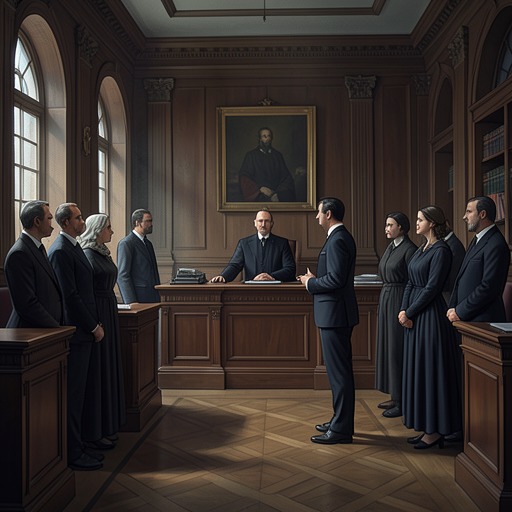
The trial lasted two days. Apart from the periods when Choi Sang-min was questioned directly, the proceedings took place in English, a language he understood very little. At the conclusion, the judge addressed him, and an interpreter delivered the decision in broken Japanese. The court dismissed the charge that he had participated in the killing of Australian Imperial Force Sergeant Frank “Darky” Gardiner, citing the contradictory character of the evidence and the form of the written testimonies. It upheld the charge that he had ordered the death of Wat Cooney, along with lesser charges of ill-treatment, including withholding food and medical supplies in ways that caused avoidable suffering and death. Found guilty as a Class B war criminal, he was sentenced to death by hanging.
The judgment did not resolve the questions that had troubled Choi Sang-min’s defense. As a Korean sergeant, he had argued that he could not have ordered a prisoner’s death. The prosecution relied on the interrogation of Colonel Kota, whose evidence attributed the order to him. Choi Sang-min also pointed out that Wat Cooney was no longer in the camp when the order was supposedly given, but confused and incomplete camp records could not establish that this was so. The same testimony from Colonel Kota had helped convict other Korean and Formosan guards; Choi Sang-min had heard that Colonel Kota was later released without charge.
After sentencing, his Australian defense counsel urged him to seek clemency. Choi Sang-min refused to prolong what he regarded as an agony with no useful outcome. He believed the victors were more likely to free officers connected to Japanese nobility while leaving men of lower rank, including Korean and Formosan prisoners, to be executed as scapegoats. He thought of Major Nakamura, who had not been arrested, and Colonel Kota, who was free again; he suspected both might be working for the Americans. These suspicions do not change the verdict, but they shape his understanding of the unequal accountability surrounding it.
The condemned in P Hall
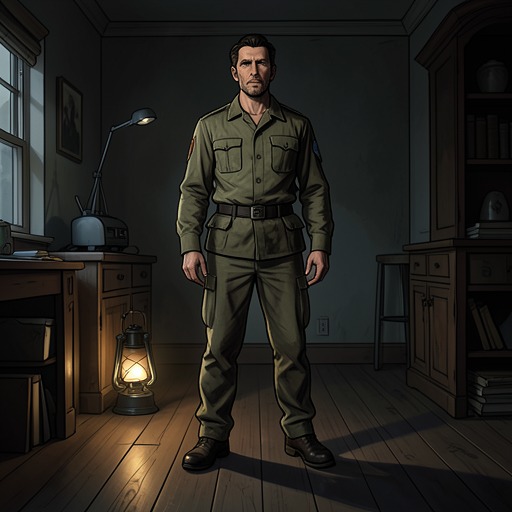
After conviction, Choi Sang-min was moved to P Hall at Changi Prison, where condemned Japanese, Korean, and Formosan prisoners lived together. He wore a dirt-brown uniform marked with the English letters CD, which he was told identified him as sentenced to die. The other prisoners filled their days with games, reading, or solitary quiet. Every few weeks, an Indian captain brought an execution notice. The men waited in silence, each relieved when the notice named someone else.
On the third such visit, Choi Sang-min understood that his own execution was approaching. The paper itself seemed disconnected from the life it purported to end: he could not reconcile a fixed sentence with the changing, complicated person he believed himself to be. The news reached him most fully through the other condemned men’s intense relief that they had not been selected. Their response made clear that he would be executed the next morning.
A meal of rice, miso soup, and tempura was provided, along with cigarettes, and a Buddhist monk attended. Choi Sang-min resented the monk’s presence because his father had once identified as Chongdoist. He longed instead for his mother’s spicy kimchi and would not eat the meal. To eat it, he reasoned, would mean accepting that it was his last; to refuse it was to resist that acceptance. The refusal cannot undo the sentence, but it preserves, for a moment, his own power to withhold agreement from the death imposed on him.
Execution
When the guards came to take him to the gallows, Choi Sang-min resisted. He was offered medication to steady his nerves and was escorted across the courtyard to the scaffold. The proceedings were conducted in silence around him: he was asked whether he wished to say anything, but could not settle on words that would express an idea adequate to his life. The fifty yen he had once been paid returned to his thoughts, now reduced to a sum that seemed too small to explain why he had been there at all. At the trapdoor, his attention fixed on the chalk marks indicating where he should stand. He was hooded, the noose was placed, and the trapdoor opened. His final thought remained unfinished.
The scene is rendered through the narrowing of his attention rather than through a claim that he has made peace with his fate. The formal sequence proceeds quickly, while his thoughts circle around money, speech, and the ordinary physical details of the scaffold. The contrast makes the execution at once a state-administered conclusion and an experience that cannot be made meaningful simply by the court’s sentence. The man who had reasoned that he was more than a document or charge is reduced, by the procedure, to a condemned prisoner whose life is ended on schedule.
Aftermath and accountability
Choi Sang-min’s execution belongs to a postwar reckoning in which responsibility was pursued unevenly. His trial records a conviction for ordering Wat Cooney’s death and for other mistreatment, but it also records the dismissal of the charge concerning Frank “Darky” Gardiner, disputed testimony, missing or incomplete camp records, and the release of Colonel Kota. Later, Kameya Sato tells Major Nakamura that some people were sentenced to death, had their sentences commuted, and were then released; he says that both the Americans and the Japanese wanted the matter forgotten. His account broadens the setting around Choi Sang-min’s fate: prosecution did occur, but neither the process nor its outcomes produced a complete or consistently applied record of responsibility.
That unevenness also shadows the public memory of the railway system that made POW suffering possible. At Yasukuni Shrine in Tokyo, steam locomotive C 5631 is displayed beside the Book of Souls, which lists more than two million people who died in the service of the Emperor of Japan. Among the names are 1,068 men convicted of war crimes after the war and executed, including men found guilty of mistreating POWs on the Death Railway. Yet the locomotive’s plaque says nothing about the railway’s construction or the people who died building it. The novel places the individual execution beside this larger imbalance of remembrance: a sentence can mark one person’s responsibility, while the scale of forced labor, uncertain records, released officials, and forgotten dead remains beyond any single trial.