Dorrigo Evans
The Narrow Road to the Deep NorthDorrigo Evans is a surgeon, former prisoner of war, and celebrated war hero whose public reputation sits uneasily beside his private sense of himself. In captivity he assumes command and continues treating the sick under conditions that make care precarious and death routine. His persistence saves some lives but cannot prevent the loss of many others; afterward, the survivors’ need for a public representative helps turn him into a symbol he does not recognize as wholly his own.
Identity and Early Formation
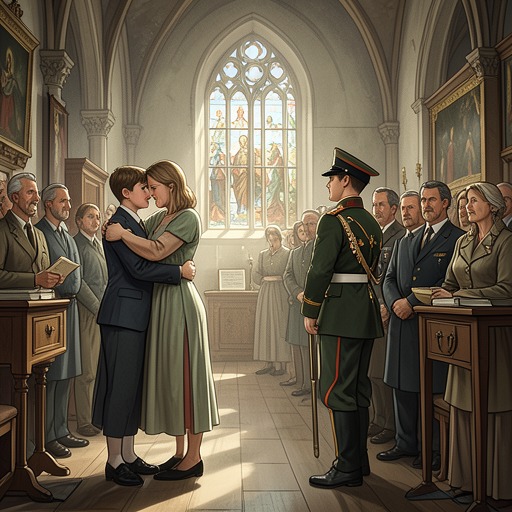
Dorrigo’s earliest memories are formed around a wooden church hall filled with sunlight, where his mother and grandmother receive him as he toddles back and forth. The movement between the bright hall and the women’s arms is remembered as a repeated return to safety. This image of being welcomed and held offers an early contrast to the later life in which he will be responsible for carrying other people through fear and illness, often without the power to protect them from loss.
In later life, Dorrigo becomes a famous surgeon and war hero, the public image of a historical tragedy and the subject of biographies, plays, and documentaries. He understands that he shares the celebrated figure’s habits, history, and features, but does not experience the two as identical. In his view, he has merely been more successful at living than at dying. Nor can he easily reject the admiration: he feels that doing so might dishonour the dead POWs whose memory he has come to represent, and he no longer has the energy to resist the attention.
His physical presence also contributes to the distance between the man and his reputation. In middle age he is tall, imposing, and somewhat stooped, with a forceful appearance that others interpret as gravitas. Admirers read him as charming and elegant; detractors find him exasperatingly different. He recognizes that this misunderstanding gives him a useful mask. The public figure’s authority, then, is not simply a quality he possesses: it is also an appearance that other people construct around him and that he permits them to see.
Command and Care in Captivity
After Colonel Rexroth dies, Dorrigo assumes command of the prisoners. The monsoon has intensified the hardships of the camp, food has dwindled, and illness is widespread. Dorrigo responds by imposing a levy on officers’ pay to obtain food and medicines for the sick, and by persuading, cajoling, and insisting that officers work. His leadership is practical and collective: it directs resources toward those in need while demanding that the surviving officers contribute to their care.
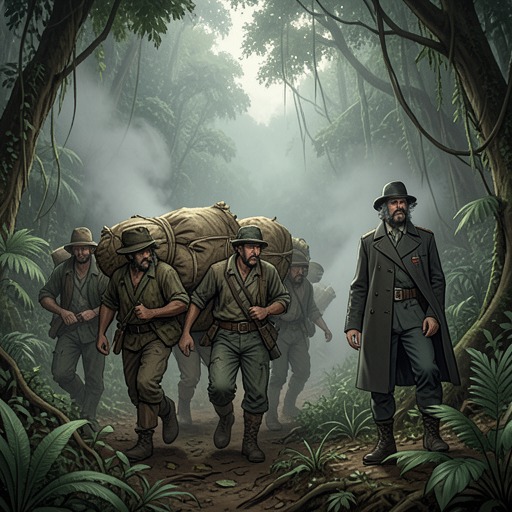
The prisoners are also forced into railway labour. Dorrigo and the men under his command are transported in closed steel wagons, with twenty-seven men packed into each, and then made to clear jungle, break rock, move earth, and carry railway materials. Their tools are basic, and the work continues under hunger, exhaustion, and the coercive authority of their captors. A duck egg, a little palm sugar, a repeated joke, and the hope sustained by small acts of solidarity become meaningful against this imposed routine. The men’s shared life is not a reprieve from forced labour, but a way of preserving human ties within it.
Dorrigo’s medical responsibility becomes especially stark during a cholera outbreak. At a roll call, he reports that 838 POWs remain: 67 are in the cholera compound, 179 are seriously ill in hospital, 167 can manage only light duties, and 62 more have reported sick that morning. When Major Nakamura presses for workers, Dorrigo argues over which men can be spared. He offers 400, grounding his proposal in his medical assessment of the prisoners, while recognizing inwardly that medical knowledge offers no real protection against the demands imposed on them. His professional judgment matters, but it cannot control the terms of the negotiation.
The daily work of caring for the sick consumes him. He carries and nurses men, operates, and keeps trying to secure another day of life for them, while knowing that more die each day. Jimmy Bigelow assists him as an orderly nurse on rounds outside the cholera compound; the severity of the conditions sometimes forces Jimmy to step away. Dorrigo’s commitment does not depend on confidence in his own skill or goodness. He sees his hospitals and treatment as absurdly inadequate, yet compares them to the makeshift theatrical performances the men once created from bamboo and rice bags: imperfect representations that nevertheless help, and sometimes keep people alive. He refuses to stop trying.
Conflict, Judgment, and the Limits of His Authority
Dorrigo’s efforts to help the prisoners require more than medical treatment. He sometimes lies, cheats, and steals for their sake, and he takes risks in attempts to protect them. His approach is captured in his conversation with Squizzy Taylor: when confronted with an apparently impossible situation, he describes himself as moving forward against it, sustained by faith in possibilities that a literal assessment might dismiss. The principle is not confidence that he will prevail; it is a refusal to let the absence of certainty become a reason for inaction.
That resolve does not make him master of the camp’s violence. When Darky Gardiner is to be punished, Dorrigo recognizes that the railway’s construction depends upon the Japanese authorities enforcing their demands against the POWs. He sees the immense suffering behind the railway and, at the same time, finds himself admiring the terrible will and strict obedience embodied by Nakamura. The recognition is morally disturbing: the quality that sustains the machinery of punishment can look like strength even to the man who sees its cost. Dorrigo’s understanding of the opposing officer does not erase the suffering or grant him the power to prevent it.
His medical practice is shaped by this tension between action and helplessness. During Jack Rainbow’s operation, Dorrigo concentrates on the work and imagines Jack alive in middle age, with children and his stump resting on a cushion. He believes that the immediate operation has given Jack a good chance, though recovery and infection remain uncertain. For Dorrigo, the imagined future is not proof of a happy outcome; it is a way to recognize that the effort itself has meaning. The possibility of saving one person briefly answers the fear that his work has failed, without cancelling the deaths he has witnessed.
Private Attachments and Remembered Possibility
Dorrigo’s relationship with Amy Mulvaney remains a private point of emotional uncertainty. In his early years with Ella Lansbury, he thinks often of Amy and cannot explain what he had experienced with her, except that it seemed to exceed ordinary love. He recalls their first meeting as outwardly unremarkable: the beauty spot above Amy’s lip, the dusty light in which he saw her, their conversation, and the book of Catullus he returned to buy the following day. At the time, he assumes that the encounter will fade from memory. In retrospect, the small details persist, while the significance of the relationship remains difficult for him to define.
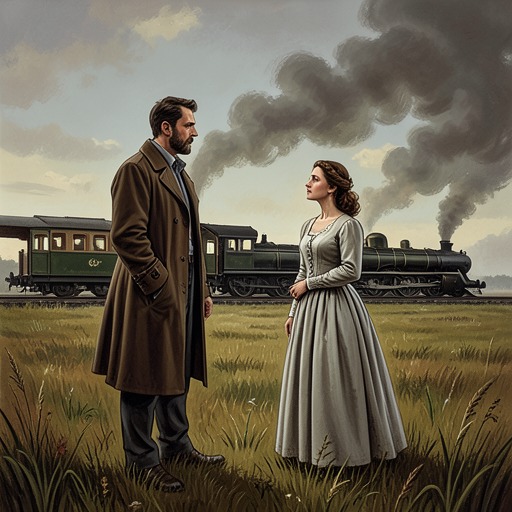
At a later point, Dorrigo anticipates that Amy will say she is leaving Keith Mulvaney, or that Keith has sent her away. He imagines agreeing to leave Ella and arranging for himself and Amy to become a real couple; in that moment, this future seems inevitable and right to him. The passage establishes the force of his anticipated choice, not that he carries it out. His private conviction about what he would do therefore stands beside the actual uncertainty that governs their lives together: desire and imagined commitment do not guarantee a shared future.
The novel later places Dorrigo on the Sydney Harbour Bridge, where he pauses above the water before resuming his walk and glimpsing Amy in the distance, stepping briefly from shadow into light. The scene gives their connection the form of a sighting rather than an assured reunion. The woman he once expected to build a life with reappears across space, while the narration withholds any easy resolution. Memory has preserved the encounter; it has not made the lives they imagined coincide.
Return, Public Memory, and the War That Continues
When Dorrigo steps from a Douglas DC-3 in Sydney in the autumn of 1948, the war has formally ended, but he has not yet surrendered its claims on him. Though he spent three and a half years as a POW, he continues to seek adversity, intrigue, and adventure after returning. As opportunities diminish, he finds it difficult to admit that, in a fundamental sense, he had been free during the war. The reversal complicates any simple account of liberation: the end of captivity does not immediately restore him to an ordinary life, and the struggle he chooses after the war cannot simply reproduce the conditions that gave his wartime actions their purpose.
In later years, Dorrigo maintains the routines and appearance of a man expected to care. He shaves each morning because he believes the men depend on seeing that he still cares. In the service mirror, however, he sees an older, thinner, harder, more remote version of himself. His officer’s cap and red scarf have become props through which he sustains an outward identity, perhaps as much for his own sake as for theirs. The small act of shaving thus joins public responsibility to private estrangement: he keeps up appearances because he fears what their collapse might mean to the people who look to him.
At a dinner for the College of Surgeons’ executive committee, Ella Evans calls him the loneliest man in the world, and the guests laugh. The joke exposes the gap between Dorrigo’s public image as everyone’s friend and the loneliness his wife believes she sees. The laughter does not settle whether the description is accurate; it shows how readily his companions’ familiar image of him can turn an intimate judgment into a social amusement.
Dorrigo’s story also sits within a larger contest over how the war is remembered. At Yasukuni Shrine in Tokyo, locomotive C 5631 is displayed alongside the Book of Souls, which lists more than two million people who died in service to the Emperor between 1867 and 1951. The shrine’s commemorative framework offers absolution to those enshrined, including executed war criminals, among them men convicted for mistreating POWs who worked on the Death Railway. The plaque on the locomotive does not name the railway’s suffering or the hundreds of thousands who died building it. Estimates for the deaths among the Asian forced labourers vary widely, and no agreed total exists. Against this incomplete and selective public record, Dorrigo’s reluctant celebrity gives the prisoners a surviving representative, but cannot restore the dead or make the history whole.
Narrative Significance
Dorrigo’s defining quality is not victory over the conditions around him but persistence within their limits. He organizes food and medicine, argues from medical evidence, treats the sick, and continues after repeated failure. His care has measurable consequences when a patient has a chance to live, yet it remains surrounded by a system powerful enough to decide who must labour and who will be punished. The novel makes his heroism inseparable from that distinction: he can act meaningfully without being able to command the outcome.
His later fame sharpens rather than resolves this contradiction. Others turn him into an emblem of wartime courage, while he experiences himself as a survivor carrying the memory of those who did not return. His private attachments offer no simple refuge from that burden, and his postwar restlessness suggests that the war remains present in the habits through which he seeks difficulty and in the appearance he maintains for others. Dorrigo’s life therefore links personal memory to public commemoration: he is both a man trying to keep faith with particular people and a symbol asked to stand for a history whose losses cannot be fully counted.