Dorrigo Evans marries Ella Lansbury
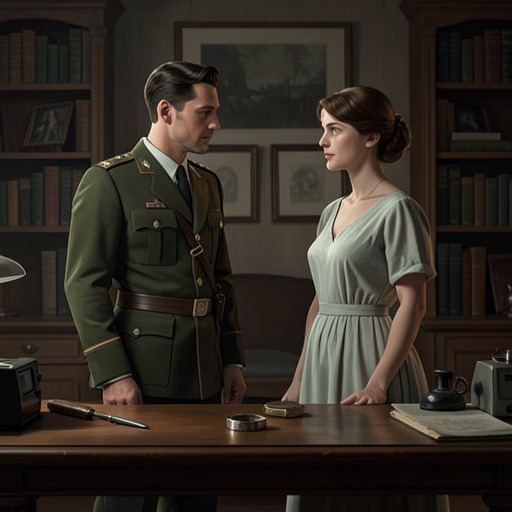
The Narrow Road to the Deep NorthDorrigo Evans marries Ella Lansbury in 1948, three weeks after returning to Sydney from postwar service in Southeast Asia. The wedding completes an engagement made seven years earlier, but it does not resolve the distance between them: Dorrigo has lived through captivity and the war, while Ella has held fast to an image of the man she expected to marry. His assent is less a confident choice than a surrender to expectation, establishing the pattern of dutiful conformity that shapes the rest of his life.
Return and Reunion
Dorrigo arrives in Sydney in the autumn of 1948 after nineteen months working in army organizations across Southeast Asia, on matters ranging from repatriation and war graves to reconstruction. Although the war ended in 1945, he has not inwardly left it behind. For three and a half years as a prisoner of war, he had been free in a fundamental sense, he later finds it difficult to admit; civilian life, by contrast, seems to offer no comparable intensity. He has continued to seek adversity, intrigue, and danger, even as opportunities for them diminish. The arrival that should begin a homecoming therefore confronts him with a life he has postponed and does not know how to inhabit.
Walking across the tarmac toward a small crowd, Dorrigo resolves to meet civilian life with the charm and daring he used to face other obstacles. He urges himself forward and reaches for the idea of charging at a windmill: a deliberate effort to treat an uncertain future as another challenge to overcome. The gesture is both resolve and evasion. He is trying to make the return manageable by casting it in the language of action, rather than confronting what he wants from it.
Ella waits in the crowd, waving a gloved hand. Dorrigo recognizes her voice after she speaks, but cannot remember her name until after they have kissed. The reunion’s outward signs suggest joy, relief, fidelity, and love, yet those feelings do not match his experience. The summer air seems empty after Asia, and the kiss disappoints him. Only belatedly does the name Ella come back to him. The scene makes the distance between the expected homecoming and his actual response unmistakable: the woman waiting to resume their life together is someone he recognizes, but cannot immediately place in his emotional world.
An Engagement Carried Forward
Their engagement had been made hastily in the looming shadow of war, before Dorrigo’s departure overseas. Seven years later, Ella’s embrace and the reactions of those around them turn that old promise into an assumed plan for marriage. The people they meet accept that the engagement must now be concluded; no one appears to treat it as a decision requiring renewed reflection. Dorrigo understands the disparity between them starkly: during the intervening years he has lived several lives, while Ella seems to have devoted hers to an idea of him that he scarcely recognizes.
He feels anger and defiance at times, but also a weariness he has never known. Rather than insist on his own uncertain wishes, he yields to the judgment of people he sees as more sane and sober than himself. He hopes their confidence may draw him toward a better place. The choice is not presented as free of fear: the prospect of marrying Ella frightens him more than anything else. Yet the novelty and terror of the unknown also exert their pull, and he allows the wedding to become the next step simply because others have made it seem inevitable.
The Wedding and Its Public Story
Three weeks after the reunion, Dorrigo and Ella marry at Saint Paul’s Cathedral. He arrives in an alcoholic haze, wearing a new suit chosen by Ella, and later regards both the suit and the wedding as affected. Even before their kiss, he loses hold of his own name. Smothered by her embrace and the smell of her powder, he feels lost; when his name returns, he identifies himself as Alwyn. The name is not a new identity so much as another sign of his disorientation. Looking at Ella in makeup, lace, and orange blossom, he sees familiar features but can find nothing attractive in them.
At the reception, he does not voice his wish to deny that he is Alwyn or to call himself bogus. Instead, he tells the guests a polished story about a love that survived seven years of separation. He casts Ella as Penelope and himself as a returning Ulysses, turning their enforced interval into the shape of a classical homecoming. The speech earns laughter and applause, but its public success depends on a version of the marriage that Dorrigo does not feel to be true. The contrast between his private estrangement and the guests’ celebratory response makes the ceremony less a union founded on renewed understanding than a performance that confirms what everyone has already decided.
Consequences and Significance
The marriage establishes a recurring pattern in Dorrigo’s adult life. He yields to circumstance and expectation, eventually giving those pressures the name of duty. The wedding is an early instance of that accommodation: faced with his own fear and resistance, he lets the broader will of family and society direct his life. His public account of enduring love helps conceal rather than settle the mismatch between what he says and what he feels.
The consequences appear soon after the wedding. A month after the honeymoon, Dorrigo sleeps with Ella’s best friend, Joan Newstead, and thinks of his conduct as wicked. The affair does not undo the marriage; it exposes the guilt and division that accompany it. As he later tries to do good in public life, he becomes more desperate to meet other people’s expectations, treating that outward duty as an escape from private failure. The marriage thus marks not a secure return to civilian happiness but the beginning of a life in which Dorrigo repeatedly accepts the roles others assign him while remaining estranged from the person those roles are supposed to serve.