Ella Evans
The Narrow Road to the Deep NorthElla Evans is a loving and socially admired woman whose marriage to Dorrigo Evans is both an enduring bond and a source of profound loneliness. She believes in love and continues to care for him even as his postwar detachment, anger, and adultery wound her. Their marriage is never simply a failure or a success: it is a life they keep sharing, and a relationship whose limits become starkly visible when Dorrigo rescues Ella and their children from a bushfire.
Character and disposition
Ella is presented as someone for whom love is fundamental. She has been loved by her parents and loved them in return; as an adult, she looks for people on whom to lavish that affection. She listens to Dorrigo’s troubles at the hospital, grieves with him when he loses a patient, and sympathizes with his complaints about bureaucrats and surgeons. Her care is not confined to private intimacy: she believes in Dorrigo’s work and repeats his judgments as though they were her own. That identification frustrates him, but it also shows the extent to which she has invested herself in his life.
Over the years Ella becomes a striking older woman, admired for her elegance, composure, compassion, and easygoing manner. Her dark hair is dyed, and she carries an appearance of vigour that belies her age. Men respond to her looks and to the attentive way she listens when they talk about themselves. The account of her appearance is partly filtered through Dorrigo’s increasingly hostile gaze: he becomes fixated on the slight upturn of her nose, noticing it more and more until it can eclipse the rest of her face for him. The contrast between her outward calm and the husband’s narrowing, resentful perception marks the growing distance between them.
Reunion and hastily concluded engagement
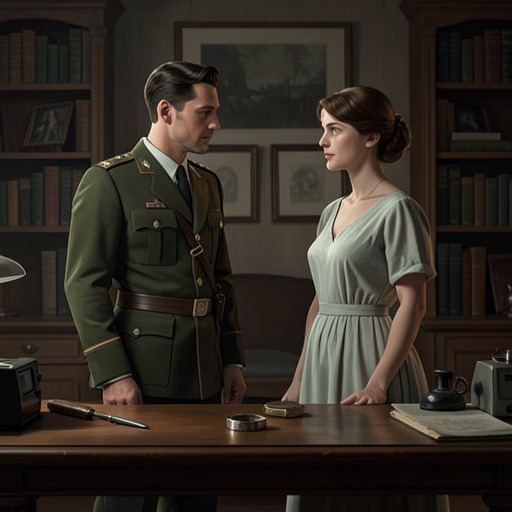
When Dorrigo returns to civilian life after seven years away, he approaches the crowd waiting for him with a resolve to meet the future with charm and daring. He whispers encouragement to himself, but the reunion with Ella does not restore the intimacy his confident pose implies. He recognizes her voice after she speaks, yet cannot remember her name, even after they kiss. The summer air seems mild and disappointing to him, and the kiss itself feels dry. When her name finally comes to him, he repeats it, hoping that further words will follow and make sense of their reunion. They do not.
Ella tells him not to say anything false or affected. Dorrigo answers that he is false through and through, a confession that does not open a conversation between them. Her embrace is inescapable, and the people around them treat their impending marriage as an obvious conclusion. Their engagement had been made hastily in 1941, under the shadow of war and Dorrigo’s imminent departure. In the intervening years, he feels that he has lived several lives, while Ella seems to have devoted hers to an image of him that he scarcely recognizes. He is tired and gives way to the expectations of others, hoping their confidence and apparent sanity might draw him somewhere better.
Dorrigo had proposed during his last leave with Ella before embarkation, while thinking about Amy Mulvaney and feeling guilty about those thoughts. The proposal also served as a way to quiet Ella’s repeated questions about why he had not asked her to marry him. Three weeks after his return, they marry at Saint Paul’s Cathedral. Dorrigo is in an alcoholic haze and wears a suit Ella chose; later he regards the ceremony as affected. Even during the wedding, he briefly forgets his own name. His fear of marrying Ella does not stop him: he yields to the marriage partly because its prospect frightens him so deeply.
A marriage sustained by love and habit
Ella believes in Dorrigo and in the life he is supposed to lead. When he becomes famous for his collegial manner, however, that public warmth conceals a private isolation. At a dinner for the College of Surgeons’ executive committee, Ella describes him as perhaps the loneliest man in the world, and the others laugh, apparently unable to reconcile her claim with his reputation as a friend to everyone. The joke makes the discrepancy plain: Ella knows a loneliness that the public image of Dorrigo obscures.
Dorrigo does not regard the marriage as a wasteland. He resists calling it a failure or concluding that he never loved Ella. At first, he saw her through the expectations surrounding marriage: she seemed to him a perfect wife, loving and devoted, and more determined than he was that he should succeed. He mistook the fit between convention, marriage, and the poetry in his youthful imagination for love, then accepted that it would have to do when it no longer seemed sufficient. Later, while Ella bore their children, he loved her very much. He remembers finding peace when he leaned against her and smelled her. This tenderness existed alongside his adulteries and the eventual fact that Ella could no longer bear to have him in bed with her.
Their three children, Jessica, Mary, and Stewart, are loved by Dorrigo, though he recognizes that he has treated them with benign neglect. He is distressed by their hostility and coldness toward one another, and sees in it an echo of the cruelty he has shown Ella. He recognizes himself as unfit for fatherhood but continues in the family, as he continues in other parts of his life. In company, he and Ella can admire one another; in private, their estrangement persists. Ella tells friends that the war and the camps have not let Dorrigo go, while he resents her for making him into a tragedy and wishes she would condemn what he has become. Her refusal to give up on him is itself a form of love, though he cannot receive it without anger.
Questions without easy answers
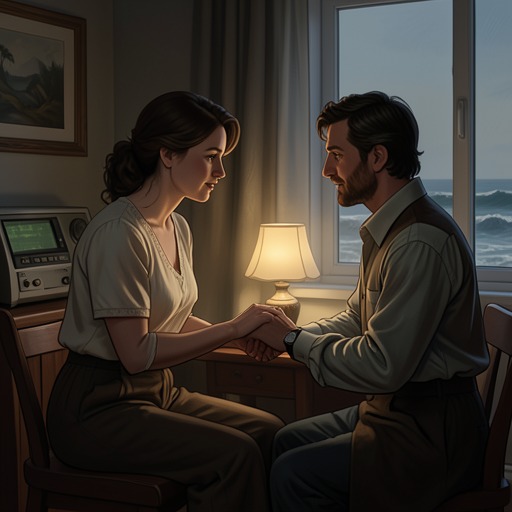
Ella tries to create distance as well as closeness. She cuts her hair in the style of Françoise Hardy and smokes purple Sobranies, gestures that may offer a more stylish distance and perhaps an appeal to Dorrigo. He finds the perfume of the smoke abhorrent; he remains attracted to her fragility even as he recoils from the signs through which she tries to alter their relationship. Their attempts to speak reveal how little clarity their shared life provides. Ella asks what he wants, and he answers with evasions—nothing, serenity, her, or the marriage itself—before she presses him to say what he really wants. She asks whether he wants only sex. Her calm hurts him more than anger would, because it leaves him with a question he cannot answer.
The marriage is also structured by a painful mismatch between their inner lives. Dorrigo is alone with Ella, their children, his work, and the public organizations on which he serves, despite his reputation for sociability. Ella’s description of that loneliness is not merely a joke, even when the dinner guests receive it as one. For her, love remains a sustaining principle; for him, it is bound up with exhaustion, fear, and an inability to articulate what he wants. Neither description cancels the affection that has existed between them, but neither resolves the distance that has accumulated.
The bushfire and its aftermath
During a bushfire, Ella finds Jessica, Mary, and little Stewart playing beneath the small amount of water still coming from a backyard sprinkler. After a nearby house explodes into flames, she tells the children that they will walk to Hobart, though she does not know how far away it is and feels frightened. Their own house is lost. As the fire advances, Ella and the children hear a car horn, then see a green 1948 Ford Mercury with white-wall tyres stop nearby. The driver is Dorrigo, who has come back for them.
He runs to the family through smoke, heat, and flame, lifts Stewart onto his hip, and presses Ella’s head against his face while holding the girls close to them. The embrace lasts only a moment before they flee to the car, but it is more affection than the children have seen him show their mother in a lifetime. Dorrigo drives them through the burning bush, smashing through a fence and a wall of flame. Ella sees that his hand is blistering badly; his burns will later require skin grafts. The Ford escapes on three tyres and a failing wheel rim, reaching the safety of a police roadblock.
In the car, Ella understands that she knows nothing about Dorrigo, that their marriage was over before it began, and that neither of them can alter this. Yet the rescue does not reduce their shared life to a simple verdict. Their children sit soot-smeared and silent behind them, absorbing the danger and the parents’ exposed emotion. The scene brings together affection, illness, labour, tragedy, and jokes in a marriage that remains unresolved: a shared life that is not a simple union, but is not simply over. The rescue gives the family a brief, physical form of closeness without undoing the history that makes that closeness so startling.