First World War
The Narrow Road to the Deep NorthThe First World War is a defining absence in the novel’s early family history and a continuing presence in the lives of the generation that follows it. Rather than recounting battles, the narrative shows the war through Tom Evans’s return from France, his silence, and the lasting effects of the conflict on the men and communities left behind. This inheritance forms part of the social world from which Dorrigo Evans and the later Australian prisoners emerge.
Tom Evans Returns from France
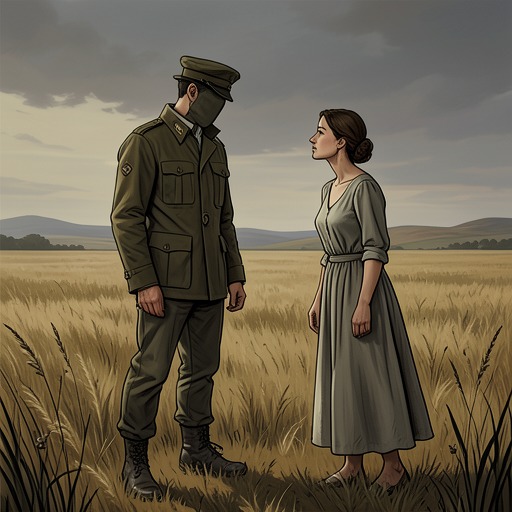
Tom Evans’s homecoming is one of Dorrigo Evans’s earliest memories of the First World War’s human consequences. Dorrigo sees his brother get off the train, swing down his kitbag, and abruptly begin to cry. The scene astonishes the young boy, who wonders what could make a grown man weep. The novel presents this moment not as an explanation of Tom’s wartime experience, but as a memory of its emotional force: the return itself is visible, while what happened in France remains largely unspoken.
That night, the family burns the Kaiser in a bonfire. Tom says nothing about the war, the Germans, or the gas, tanks, and trenches they have heard about. His silence stands beside the public gesture of burning the enemy’s image, revealing a distance between a simple symbolic act and the experience Tom has brought home. For Dorrigo, the memory becomes an early encounter with the limits of what one person’s feelings can express about a larger reality.
A Generation Marked by the War
The First World War persists beyond Tom’s return in the condition of the older men around Dorrigo. The novel describes a generation of fathers as dead, crippled, or mentally damaged by the Great War. Their families make do amid poverty, in shacks and shanties, settlements for returned soldiers, sustenance camps, and slums. The war is thus part of a broader inheritance of hardship: it has injured or removed many of the men who might otherwise have supported their families, and its consequences remain embedded in everyday life.
This background also places the later Australian POWs within a history of deprivation that predates the Second World War. The men who serve under Dorrigo come from varied occupations and regions, but many have grown up amid the privations of the Depression and the aftereffects of the earlier conflict. The novel does not make their later captivity a direct consequence of the First World War; instead, it presents the earlier war as one part of the social landscape that shaped their generation.
Memory, Silence, and Inheritance
Dorrigo’s recollection of Tom’s return links the First World War to the novel’s wider concern with memory. The child can preserve the sight of his brother crying, yet cannot know what Tom experienced or why he could not speak of it. As an adult, Dorrigo will witness suffering on a far greater scale, but the early memory remains a formative example of how private feeling may fail to account for the whole of life.
The First World War therefore appears less as a completed historical episode than as an inherited wound whose effects surface in family memory and social conditions. Tom’s silence, the bonfire, and the damaged older generation offer distinct traces of that inheritance: one intimate, one ceremonial, and one collective. Together they establish a pattern that recurs in the novel’s later treatment of war, where survival does not necessarily bring explanation, and where the consequences of violence outlast the event itself.