Human goodness
The Narrow Road to the Deep NorthHuman goodness is a contested moral idea in the novel: it can be enacted in ordinary care, invoked to excuse service to an empire, or preserved in memory after the facts of suffering have faded. The contrast between Dorrigo Evans, Tenji Nakamura, and Jimmy Bigelow prevents goodness from becoming a simple reward for endurance. Suffering does not guarantee virtue, and a person’s own conviction that he is good may be as uncertain as the memories through which he understands his life.
Care and the limits of suffering
Dorrigo’s experience as a doctor gives him a direct basis for resisting the idea that suffering is itself virtuous. He has argued with Padre Bob about the Christian understanding of suffering, and hopes that Christ is right, but cannot accept that pain produces goodness or that virtue necessarily emerges from it. To Dorrigo, suffering remains suffering; virtue is distinct from it and cannot be explained away as its natural result. Padre Bob’s death, which Dorrigo remembers as an occasion of terror and pain, makes the distinction immediate rather than abstract.
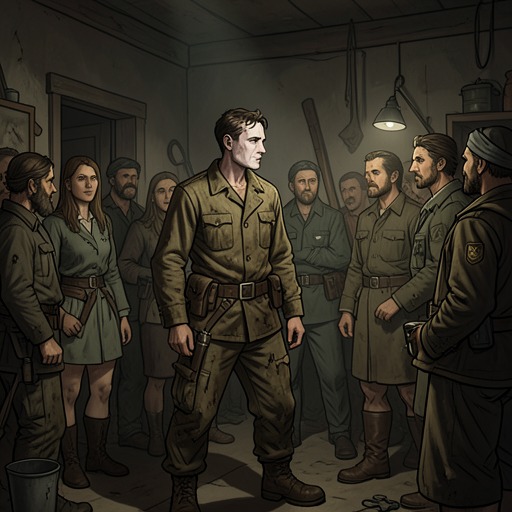
Dorrigo’s care for the prisoners is substantial but not idealized. He carries and nurses them, performs operations, and continues trying to save lives as more men die. He also recognizes that the prisoners lie, cheat, and steal, and that their conduct does not always match a noble ideal. One day he finds a man too sick to make the last stretch from the Dolly to the hospital. Two other prisoners, themselves exhausted and conserving their strength, pass him without helping. Dorrigo orders them to take the man in. The episode presents goodness as a difficult act of responsibility amid scarcity, not as proof that suffering has made everyone compassionate.
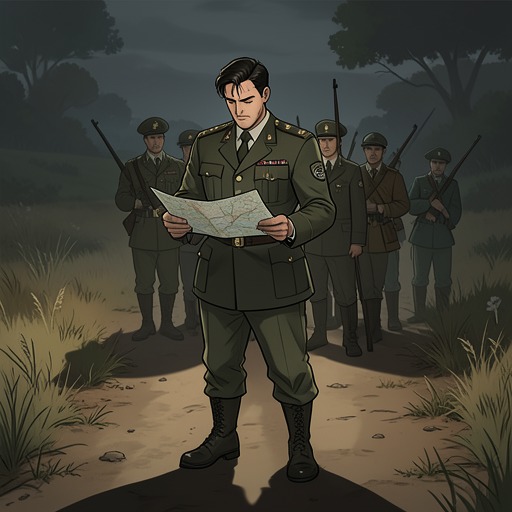
That responsibility also fails to spare Dorrigo from moral compromise. During Darky Gardiner’s beating, Dorrigo understands that he has arrived too late and done too little; he sees himself among the hundreds who watch without intervening. For a brief moment, he apprehends violence as a force that outlasts civilizations and overwhelms human attempts to give the world a moral order. The insight soon vanishes, but his participation in the scene remains: he cannot treat himself as an innocent observer. Goodness here is not a triumphant answer to violence. It is measured against the acts a person performs, the suffering he cannot prevent, and the failures he must recognize.
Goodness in service to the Emperor
Nakamura’s understanding of goodness exposes a different danger. He believes his devotion to the Empire and the Emperor belongs to a universal moral good. In that belief, he can regard himself as more than an individual and permit acts he might otherwise have considered evil because he thinks they serve something ultimate. The Emperor becomes, in his imagination, a poem that transcends ordinary morality and suffering. His idea of goodness therefore does not prevent violence; it gives him a framework in which violence can seem permissible.
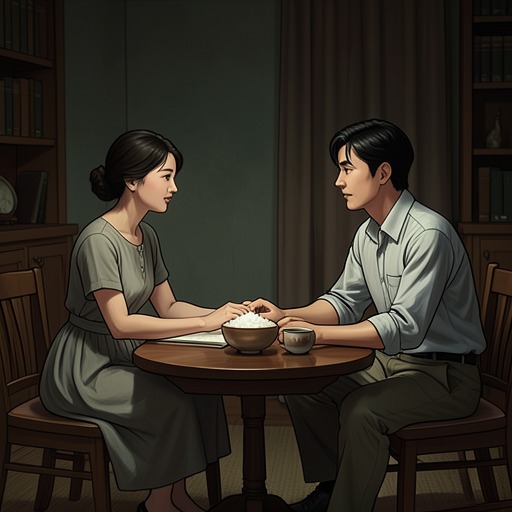
Yet Nakamura’s confidence is unstable. He knows that the grand ideal has become entangled with horror, and recognizes in himself a capacity to suppress pity and take pleasure in cruelty. As he faces death, he wonders whether his supposed service to goodness has instead concealed evil. He tries to recover a different measure of his life: Ikuko Nakamura’s patient care, his daughters’ love, and the small act of giving quinine to an Australian doctor. Those memories matter precisely because they are separate from orders and imperial authority. Even so, he cannot firmly reconcile them with the person he became in service of the Emperor. His crisis makes goodness a question of conduct and self-knowledge, not merely allegiance to an ideal.
Remembrance, forgetting, and ordinary kindness
Jimmy Bigelow’s later life presents goodness through the fragility of memory. When his daughter Jodie asks what the war was like for a school project, he initially says there is little to tell. He brings out an old bugle and plays the Last Post, but cannot offer a comprehensive account of his experience. For him, the music’s meaning remains a mystery. His limited answers are not evidence that the war did not matter; they show the distance between a public account of history and what he can express about his own past.
As Jimmy grows older, his recollections become less reliable, and his sons, historians, and journalists correct his inconsistent versions of events. What persists most clearly is not a complete record but memories of human goodness. He remembers the taste of a duck egg Darky Gardiner gave him and, more enduringly, Wat Cooney’s habit of waiting at the cookhouse until the last man had arrived, saving food so that everyone might have something to eat. At Wat’s burial, none of the men wanted to be first to throw earth onto the grave. Jimmy retains the generosity and the shared reluctance, even as he loses the surrounding particulars of the march and its cruelties.
His memory gradually releases the humiliation, violence, sickness, mud, and hunger of captivity. Eventually he can recall that he was a prisoner of war but no longer remember the experience itself. What remains is an enduring conviction of human goodness. The novel does not present this forgetting as a restored factual account: Jimmy’s family continues to challenge his versions, and the lost memories do not return. Instead, the change shows how his later understanding of life is shaped by what memory has kept—the instances of care that he regards as more fundamental than the violence he can no longer recall.
A goodness made in daily acts
At ninety-four, Jimmy considers himself free, and his later habits give that freedom a quiet form. He cultivates friendships, takes pleasure in weather and in the smiles of strangers, and sets out food and water for birds that visit his yard. These acts do not undo the past or establish that every memory is accurate. They show goodness taking shape in sustained attention to other lives, rather than in a grand explanation of history.
Across these strands, the novel distinguishes goodness from both suffering and moral certainty. Dorrigo’s care persists alongside helplessness and complicity; Nakamura’s devotion to an allegedly universal good enables cruelty even as he searches for evidence of another kind of life; Jimmy’s remnant of goodness survives when the story of his captivity has disappeared from memory. The idea remains vulnerable to self-deception and loss, but the novel gives it concrete expression in tending the sick, sharing food, remembering kindness, and maintaining habits of friendship.