Ikuko Nakamura
The Narrow Road to the Deep NorthIkuko Nakamura is Tenji Nakamura’s wife, whose patient care during his final illness reveals a form of goodness distinct from the imperial ideal to which he has devoted himself. Her daily acts of attention offer him a personal standard of kindness, even as his illness and behavior make that standard increasingly difficult for him to face.
Identity and Relationship
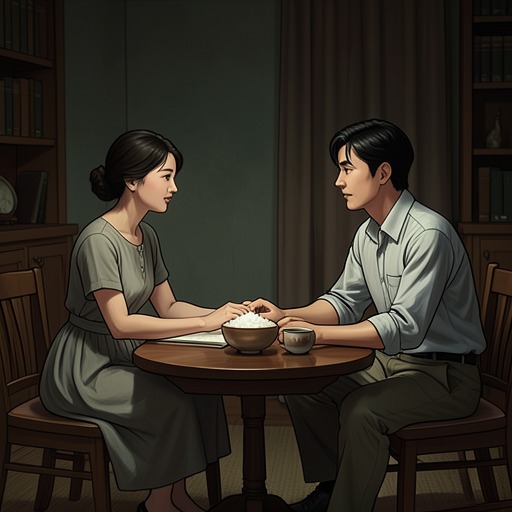
Ikuko is Nakamura’s wife and, with their daughters, nurses him in his final illness. The narrative shows her care through ordinary gestures: she rises two hours before work and touches his cheek. These acts are modest, but they matter to Nakamura because they embody a goodness rooted in attention to another person rather than obedience to an authority or cause.
Care and Moral Contrast
As Nakamura reflects on the difference between his own conduct and Ikuko’s, her patience unsettles the moral framework he has used to understand his service. He recognizes that the goodness his wife and daughters see in him is not the same as Ikuko’s care. His thoughts return to her familiar smile and her touch, and he senses that her goodness is something he does not possess in the same way. The contrast exposes the limits of a conception of virtue that can justify violence in the name of the Emperor while treating intimate, everyday tenderness as secondary.
The Final Illness
Nakamura’s illness is accompanied by bad temper and vicious attacks on Ikuko and their daughters, including when they try to stroke his cheeks or smile at him. The account establishes the strain placed on those caring for him without making their care disappear: they remain with him through his decline. Ikuko is therefore both the person whose kindness prompts Nakamura’s self-examination and a caregiver subjected to his hostile behavior.
Death and the Account to Tomokawa
The following spring, Tomokawa and his wife receive a card from Ikuko informing them that Nakamura has died. Her letter does not mention his final ravings, bad temper, or attacks on the women nursing him. Instead, she recounts that, on the night before his death, he tried for several hours to write a death poem. Weakened by illness, he concluded that he could not improve on Hyakka’s poem, which, he said, expressed his feelings more beautifully than he could.
Ikuko adds that she believes his visit to wintry Sapporo the previous year inspired this final act, and she sends the Tomokawas a copy of the poem. She says the family was with Nakamura when he died and describes him as kind, unable to bear the suffering of animals, and convinced that he had led a blessed and fortunate life. Her account preserves his own understanding of himself while standing in marked contrast to the painful late-stage behavior she has endured. Through that contrast, Ikuko’s care becomes more than background to Nakamura’s death: it is the human measure against which his claims to goodness have been tested.