Japanese spirit
The Narrow Road to the Deep NorthJapanese spirit is the name the novel gives to an imperial ideal that promises unity, endurance, and historical purpose. For Major Nakamura, it is at once a personal conviction and a political explanation for the Death Railway: a force said to make the impossible achievable, even as the railway’s construction depends on the forced labor of prisoners. The concept’s significance lies in this collision between elevated claims about culture and the human cost those claims are made to justify.
The imperial ideal and the railway
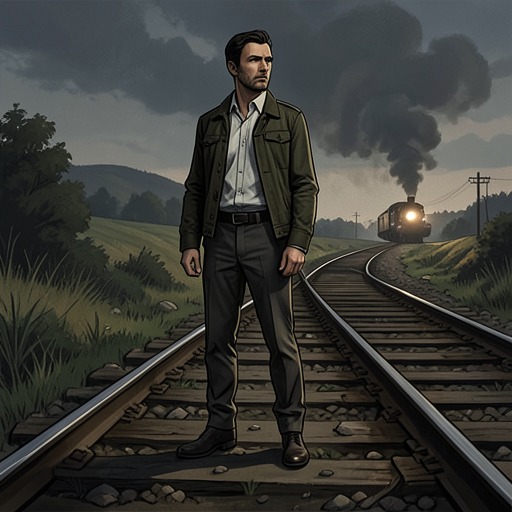
The novel places Japanese spirit within the wartime logic that produces the railway. After the fall of Singapore, the Japanese Empire needs a land route to supply its forces in Burma, while the Allies control the seas and the railway must be built without sufficient money, machinery, or time. The Empire nevertheless believes that its spirit, understood as the Emperor’s will, will carry it to victory. The thousands of Australian prisoners sent to the work are not incidental to that vision: the project’s apparent triumph is made possible by their coerced labor, and the first train’s passage on 25 October 1943 comes after immense human loss.
That contrast gives the ideal its double meaning. As a language of national purpose, Japanese spirit offers a way to imagine the railway as more than a military work: it becomes evidence of collective resolve and a contribution to a world-historical mission. As the narrative presents the material conditions, however, the same confidence obscures the people made to bear the project’s cost. The railway’s completion cannot establish the ideal’s moral truth; it demonstrates how effectively an imperial belief can turn suffering into an instrument of progress.
Nakamura’s belief under pressure
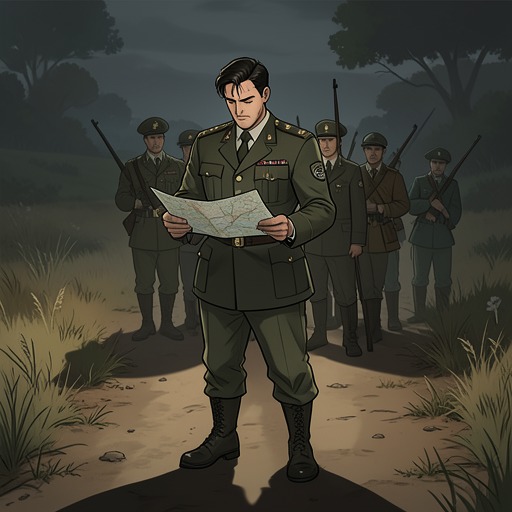
Major Nakamura initially welcomes the railway as a historic undertaking. As an officer of the Fifth Railway Regiment, he is proud to have a significant role in a mission that earlier English and American investigations had judged impossible. The order to build the line in the shortest possible time seems to align his work, his life, and the destiny of the nation. At this stage, Japanese spirit appears to him as conviction given practical form: an idea that can become plans, labor, and steel rails.
The conditions in the jungle steadily unsettle that confidence without immediately dislodging it. Nakamura finds himself far from the crowds and cities that had shaped his life, among a small number of Japanese officers and soldiers and a much larger population of laborers and prisoners. The jungle closes in, and the work grows harder. With the monsoon, the flooded river becomes dangerous for moving heavy loads; the road is largely impassable, supplies dwindle, tools are poor, and the prisoners are in bad condition. Cholera adds another crisis. Faced with this mounting disorder, Nakamura throws himself more deeply into the railway, even as the task begins to feel like an impossible equation and his solitude troubles him.
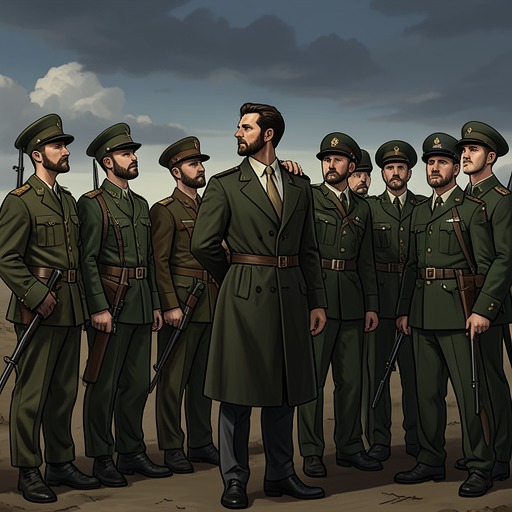
Colonel Kota’s reassurance gives the ideal renewed force. Recalling the pressure of American bombing and the shortage of provisions, Kota presents Japanese spirit as the capacity to endure adversity and insists that the railway will be built and the war won through that endurance. Nakamura receives the colonel’s words as an account not merely of past hardship but of what he himself must do: persist despite inadequate tools and manpower. Yet when Nakamura tries to explain what the spirit actually is, he cannot define it. It feels pure and more real to him than the physical materials of the work, but it remains beyond words. The gap between certainty and explanation is central to the concept: its power over him does not depend on a clear definition.
Progress without freedom
The novel makes the political consequence of this ideal explicit through Nakamura’s account of his exchange with Dorrigo Evans. Asked why Japan began the war, Nakamura describes a noble idea of universal brotherhood, invokes the motto “The Whole World Under One Roof,” and presents Japan as the leader of an Asian bloc and liberator from European colonial rule. Dorrigo keeps returning to freedom, a point Nakamura says did not come across. The difference between their terms exposes the distance between a promise of collective emancipation and the treatment of individuals within the railway project.
Nakamura’s formulation, “Progress does not demand freedom. Progress has no need of freedom,” makes that distance into doctrine. He distinguishes what the doctor calls non-freedom from what he calls spirit, nation, and Emperor; what the doctor calls cruelty becomes, in Nakamura’s account, destiny. The railway can therefore be represented as progress even when the people building it are denied freedom. The concept does not merely inspire effort: it supplies a vocabulary through which coercion can be separated from the ideal’s declared purpose.
This contradiction is sharpened by Nakamura’s own capacity for sympathy. He remembers watching prisoners perform concerts around a fire and hearing them sing “Waltzing Matilda”; the scene makes him sentimental and sympathetic, and he finds it difficult not to be moved. But the emotional response does not overturn his commitment to the work. Kota’s reminder that the railway is no less a battlefield than the front line helps contain such feeling within the demands of the project. Japanese spirit can thus coexist with recognition of another person’s humanity without allowing that recognition to govern the railway’s purpose.
Poetry, identity, and the limits of certainty
The ideal also draws strength from Nakamura and Kota’s shared attachment to Japanese poetry. They recite haiku and discuss renga and waka, finding mutual understanding in their sensitivity to concise poetic form. Their sense of communion rests not only on the poems themselves but on what their appreciation seems to prove about their own character and the Japanese spirit. They imagine the railway carrying the beauty and wisdom of Basho toward Burma, India, and eventually the wider world. In that imaginative leap, cultural transmission and military expansion occupy the same route.
Nakamura goes further in his own reflection: Japanese spirit has become the railway, and the railway Japanese spirit. The equation turns a construction project into a symbol of national essence. It also reveals how an aesthetic ideal can lend moral and emotional prestige to imperial ambition. The officers’ conversation helps them bear their privations and the bitterness of their work, although neither could later say exactly what meaning they had shared. Their confidence is real as an experience, but its object remains indistinct.
Narrative significance
Japanese spirit is therefore neither presented simply as a false slogan nor affirmed as an uncomplicated virtue. The narrative shows why it attracts Nakamura: it gives loneliness a collective frame, difficult work a purpose, and cultural pride a future-facing mission. It also shows the costs of that explanatory power. When spirit is identified with the Emperor, the nation, and the railway, the demands of those institutions can be treated as destiny rather than as choices for which people bear responsibility.
The concept’s most revealing tension is between its inward vagueness and its outward consequences. Nakamura cannot precisely say what Japanese spirit means, yet it helps him interpret hardship, defend the railway’s logic, and understand himself as an honorable officer. Poetry offers him a language of beauty and mutual recognition; the railway gives that language an imperial direction. Against the story of progress stands the unignorable fact that the line was built through the labor of prisoners. The novel’s treatment of Japanese spirit holds these claims together without allowing cultural idealism to erase the coercion on which the railway depends.