Kobe
The Narrow Road to the Deep NorthKobe is a landscape of postwar devastation and a place of attempted reinvention in Tenji Nakamura’s story. He reaches the ruined city while fleeing his past, finds no safety or easy livelihood there, and later enters a more settled life through Ikuko Kawabata, whose family was also shaped by the destruction of Kobe.
A city in ruins
When Tenji Nakamura travels from Tokyo to Kobe in a third-class train carriage, the journey carries him away from his former identity as a railway-regiment major and toward the assumed identity of Yoshio Kimura. The change of name does not bring him into a recovered city: Kobe, like Tokyo, is described as a wasteland of craters, mud, ruined buildings, and twisted steel. The landscape makes his effort to put distance between himself and his past feel provisional rather than secure.
Flight and precarious survival
In Kobe, Nakamura survives for several months through petty theft and black-market dealings. He remains afraid of being exposed and handed over to the Americans. Once he thinks he recognizes a tall Australian officer from a prisoner-of-war camp, fear narrows his movements: for a week he ventures out only at night. Kobe therefore offers concealment in the practical sense of distance, but not the relief of feeling safe.
Ikuko Kawabata and the city’s losses
Kobe’s destruction also belongs to Ikuko Kawabata’s history. Her parents were killed in the firebombing of the city in the final months of the war, and her brother died of starvation after peace came. The account presents her losses as part of a devastation shared by many residents, one that often went unspoken. Her personal history connects Nakamura’s postwar refuge to the wider civilian consequences of the ruined city.
Work and a fragile return to ordinary life
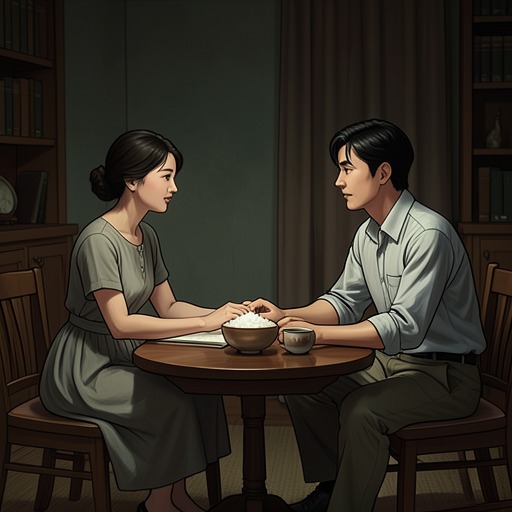
Through Ikuko, Nakamura finds work in a hospital, first as an orderly and then as a storeroom clerk, leaving behind the danger and poor returns of black-market work. He moves in with her partly to preserve his solitude, though he is grateful for her health and housekeeping. He also develops a habit of playing go with the hospital doctor Kameya Sato; over several years, the repeated games grow into trust and quiet friendship. In this postwar setting, ordinary employment and companionship take shape not as a clean escape from the past, but as a tentative routine built amid the consequences of Kobe’s destruction.