POW survivors’ postwar trauma
The Narrow Road to the Deep NorthPOW survivors’ postwar trauma is the prolonged aftermath of captivity and forced labour on the Death Railway, carried into homes and relationships long after the prisoners return. The novel presents it not as a single, uniform condition but as a pressure that recurs in habits, silences, guilt, drinking, and stories shared among former comrades. Jimmy Bigelow’s folded clothes and trembling hand make that persistence especially clear: what he cannot explain to his children is nevertheless shaping how he treats them.
Wartime foundations
The trauma begins in a system that reduces the prisoners’ choices to survival and work. Evans’ J Force is transported from Changi in closed rice wagons, twenty-seven men to a wagon, on a journey of five days without food. The men travel in cramped conditions, sleeping in turns and reaching Ban Pong after three deaths. The account establishes captivity as an imposed physical and social environment, not simply a sequence of battlefield memories.
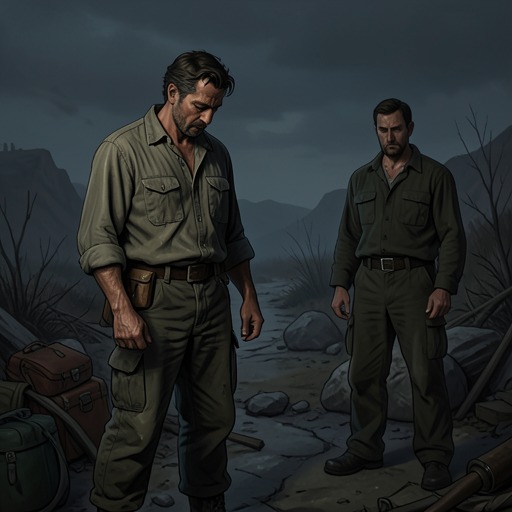
As the monsoon arrives, food becomes scarcer and the Speedo removes rest days, raises quotas, and lengthens shifts. Men are made to work both day and night; illness increasingly separates the sick from the dying rather than the fit from the sick. Prisoners clear jungle, break rock, and carry railway materials with rudimentary tools and their own bodies. Small provisions and repeated jokes offer moments of relief, but the dead accumulate and the hospital fills with men who are not expected to recover. This relentless routine gives the later trauma its material foundation: the war has reorganised what the men must notice, fear, and conserve.
Witnessing and moral burden
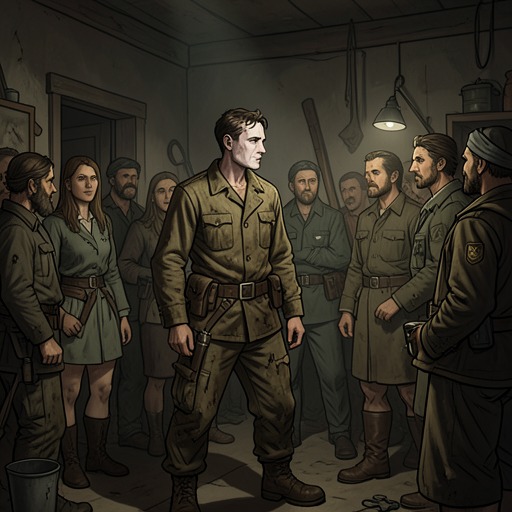
For Dorrigo Evans, the aftermath is bound to the responsibility he carried as commanding officer and senior medical officer. At a prisoners’ assembly in the rain, he reports that 838 men remain, including 67 in the cholera compound, 179 in hospital with severe illness, and 167 restricted to light duties. After further argument with Major Nakamura, he offers 400 men for railway work, knowing that his medical expertise cannot protect the sick from the demands imposed on them. His command is therefore both practical care and repeated confrontation with the limits of care.
That burden sharpens when Dorrigo witnesses the punishment of Darky Gardiner. He recognizes that the watching prisoners, himself included, have done nothing to stop it, and is disturbed by the sense that they have somehow assented to what is happening. The insight does not settle into a lasting explanation: the novel describes it as overwhelming and fleeting. Nakamura, too, turns back toward duty and the next day’s railway work, and soon forgets what he has witnessed. The passage links trauma to more than fear of harm. It also arises from helplessness and the knowledge of having been present when a fellow prisoner needed protection.
In camp, Dorrigo’s care continues through carrying, nursing, and operating on the men, even as he understands that more of them die each day. He sees prisoners lie, steal, and avoid work, but does not treat their conduct as proof that they have lost their humanity. His judgment remains shaped by the circumstances in which they are trying to survive. The difference between necessary survival and moral goodness is not easily resolved; what remains is his sense of responsibility to men he cannot save.
Jimmy Bigelow and the family home
Decades later, Jimmy’s insistence on having the folds of his children’s clothes face outward turns an obscure wartime fear into a domestic rule. He checks the drawers in his Hobart home and, when the clothes are folded the wrong way, pleads, orders, and finally refolds them himself. He does not punish the children for failing to comply. Yet his frustration and fear confuse them, because he cannot make the danger behind the rule intelligible to them. The narration connects the fold to the possibility that everything can change without warning, including a life.
The children experience Jimmy as a father who will not hurt them, even when he lifts a hand and then stops, trembling and visibly upset. They do not understand that he is trying to prepare them for dangers he cannot make safe or fully explain. The protective intention and the children’s confusion coexist: affection does not make the trauma legible, and a repeated household gesture carries a meaning the next generation cannot recover from the gesture alone.
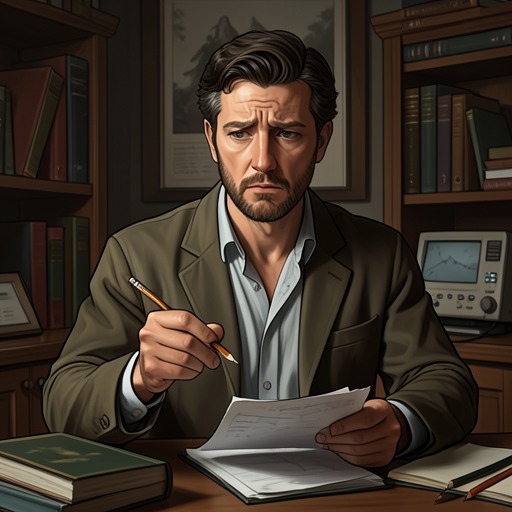
Jodie Bigelow’s Anzac Day school project exposes the same distance between family life and wartime experience. When she asks her father what the war was like, Jimmy initially says there is little to tell. He brings out an old bugle, makes a few sounds to amuse her, and then plays the Last Post before saying that this is about all anyone needs to know. The ceremonial music offers a brief, controlled form of communication, but his account remains deliberately spare. The scene shows a survivor’s silence not as an absence of memory but as a limit on what he can or will transmit.
Postwar lives and recurring memory
The novel presents no single course of recovery. Former prisoners die in car accidents, suicides, and from disease; some marriages falter, some men withdraw, and some drink heavily. Bull Herbert’s life includes a suicide pact with his wife that he survives, while Rooster MacNeice repeatedly speaks of being bayoneted. At a Broadmeadows RSL gathering, Gallipoli von Kessler challenges that account, illustrating how comrades’ memories can be disputed even within the group that shares the past. Their recollections are not a settled record, and the novel does not make every later hardship reducible to one cause.
The men also remember the shame and difficulty of explaining what happened. Army doctors advise them not to talk about it, and the experiences are set against better-known campaigns and captivity stories that seem easier to describe publicly. Chum Fahey names the prisoners’ status as enslaved, while Sheephead Morton observes that it is not something to boast about. Some former prisoners disappear from view; Ronnie Owen’s wife does not know for two years that he had been a soldier. These details show how silence can be reinforced by social expectations as well as by private inability to speak.
Drinking becomes one way the former comrades gather around what cannot be readily discussed. They drink together until, for that night, they feel more whole and can laugh at what happened. In that temporary shared state, the dead are present in memory: Lizard Brancussi, Wat Cooney, Yabby Burrows, Jack Rainbow, Tiny Middleton, and Darky Gardiner are recalled alongside the survivors. Their conversation does not undo loss or establish a complete account of the past. It briefly makes remembrance collective, allowing the men to hold the dead within a company that ordinary postwar life has dispersed.
Memory, commemoration, and what remains
The novel sets private and shared remembrance beside official commemoration. Locomotive C 5631, which travelled the completed railway in 1943, is displayed at Yasukuni Shrine in Tokyo; the shrine’s Book of Souls records more than two million names, including men convicted and executed for war crimes. Yet the locomotive’s plaque does not mention the railway’s horrors, and the names of the hundreds of thousands of labourers who died building it are absent. The number of deaths among non-POW labourers remains uncertain, and the novel stresses that many of their names are already forgotten.
This contrast enlarges the meaning of survivor trauma without turning it into a claim that every loss can be recovered or every memory made complete. The prisoners’ suffering persists in personal habits, family misunderstandings, disputed anecdotes, and the comrades’ attempts to remember the dead; at the same time, many victims remain outside any named memorial record. The book’s attention to Jimmy’s small, repeated rule and to the railway’s missing names places intimate memory and historical omission in the same field: both reveal how much of the past survives indirectly, and how much remains difficult to say.