Vichy French forces
The Narrow Road to the Deep NorthVichy French forces are depicted as a combatant in the Syrian campaign, where their fighting with Australian forces forms part of a lesser-known conflict within the wider war. The novel gives no account of their command structure or internal politics; instead, it shows their presence through the villages contested, the attacks they make, and the retreat that opens one battered settlement to the Australians.
Role in the Syrian Campaign
The forces appear in Dorrigo Evans’s recollection of an arduous journey with medical supplies and a small group of Allied troops. His party travels through a landscape marked by fighting, with no settled understanding of the route or the wider military situation. The Vichy French forces are part of the opposing force in this campaign, which the narrative presents as a small war that would later be largely forgotten.
Battles for the Villages
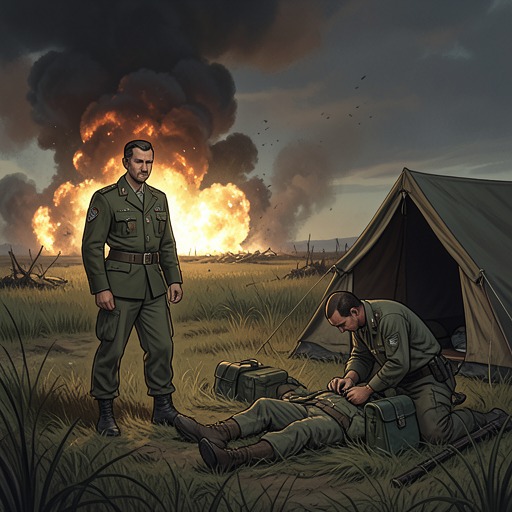
One village has been seized from the Australians by the French in a fierce fight. French mortars have struck the Australian defenders, and the scene encountered by Dorrigo’s party makes the cost of that battle plain. The account places the forces’ action within a larger pattern of villages changing hands amid the campaign, rather than describing a single decisive engagement.
Bombardment and Withdrawal
At the village where Dorrigo and his companions have been ordered to go, the French remain in occupation while the settlement is heavily bombarded by the Royal Navy. The ships destroy its buildings methodically, house by house, as the Australians watch from a distance. At noon the French unexpectedly withdraw. The Australians then advance across the damaged ground, but the withdrawal does not turn the place into a clean military victory: the settlement is left shattered by bombardment and fighting.
Narrative Significance
The Vichy French forces are rendered through the uncertain, ground-level experience of men moving between orders, damaged villages, and changing fronts. Their appearances help establish the Syrian campaign as one episode in a much larger war, while the abandoned and bombarded settlements show how little a shift in control can undo the destruction left behind. The account supplies no broader portrait of the forces beyond these encounters, keeping its focus on the immediate consequences of combat for those crossing the battlefield.