Asher's time-reversal ritual
The Night CleanerAsher's time-reversal ritual is the decisive attempt to undo the course of the war by combining Asher's magic with the divine blood of Phillip and Dorian. Proposed as a difficult but possible return to an earlier point in history, the ritual turns their shared ancestry into a means of changing the present; its completion is followed by a world that appears restored to normal.
Purpose and Conditions
The proposal rests on a distinction between those who carry divine power and those who are themselves descended from the gods. Phillip points out that he and Dorian possess the blood of the ancient Greek gods, while Asher, holding Echo, is the person whose magic may make that inheritance useful. The plan therefore depends on a specific combination: divine blood from the two men and magical ability from Asher. It is not presented as a power either bloodline can exercise alone.
The proposal comes with an acknowledged uncertainty. The speaker explains that future visions show Asher inconsistently: sometimes he can be seen, sometimes he cannot. That irregularity does not establish that the ritual will succeed; instead, the plan is described as difficult, though not impossible. The uncertainty makes Asher's role more than a convenient source of magic. The future itself has not yielded a clear answer about him, yet the characters consider his help their route to acting on the past.
The possible reach of the spell is expressed through several points of return. It might take events back to before Rose arrived in Dorian's coop, before Esme and Dorian became a couple, or before the war. These alternatives give the proposal personal as well as historical stakes: the target is not merely the conflict's end, but an earlier world in which relationships and the events leading to the conflict have not yet taken their known course. The evidence presents these as possibilities, not as a settled choice of a precise date or moment.
Consent and Preparation
Dorian is the first to ask about the catch, voicing the practical concern that accompanies a plan with consequences not yet specified. The question briefly holds the group at the threshold between possibility and commitment. The exchange does not provide a detailed account of the cost, but it shows that the risk is recognized rather than ignored.
The decision that follows is affirmative: the participants agree to proceed. This moment matters because the ritual is not initiated as an accidental effect or an imposed act. Faced with an uncertain means of changing the past, the characters choose it. The decision brings the discussion of blood, magic, and possible destinations into action, while leaving the precise terms of the outcome unresolved until the spell takes effect.
The Ritual's Performance
Asher invokes the elements of time and space, placing the attempt within a cosmological frame rather than treating it as an ordinary use of power. His spell then names three kinds of blood: human, divine, and immortal. The sequence joins the human participants to the supernatural inheritance at the heart of the plan, making the mixed blood already brought together central to the ritual's operation.
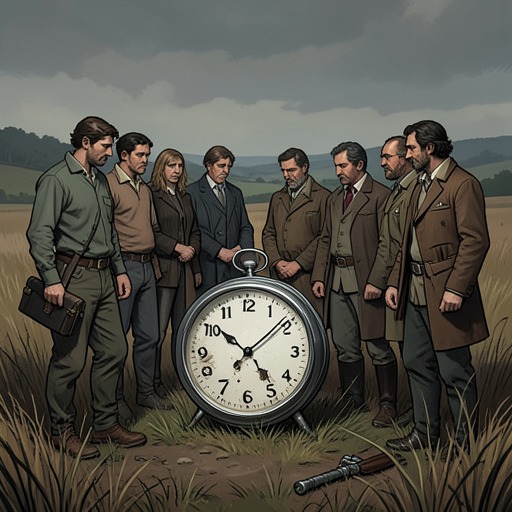
The invocation calls on the keepers of time and space and describes tracing a line into the past. Asher uses a sword of lightning as part of the rite. It begins to glow; he struggles to move it, then drives it into the ground where the participants' mingled blood lies. The action gives the spell a visible point of contact: a spoken appeal to time and space is joined to the blood and to the sword striking the ground. The narration marks the act as physically overwhelming for the first-person speaker, but does not detail an injury or explain a further price. The ritual's completion is abrupt: after the spell, the account says simply that it is over.
The Return to an Ordinary World
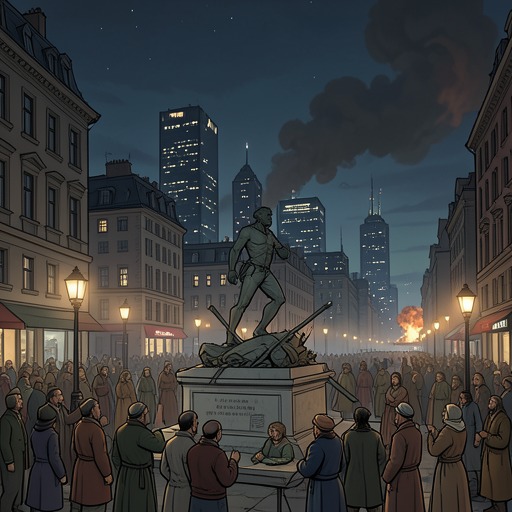
Phillip's voice is heard after the ritual, and the speaker sits up to look around. The scene has changed sharply. The sky is blue, the sun is shining, and people walk as though they had not been part of a supernatural war. Phillip, too, appears different from the person in the ritual scene: he wears clean clothes and seems notably more cheerful. These details present the aftermath not as a continuation of battle, but as a return to everyday conditions.
That return is conveyed through contrast rather than an explanation of the mechanics. The invocation had called for a path into the past; afterward, daylight and ordinary public movement provide the clearest evidence that the world has been reset. The people around the speaker appear not to remember the supernatural war, although the scene does not specify what each person remembers or describe the exact temporal point to which events have returned. Phillip's presence links the new scene to the participants who made the attempt, while his changed appearance reinforces the sense of a different circumstance.
Narrative Significance
The ritual changes the story's relation to time from a forward-moving struggle into an opportunity to begin again. Its stakes are deliberately broad: the proposed reversal could precede the war itself, as well as events in the lives of Rose, Esme, and Dorian. The result therefore matters not only as a response to conflict but as a possible alteration of the relationships and decisions that preceded it. The scene confirms a return to an apparently ordinary world without fully accounting for all the consequences, leaving the contrast between the remembered catastrophe and the visible normality to carry the force of the reversal.
The ritual also depends on cooperation across different kinds of power. Phillip and Dorian contribute divine blood; Asher contributes magic; and the proposed intervention is accepted despite acknowledged uncertainty. The spell's final image—the sword driven into the ground where the blood has mingled—concentrates those conditions into a single act. What follows is not a narrated victory over an opponent but a changed setting: a bright sky, untroubled passersby, and Phillip standing in clean clothes. That quiet reset makes the ritual the hinge between the world shaped by the war and the possibility of a different past.