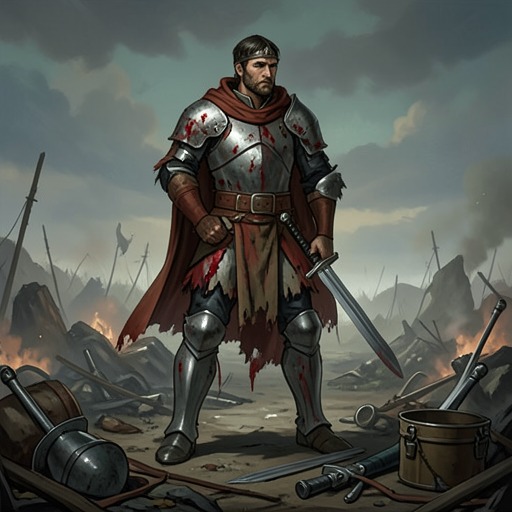
Dorian and Apollo’s Father-Son Relationship
The Night CleanerDorian and Apollo’s Father-Son Relationship is a formative and painful bond: Dorian serves his father’s domain as a healer and yearns for his approval, but Apollo belongs to the gods who treat the demigods as expendable and choose Draco instead. The rupture helps drive Dorian’s hatred, his attempt to oppose Draco, and his plan to let humanity collapse; when he later witnesses the gods’ final empowerment of Draco, he sees the divine order leave him behind once more.
Identity and Early Bond
Dorian is Apollo’s son, and the story establishes that connection through both inheritance and service. Apollo is the god of the sun, music, medicine, and prophecy; Dorian, in turn, had been a healer who used his powers to help mankind and did what his father asked. Even after describing Apollo harshly, Dorian admits that he yearned for his approval. His service therefore carries two meanings: it helps people, and it is an effort to be recognized by a father whose regard he wants.
That hope exists within a family structure already made precarious by the gods’ treatment of their children. Dorian recalls that demigods were left for dead and murdered by one another and by their parents. He survived only because he had taken a toxin that made him appear dead; when he awoke days later, every other demigod had been slain. Apollo’s parenthood is thus set against the fate of the demigod generation as a whole: the gods’ children are not protected by their divine ancestry.
The Choice of Draco
Dorian’s understanding of his father’s world changes when the gods choose Draco as their leader of heroes. He witnesses them give Draco their power and mark him with their divine symbols. Dorian’s recollection concentrates on the choice itself: Draco is made the chosen one over the gods’ own children. For a son who had tried to earn Apollo’s approval through healing, this public preference turns personal longing into a grievance against the gods and their chosen champion.
Dorian’s anger and jealousy grow into hatred of Draco. He seeks to destroy him, only to discover that Draco is immortal, while even demigods would eventually die. Dorian then forms a plan with three linked aims: to become immortal, prevent Draco from succeeding in his mission, and let humanity fall into chaos. The narrative connects that plan to Dorian’s rejection by the gods, but it also shows the scale of his response: a wound within a family becomes opposition to the protection of mankind.
The Father Seen Again
After weeks of travel, Dorian finds work as a healer in General Draco’s army, treating the soldiers and restoring them to service. He and Draco have not yet met. The life is not what Dorian wanted, but it is tolerable until he sees Apollo standing with the other gods beside Draco. Dorian hides behind a tree, hoping Apollo will not sense that he is alive. Apollo does not even glance in his direction.
The scene gives their distance a concrete form. Dorian is close enough to see his father, yet remains concealed and unacknowledged; the son’s hope is reduced to avoiding detection, not receiving recognition. He realizes that the gods look sick and are dying because humanity, repelled by the killing of the gods’ children, has lost faith in them. Dorian’s reaction is that they deserve this consequence. His judgment binds the family betrayal to a larger reversal: the gods’ treatment of their children has cost them the belief on which their existence depends.
Draco’s Empowerment and Dorian’s Exclusion
With one last chance to save the humans they love more than their own blood, the gods tell Draco that he is their chosen protector of mankind. They intend their powers to enter mortal blood, so that Draco can train and lead those who receive them. Dorian listens as the gods empower Draco, one by one, and watches them disappear after the last has given him blood and power. The act repeats the earlier choice of Draco, now as the gods’ final legacy and a concrete transfer of their authority.
The outcome sharpens Dorian’s place in the family. The gods have made Draco immortal and charged him with protecting mankind, after exterminating the demigods; Dorian is the one survivor they have not chosen. When Dorian later explains his survival to Draco, he says he drank a tonic that made him seem dead, woke to find the others gone, and had served as a healer in battle before witnessing the gods’ end with Draco. He identifies Apollo as his father when Draco guesses from Dorian’s light and medicinal gifts, and confirms that he was not among those who took part in the demigods’ destruction. Draco answers that he knows Dorian was the chosen one while the gods killed their own children, underscoring how the same divine history shapes both men’s positions.
Significance of the Relationship
Apollo’s relationship with Dorian is not developed through a reconciliation or an exchange between father and son. Instead, it is told through Dorian’s remembered acts of service, his longing for approval, the gods’ preference for Draco, and Apollo’s failure to notice the hidden survivor. That structure makes absence consequential: the father’s silence and the gods’ choices become part of the history from which Dorian’s hostility grows.
The bond also connects intimate rejection to the story’s wider conflict over power and responsibility. Dorian once used his gifts as a healer in service to humanity, but the destruction of the demigods and Draco’s elevation turn that service into resentment and a plan for human collapse. Apollo’s role is therefore significant not because he is shown directly directing every later choice, but because he belongs to the divine order that denies Dorian the approval and protection he sought. The son survives that order, sees it vanish, and carries its consequences into his opposition to Draco.