Dorian’s villainous state
The Night CleanerDorian’s villainous state is not merely a role assigned by his enemies: he names himself the villain he has been for more than a millennium, and acts on that identity by opposing Hero Society and calling the gifted to follow him. But the state is not his final word. His confrontation with Draco exposes the distance between shared blood and chosen kinship, while grief for Esme makes his denial of love increasingly untenable. After time is reversed, Dorian says his old course is finished and accepts mortality, turning the end of villainy into a choice to begin again rather than a claim that the past can be undone.
Identity and Self-Definition
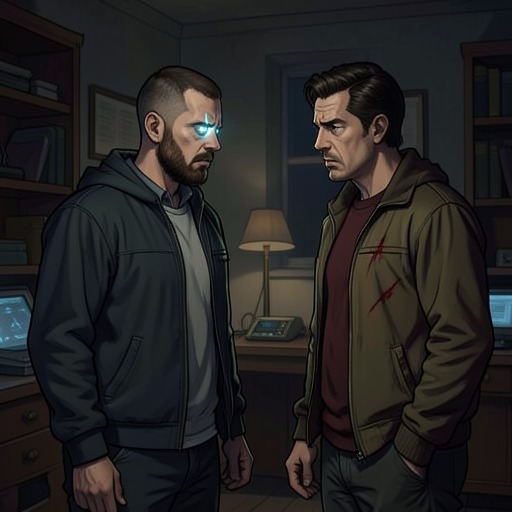
Dorian describes himself as both light and darkness, but the declaration does not reconcile those sides. Addressing Draco as a brother, he immediately repudiates the kinship: they share the blood of Apollo, yet Dorian regards Draco as an enemy. The exchange establishes a distinction central to his villainous state. Divine blood does not oblige Dorian to recognize a bond, and a name for goodness cannot substitute for the choices he has made.
His most direct account of that identity is historical in scale: he says he has been the villain in the story for more than a millennium. The statement presents villainy not as a temporary lapse or a recent response to conflict, but as the role through which he understands a vast span of his life. It also makes his later decision to stop especially consequential: ending the role requires more than changing sides in a single confrontation.
Opposition to Hero Society
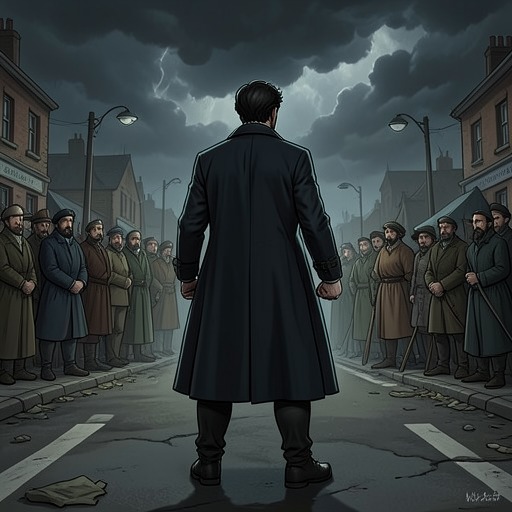
Dorian’s villainy takes political form in his appeal to the few who remain in a nearly empty city to resist him. He tries to persuade them that Hero Society is over and that they should join him, framing his offer as freedom to live without fear or persecution. He reminds the gifted that humans had been willing to hurt them only days earlier and argues that they were abandoned even as they stand in defense of those same people.
His appeal reaches beyond immediate grievance. Dorian condemns the gods as fools and links their deaths to humanity’s abandonment of them, warning his listeners not to follow the same fate. The speech turns remembered betrayal into an argument for allegiance: if the gifted have been discarded, he urges, they should cease defending the order that discarded them. Yet Dorian expects no change of mind. The defenders remain silent, and he recognizes that they will not waver because they see the conflict as a choice between good and evil. He rejects that binary as an adequate account of life, insisting that good people can do bad things for good reasons, and the reverse. His analysis may complicate the moral categories of the confrontation, but it does not erase his own responsibility for the opposition he leads.
Love, Denial, and Remorse
Dorian’s self-conception begins to fracture when Phillip confronts him with the connection between Esme’s death and the grief awakened by Rose’s death. Phillip argues that Dorian loved Esme, lost her, and pushed the loss far back into his mind until hearing Rose’s last breath brought those feelings forward. Dorian roars that he did not love Esme, but he recognizes the denial as a lie. He acknowledges that he found love where it had been before him all along, even though he had not admitted it.
Recognition does not immediately produce repair. Dorian tries to push away regret and sorrow and continues walking when Phillip urges him to help change the Fates’ design and bring the dead back. Looking up at the stars through a false night sky, he imagines that Esme would see him as a monster and doubts she could still love him. He understands that he is choosing to leave things as they are because he fears she would no longer love the villain who killed her friends and took away the light. The contrast is sharp: he can finally acknowledge his love, yet that acknowledgment does not make him willing to face what his actions have made of him. His attachment to Esme and his fear of judgment keep him moving away from the chance Phillip offers.
A New Path and the End of Villainy
After time is reversed, Dorian tells the group that everyone is alive and offers to explain where they are, but Phillip first demands to know whether Dorian means to return to his villainous ways. The question is not abstract: Draco and Asher tense, prepared to fight again depending on his answer. Dorian replies that it is done. He accepts the chance to start over and learn from past mistakes, and the conversation frames his change as giving up hate for love rather than claiming that his earlier conduct never happened.
The decision reaches beyond his alignment with the others. When asked whether he will give up immortality, Dorian agrees. He considers immortality painful and does not want to outlive Esme after experiencing the feelings he had tried to avoid. His new path therefore entails accepting mortality, not merely promising better behavior while retaining the condition that separated him from ordinary limits. Villainy ends here as a stated commitment joined to a concrete relinquishment: Dorian chooses a finite life and the possibility of happiness over continuing as an immortal adversary.
Meaning of the Villainous State
The supplied scenes place Dorian’s villainy between two ways of understanding the world. In the city, he argues that moral life exceeds a simple division between good and evil; in private, his own history makes that complexity no excuse for evasion. He admits the love he denied, recognizes the harm associated with his past, and fears that Esme would judge the person he became. The narrative thus gives his self-description both force and limits: he has occupied the villain’s role for centuries, but that role does not prevent him from changing course.
The ending does not promise that love reverses every consequence. Dorian initially refuses Phillip’s proposal to alter the Fates’ design, and his eventual fresh start follows time reversal, when the others are alive again. What changes is his response to the renewed possibility: instead of defending his old identity, he declares it over and accepts the vulnerability of mortality. His villainous state is therefore concluded not by a denial of what he has done, but by a decision not to continue being the person who did it.