Draco's immortality
The Night CleanerDraco's immortality is a divinely granted condition that distinguishes him from the abandoned demigods and helps shape the central conflict with Dorian. The gods choose Draco to lead their heroes, give him their power, and mark his back with their symbols; much later, at Seahill, he makes clear that immortality is not a universal demigod trait, explaining that Dorian has only been living on borrowed time. The apparent certainty of Draco's own survival also stands beside Rose's fear that she might die and leave him behind.
Identity and divine origin
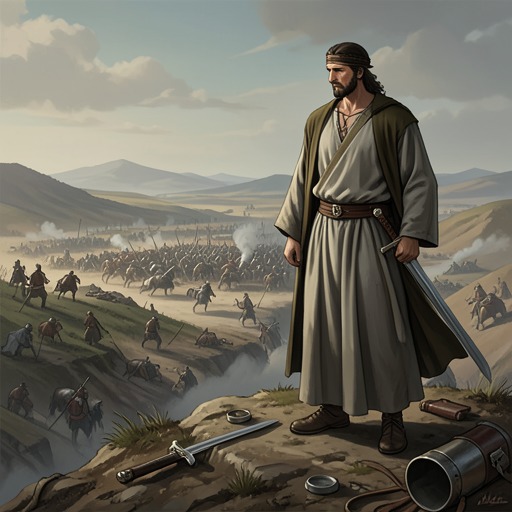
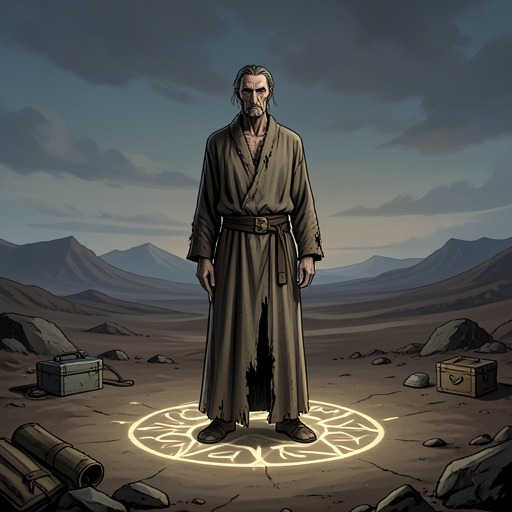
Draco's immortal state begins with the gods' choice of him as their leader of heroes. Dorian, who survives the slaughter of the demigods by using a toxin that makes him appear dead, later recalls witnessing the selection firsthand. His account stresses the painful contrast: the gods have deemed demigods expendable, yet they choose Draco over their own children.
The bestowal is both a transfer of power and a visible mark of divine favor. The gods give Draco their power and burn their symbols into his back with their blood. This scene establishes the supernatural basis of his exceptional status while making the gods' decision legible on his body: the same divine order that abandons its demigod children singles Draco out as its chosen leader.
Consequences for Dorian and their conflict
Draco's immortality becomes an obstacle around which Dorian builds his revenge. Dorian says that his hatred and jealousy grow after the gods' choice, and that he seeks to destroy Draco only to discover that Draco is immortal. The discovery forces Dorian to change the scale of his ambition: he drafts a plan to become immortal himself, prevent Draco from succeeding in his mission, and leave humanity to its own chaos.
The contrast between their conditions does not mean that demigods are incapable of surviving for a long time. At the climax at Seahill, Dorian is near death, and Draco explains that demigods are not immortal and that Dorian has been living on borrowed time for ages. His explanation distinguishes Draco's divinely granted immortality from Dorian's prolonged but finite life. What Dorian had treated as an absolute advantage in his enemy is therefore not a property of demigod existence in general.
Relationships and the limits of security
Draco's immortality also frames Rose's fear of mortality. After Rose admits that she does not want to die, Draco comforts her by promising that she will be protected and that Phillip will not allow her to die. He believes that she cannot lose him because he is immortal, but recognizes that her death would still mean losing him from her perspective.
That exchange gives the state an intimate consequence beyond the conflict with Dorian. Draco's security is not shared by Rose, and his confidence in his own survival cannot remove her fear of dying. His reassurance therefore reveals a limit in what immortality can promise: it can protect Draco from the fate he fears, but it cannot guarantee a future in which the people he loves remain beside him.
Significance in the story
Draco's immortality is at once a divine privilege, a political distinction, and a source of dramatic contrast. The gods' selection makes him their empowered leader while intensifying Dorian's sense of rejection; Dorian's response turns that disparity into a plan for revenge and self-transformation. At Seahill, the difference between Draco's immortality and Dorian's borrowed time becomes explicit just as Dorian is dying, recasting their long conflict as a collision between a genuinely immortal figure and a demigod whose life has only been extended.
The story also places that apparent permanence against the vulnerability of Rose. Draco's condition may make him seem beyond loss, but the people around him remain mortal, and their possible deaths shape his hopes and fears. Immortality thus defines neither a shared protection nor an uncomplicated happy future: it is a rare status that separates Draco from others even as he tries to imagine a life with them.