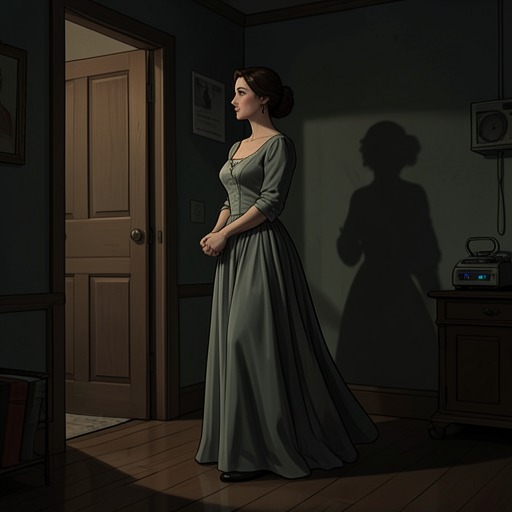
Esme and Phillip’s Friendship and Breach of Trust
The Night CleanerEsme and Phillip’s Friendship and Breach of Trust is a bond of family-like affection strained by a deliberate secret: Phillip knew about Dorian’s role and told the others not to warn Esme. He asks her to forgive the people who kept silent, insists that her love may be the only chance to change Dorian, and then must live with the consequences of that gamble when Esme dies. Their friendship offers comfort and faith, but it cannot make the choice harmless or the loss reversible.
Trust and the concealed truth
After Dorian kisses Esme in front of everyone during their shift, she leaves and turns toward Hero Society headquarters. On the way, she realizes that the people she considered friends, even family, have hidden the truth from her. They did not know that she was involved with Dorian, she recognizes, but she believes they could still have said something. The discovery unsettles her confidence in the group as well as her feelings for Dorian: the silence has left her to confront a dangerous relationship without the warning she thinks her friends could have given.
Rather than continue to headquarters to demand answers, Esme goes to Grand Bay Park and sits beside the water. Phillip finds her there. She tells him that she does not know what to feel, and he acknowledges the painful fact at the center of the crisis: she has fallen for Dorian. His regret does not erase the breach; it shows that he understands the emotional cost of what has happened, even as he continues to defend the decision behind it.
Phillip’s gamble and Esme’s choice
Phillip explains that the others stayed silent because he told them not to. He frames their silence as an attempt to protect Esme, emphasizing that they care for her and regard her as one of their family. But his explanation also establishes his responsibility: he was not merely another friend who failed to speak up. He directed the concealment, making his protective intention inseparable from the choice that deprived Esme of the truth.
He believes that Esme alone can change Dorian, and describes her love as powerful enough to become a legend if she has faith in it. Esme rejects the comfort of that romantic ideal: to her, this looks less like the love of legends than a tragic fate in which she must either lose Dorian or lose her humanity. Phillip nevertheless asks her to forgive the others, offering himself as the person she may hate instead. His plea places the group’s loyalty and his own guilt directly in their conversation rather than pretending that love has made the secret acceptable.
Esme answers that she does not hate him. She moves closer, wraps her arms around him, and lets him hold her while they remain together for several minutes. The embrace restores their physical closeness without undoing the breach or settling the danger she faces. When she asks what she should do next, Phillip tells her to live hard, love strong, and keep faith. Watching the sun rise over the sea, Esme decides to follow his counsel: she doubts that her love can change Dorian, but chooses faith over what she sees as destruction. Their friendship thus becomes part of the resolve that carries her forward, not proof that the future will be safe.
Loss and shared responsibility
After Esme’s death, Phillip’s earlier hope becomes a source of grief. Rose confronts him with the consequences of his instruction, asking who might die next because he chose this future and pointing to Esme’s love for Dorian and her sacrifice to save his life. She argues that the group might have prevented what happened if Esme had known Dorian’s role, and stresses that they did not even know Esme had powers. The concealment was therefore not simply a painful omission in a friendship: it left the others without knowledge of what Esme could do, while helping shape the circumstances in which she used that power.
Phillip does not answer Rose; his customary smile has been absent since the night Esme died. Later, he breaks down and says that Esme was their only chance to make things right. The hope he had placed in her love now appears beside the fact of her death, and his silence reads as grief rather than triumph or vindication. His original reasoning has not been shown to succeed: the passage presents his belief and the loss that follows, not a claim that his plan saved Esme or repaired everything.
Draco tells Phillip that the burden of Esme’s death does not rest on Phillip alone; it belongs to Draco and Dorian as well. The reassurance does not absolve Phillip of having ordered the secret, but it resists making him the sole cause of a tragedy shaped by several people and their choices. Draco also recognizes that Dorian loved Esme, whether or not Dorian understood or acknowledged it. The relationship’s aftermath therefore enlarges the meaning of Phillip’s gamble: the love he trusted was real, but its reality could not protect Esme from the fatal cost of the events around her.
What the friendship holds
The relationship moves through three distinct states: concealed trust, intimate confrontation, and bereavement. At Grand Bay Park, Phillip still has the chance to explain himself and Esme can choose to embrace him and act on his advice. After her death, that exchange survives only as the origin of a painful question about what might have been prevented. Their closeness remains evident, but affection does not erase the difference between Phillip’s protective motive and the consequences of his command.
Phillip’s foreknowledge and Esme’s uncertainty sharpen that difference. She wishes she could see the path ahead as he can, while he asks her to trust love without being able to offer certainty that it will save her or change Dorian. The friendship consequently becomes a channel for both care and risk: Phillip’s faith gives Esme a way to continue, but his decision to control what she knew helped expose her to a choice she might otherwise have faced differently. Afterward, grief binds Phillip to the loss without converting that cost into a simple judgment of either innocent protection or deliberate harm.