Esme’s First Healing
The Night CleanerEsme’s First Healing is the discovery of her ability to mend injuries, first recognized after she saved a squirrel her dog had caught. The gift gives her a way to help others, but its cost emerges alongside its promise: every healing shortens the golden line marking her life. That tension shapes her choices from her twin Eli’s illness to the later cases she treats and, ultimately, her decision to spend the rest of her life saving Dorian.
Discovery and the Sign of the Thread
The first sign of Esme’s unusual nature appeared on her sixteenth birthday, when a golden shimmer became visible in a vein along the middle of her left arm. After she healed the injured squirrel, she and Eli began to connect that mark to her power. They observed that the line grew shorter each time she healed someone. The change was usually small, but it made the ability impossible to treat as cost-free: the visible measure of her life was diminishing with each use.
Esme and Eli searched for an explanation and found an account of The Fates as keepers of human destiny and life. In their understanding, one sister spun each person’s thread, another determined its length, and the third cut it to decide how that person died. They also read that the gods’ golden blood, called ichor, meant their threads could not be cut. The siblings could not establish whether this account fully explained Esme’s condition, but they feared the consequence they could see: when her golden line vanished, something terrible would follow. Their uncertainty did not lessen the practical risk of healing; it gave that risk a framework and a name.
Eli’s Refusal and the Cost of Care
The danger became personal as Eli’s leukemia worsened. Esme could potentially save him, but he repeatedly refused her healing because he would rather have less time with her as his brother than live without her. By the time the illness reached its final stage, she understood that using her gift against his wishes could cost her his forgiveness as well as years of her life. The ability therefore placed care and consent in direct tension: she could act, but she could not make the decision harmless simply by wanting to save him.
At his hospital bedside, Esme pleaded to heal him while he lay connected to medical tubes and wires. Her grief was intensified by the knowledge that the bond between them would end soon, yet the golden line on her arm remained a reminder that saving him might also bring her own death nearer. She did not heal him. Eli’s refusal held, and his death turned the power’s limit into an intimate loss: Esme possessed the capacity to heal, but not the right to erase another person’s choice. In the aftermath, she understood the gift as a curse when it could not save the people she loved most.
Healing as Practice and Hope
Eli’s death did not make Esme stop healing. In her work at the hospital, she encountered injured people in urgent circumstances, including men brought to the emergency department after a fight. She also saw patients benefit from recovery: one man told her that therapy had helped him regain the use of his legs, and his progress made her proud of her gift. The account of his improvement shows why Esme continued despite the cost. Healing was not only an abstract power or a source of danger; it could make a concrete difference in another person’s life.
Her care extended beyond emergencies. While working in the maternity ward, Esme helped deliver two babies and supported three women in postpartum rooms, returning to ease the new parents’ worries. These acts of ordinary professional care sit beside her supernatural healing without replacing it. The ability’s burden did not define every useful thing she did: she also helped through nursing work, attention, and reassurance. Yet the prospect of a shortened life affected how she imagined her own future. She feared she might not live long enough to see children grow up, and that fear made the possibility of having a family difficult to embrace.
Repeated Choice and Narrative Significance
As the story continues, Esme’s healing becomes a pattern of deliberate care rather than a single discovery. She heals people who are near death, including Charles and Leon, and restores Charles’s ability to use his legs. She keeps these interventions secret from Hero Society and does not seek recognition for them; despite believing that healing may have cost her years, she says she would make the same choices again. The secrecy protects the private character of her actions, while the repeated willingness to help shows that knowledge of the cost never turns into indifference.
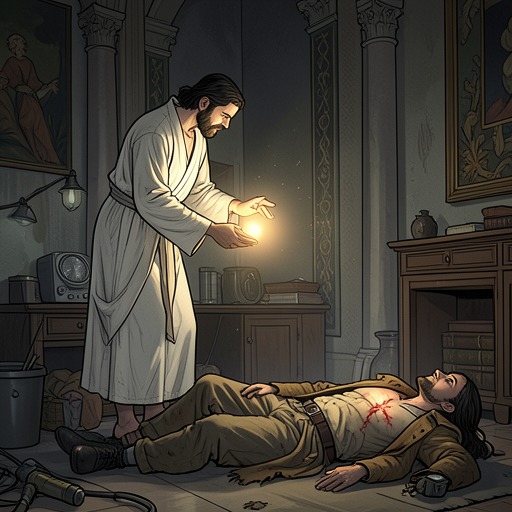
The pattern reaches its most consequential point when Dorian is near death. Esme removes the metal lodged in his chest and uses her power to heal him, recognizing that her remaining life is being spent in the process. She continues even when Rose warns that she is giving too much. The act does not cancel the loss of Eli or prove that healing can always overcome death; it brings the gift’s central contradiction to its fullest expression. Esme can preserve another person’s life only by accepting the danger to her own, and she chooses that sacrifice because she cannot bear to lose someone she loves when she can still act.