Light and darkness motif
The Night CleanerThe Light and darkness motif gives the story’s supernatural conflict a visible and moral vocabulary. Light can be intimate, remembered, and life-giving, or gathered as overwhelming power; darkness can register grief and concealment, become Dorian’s chosen identity, and finally name the opposition the heroes undertake to face. Its decisive movement is from a private sky emptied by loss to an eclipse used to announce a new age, then to a collective promise to fight the shadows.
Grief and the missing stars
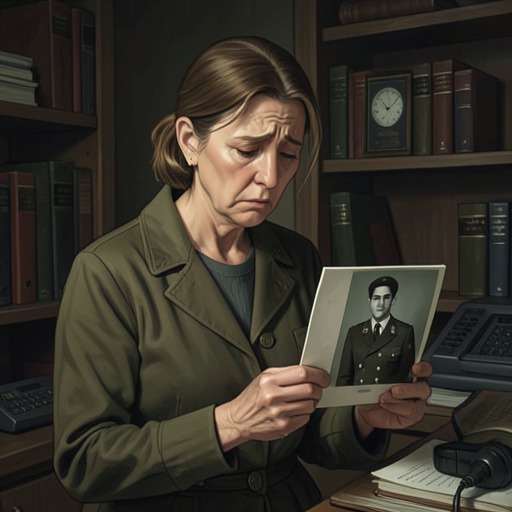
After Esme dies, Dorian cannot stop thinking about her tender expression as she healed him by pushing her power and life force into him. The memory binds light to an act of care: her power was not merely something she possessed, but something she gave, at a cost that makes the recollection inseparable from loss. The remembered phrase, “Look to the stars and find my love in the dark,” turns the night sky into a possible place of connection beyond her absence.
Dorian answers that image by going to the roof of his mansion to stare at a dark, cloud-covered sky. He insists that he did not want Esme’s love, yet the insistence cannot keep him from seeking the stars associated with her words. The clouds appear to him as if Esme had taken their light with her into the afterlife. He admits that he no longer knows what awaits people after death, leaving the image suspended between hope and uncertainty: the dark holds the memory of her, but offers no confirmed answer about where she has gone.
Darkness as public declaration
The motif shifts from private bereavement to political spectacle when Dorian announces that gifted people need no longer remain hidden. He presents their release from the shadows as a change in their public condition and tells the world it may fear them or join them. His declaration ties that change to the solar eclipse of the century: darkness will cover the earth, and the age of the gifted will begin. The celestial event therefore becomes both a literal setting for his plan and its emblem, making the transition from concealment to public power coincide with the loss of daylight.
Dorian’s announcement is not a promise of benign liberation. He warns heroes who try to stop his group that they will lose everything, turning the contrast between shadow and visibility into an ultimatum. To the gifted, leaving the shadows means being set free; to their opponents, the same shift threatens destruction. The motif’s political force lies in that divided meaning: exposure may constitute freedom for one side and danger for another.
The eclipse and the appropriation of light
As the eclipse begins, Dorian’s body glows with the sun’s radiation. He absorbs every ray he can get, drawing sunlight from around the globe until the earth is left in darkness. The scale of the action turns the motif into a physical mechanism: light is no longer only a sign of life or hope, but a resource Dorian can collect and concentrate within himself. When the moon completely covers the sun, the night takes over; with the last sunlight absorbed into his veins, his vision becomes tinged with a glow and a subtle current runs over his skin. Darkness outside and radiance within him arrive together.
Dorian describes the darkness as lasting one solid day, not indefinitely. He says he is not willing to doom the planet by keeping the light from plants until nature dies, but he wants suffering for others because his people have suffered and he has suffered. Keeping the world alive is, in his account, necessary to that purpose. The limitation does not make the act merciful: it shows that his use of light is calibrated to inflict suffering without destroying the world in which that suffering must be felt. His choice converts the eclipse from a natural interval into an instrument of retaliation.
Rival claims to light
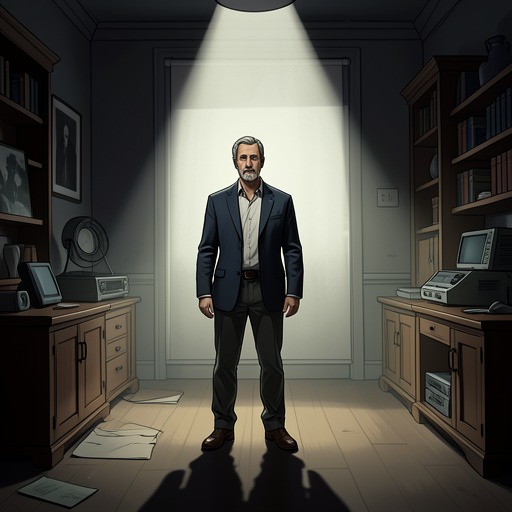
During the confrontation on the rooftop, Draco asks Dorian to return to the heroes’ side, invoking the possibility that they might be light in the darkness together. His appeal gives the motif a relational meaning as well as a cosmic one: light could be something shared between the two men rather than seized by one. Dorian refuses the invitation. He declares himself both light and darkness, spits out the word brother, and insists that the two are enemies despite sharing the blood of Apollo.
That refusal makes Dorian’s self-description deliberately unstable. He has taken the sun’s light into himself, but he also identifies with darkness and rejects the moral division Draco’s appeal offers. He further calls himself the villain in the story and says he has been one for over a millennium. The statement frames villainy not as a temporary misunderstanding that the appeal can undo, but as the role Dorian claims for his long history. At the same time, Draco’s effort to find humanity in him shows that the language of light remains contested: one character treats it as a possibility of shared return, while the other uses it to name a power inseparable from his chosen darkness.
The heroes and the shadows
The motif persists after the eclipse confrontation in the Hero Society motto, voiced by Rose: “We are heroes in the darkest times, and we will always rise to fight the shadows of the world of mankind. It’s what we do.” The line does not promise that darkness will disappear or that the heroes already possess untroubled victory. Instead, it defines heroism as action undertaken in darkness, with rising and fighting as repeated commitments rather than a final triumph.
The distinction between the heroes’ language and Dorian’s claim is sharp. He makes darkness part of his identity and uses the eclipse to impose it on the world; the motto treats shadows as something to oppose together. Yet the ending leaves the conflict open: the group cheers Rose, Dorian rolls his eyes, and his grip tightens around the hand of the first-person narrator, who predicts that they will make him one of them soon enough. The motif thus closes not with darkness overcome, but with a possible future of inclusion held against Dorian’s declared villainy. Across grief, eclipse, confrontation, and renewed resolve, light and darkness remain forces that characters interpret and choose—not fixed guarantees of goodness or defeat.