Love conquers all
The Night CleanerLove conquers all is the novel’s redemptive principle: Esme’s faith in Dorian survives his villainy and helps turn a world headed toward loss into one where the dead are restored, old enemies can begin again, and their love endures beyond the crisis. The idea is not simply that love excuses harm; it is that love can make change and repair possible when joined to action and accountability.
Love at the Turning Point
As the group prepares to reverse time, Dorian’s willingness to do whatever it takes to bring Esme back outweighs the hatred and bitterness he has held toward the narrator. The moment reframes his hostility: it has not vanished, but it is no longer stronger than his love for Esme. The narration draws the meaning plainly from this choice, declaring that love has saved them all.
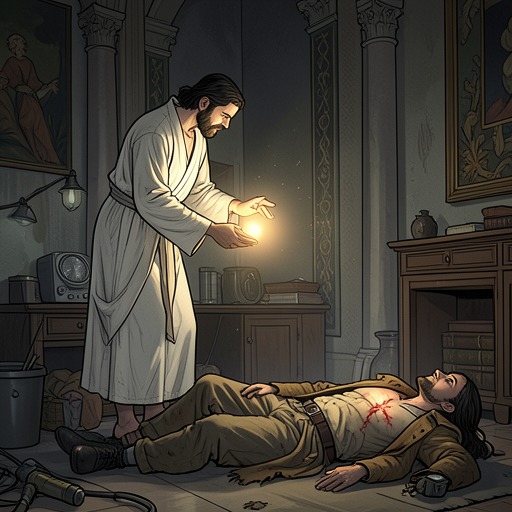
The reversal depends on more than feeling. Asher invokes the elements of time and space and raises the sword, while Dorian and Draco help him break into time and send events back to a point before the trouble began, when everyone was alive. Love is therefore linked to a concrete, shared act that changes the outcome. The restoration gives the survivors their memories as well as their lives, so the past is neither erased from their understanding nor allowed to dictate the future.
Forgiveness and a Second Chance
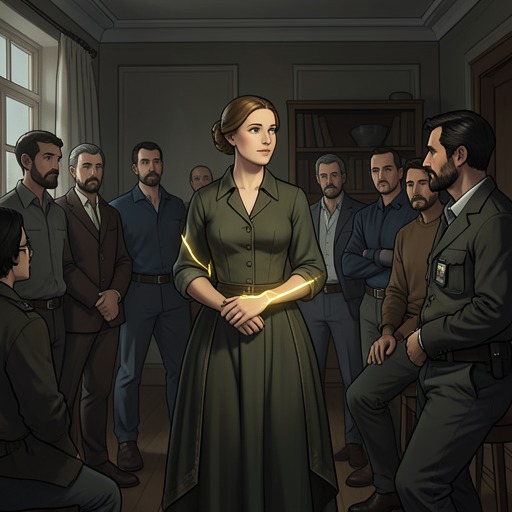
After the reversal, the group’s response gives love a social consequence beyond the couple. Phillip explains that Dorian has let go of his villainous ways and invites him to join their family. He asks the others to find it in their hearts to forgive him, describing him as the hero who saved them all. The invitation does not deny Dorian’s earlier actions; it makes a future with the group conditional on the possibility of change and a fresh start.
The new timeline is presented as an opportunity to learn from mistakes and become the heroes they were meant to be. The narrator sees the others agree and recognizes the rarity of this do-over. Love’s reach thus extends from private devotion into a collective ethic: the restored group can choose not only to survive together, but to rebuild together.
Esme and Dorian’s Reunion
When Esme and Dorian reunite, their intimacy gives the theme its most personal expression. Dorian asks whether Esme hates him, and she acknowledges that falling for a villain was not easy, while recognizing that he became the hero in the end. Her laughter and smile meet his, and their kiss follows; she tells him she loves him. The scene holds his mistakes and his transformation together rather than reducing him to either one.
Their reunion also recovers time lost to separation. They refuse to give up a minute of the present without touching, until a knock interrupts them and Melissa Ann enters. The physical closeness is not a substitute for the larger repair, but it makes their restored future tangible: love becomes a daily, shared life rather than a declaration alone.
A Love That Lasts in the World
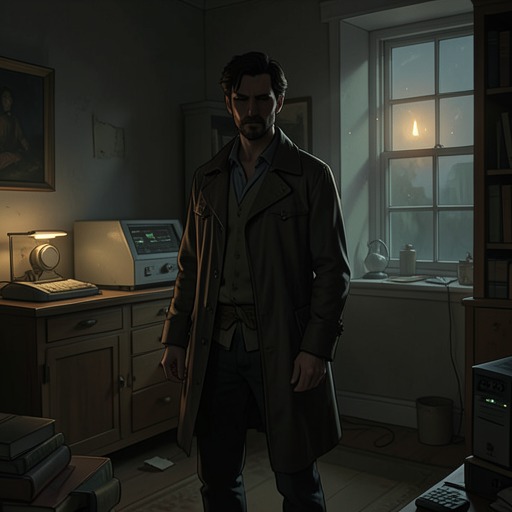
Afterward, Dorian continues his work at the hospital with Esme, and they help the Hero Society when they can. His changed life also includes taking responsibility toward people who remembered him and had been waiting for a war that would never come: he apologizes and helps them recognize the error of that expectation. He donates his other properties to house and train future heroes because the headquarters beneath the restaurant has become too small for the growing society.
The narrator says that Esme’s faith in her love for Dorian saved the world, and that Dorian spends every day after her return proving his love to her. Their story becomes legendary, told in books as an account of love conquering all. Even Dorian’s occasional mischief continues, now shared with other men in the society; redemption does not make him colorless, but places his life and energy within a community he once opposed. The novel’s claim is ultimately grounded in this aftermath: love opens the way back, while sustained care, apology, and service give that second chance substance.