Seahill
The Night CleanerSeahill is both a place of ordinary work and the setting where the conflict over people with powers becomes a citywide crisis. Its hospital records the dispute’s early human consequences; later, the confrontation between Hero Society and Dorian’s crew, the destruction of the bridge, and the loss of electricity transform the city into a place of panic and evacuation. The shift from daily routine to breakdown gives Seahill a central role in showing how political fear becomes immediate danger for residents.
Setting and Everyday Life
At the outset, Seahill is a working city whose troubles have not yet become fully visible in everyday life. Esme works night shifts at a hospital there, choosing nursing as a practical way to help people while a conflict over powered people gathers force. The hospital is close enough to her small apartment for her to walk to work and reach it in an emergency; on one occasion, the journey takes five minutes. These details establish a compact, familiar geography organized around work and care, before the city’s streets become a site of open disorder.
The hospital also connects Esme’s private routine to the wider crisis. In addition to her hospital work, she serves part-time as a nurse at Hero Society Headquarters when needed. She has helped people with powers since becoming a nurse and plans to examine blood samples from members of the society for possible anomalies, diseases, and vulnerabilities. Her work gives the city’s growing tensions a clinical, practical dimension: the conflict is not only a contest between opposing groups, but also something encountered through patients and the effort to keep people safe.
Early Signs of Conflict
The crisis is described as beginning after a pastor gave people with powers a hallucinogen. From Esme’s perspective, the result is a civil war in the streets, quiet for the moment but unlikely to remain so. The account links Seahill’s instability to a specific earlier incident while emphasizing that the public consequences are still developing. The city’s apparent everydayness therefore sits uneasily beside the possibility of a wider confrontation.
At the hospital, that possibility becomes harder to dismiss. Staff treat two men who fought after one accused the other of using his powers to influence his sister; one of the people involved can read minds. Their injuries are described as limited, though a wrist X-ray may be needed. More significant for the staff is that this is the third group of patients in twenty-four hours connected to a dispute involving someone with powers. The episode turns an abstract social conflict into a recurring demand on local health workers, and the hospital staff anticipate that Seahill’s residents may eventually turn against one another.
Confrontation and Breakdown
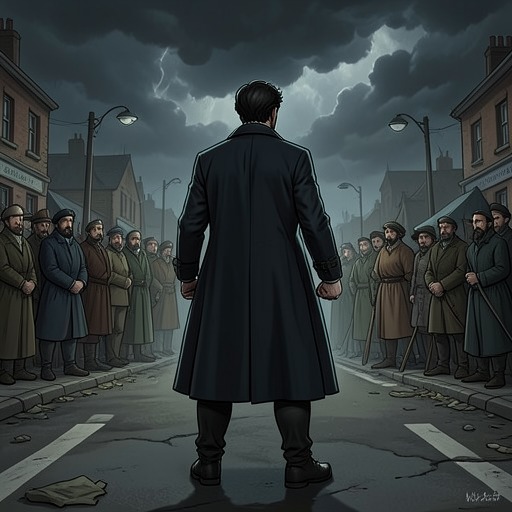
Later, Seahill’s conflict takes a more openly organized form. Esme runs toward a commotion, believing Dorian may be involved, and finds people shouting in an atmosphere charged with anger. Hero Society stands on one side; she assumes that part of Dorian’s crew is on the other. Draco arrives and demands to know what is happening. The scene places the city between two forces and marks a contrast with the earlier hospital encounters: disputes that had appeared as separate incidents now gather into a public confrontation.
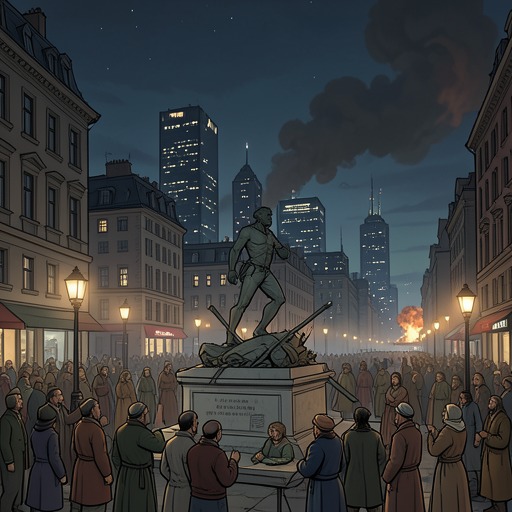
The breakdown then reaches Seahill’s infrastructure. During an operation carried out early in the morning, Ajax and Monica destroy the bridge, which is identified as the only way onto the island. Esme watches from a nearby rooftop as the bridge falls into the water. The city’s electricity is cut immediately afterward, with lights going out block by block. The sequence makes the crisis cumulative: the bridge’s destruction removes the route connecting the island to elsewhere, and the blackout follows as the next phase rather than as an unrelated disruption.
With the bridge out, the governor imposes a mandatory curfew, and police patrol slowly while making announcements over their radio speakers. Residents do not comply. News of the lost bridge intensifies an existing panic, while looting, fighting, and fires spread through the city. The account links public disorder to both the wider campaign and the immediate failure of essential connections: fear grows as movement is restricted and electricity disappears.
Evacuation and Aftermath
The effects of the crisis shape Hero Society’s response. Dorian’s television stunt has already seeded panic; after the bridge is destroyed and electricity is lost, Rose is sent to help Asher calm the city. Draco fears that the task may be impossible. His concern situates the evacuation effort within a worsening chain of events, rather than presenting it as a simple return to order.
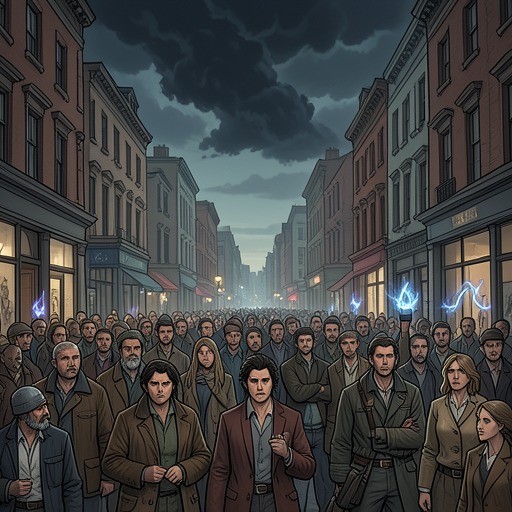
A large majority of people are eventually evacuated from the island within an hour. Those who remain are described as either accepting the danger or choosing to fight alongside Hero Society. Only a few stay: one person with powers over water, who has hidden that ability for years and has not trained to use it, and four people without powers. Their presence illustrates the uneven choices left to those still in Seahill: some have an ability but little preparation, while others enter the danger without one. The successful evacuation reduces the number of residents exposed to the coming fight, but does not end the conflict in the city.
Narrative Significance
Seahill’s role is defined by a succession of changes in scale. At the hospital, staff notice repeated disputes and anticipate that the city may turn against itself; later, the opposing sides appear in the street, and the bridge and electrical grid become part of the conflict. The movement from patient care to public confrontation, infrastructure failure, and mass evacuation gives the city’s crisis a concrete progression. Seahill is not merely the setting for battles: it is where the social consequences of conflict become visible in everyday services, residents’ choices, and the ability to leave.
The story’s later time reversal changes the significance of that destruction. Phillip explains that Asher, with help from Dorian and Draco, reverses time to a point when everyone is alive and the trouble has not begun. Seahill’s crisis is therefore part of the catastrophe the characters remember, but not an irreversible fate in the restored timeline. The city’s experience of conflict and evacuation underscores the stakes of that second chance: the renewed future begins before the conditions that brought Seahill to the brink have taken hold.