The Demigod Massacre
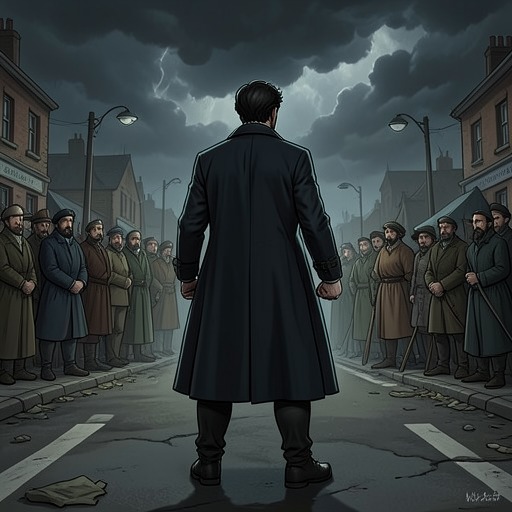
The Night CleanerThe Demigod Massacre is the catastrophe that left Dorian the sole survivor among the demigods he knew. Its defining reversal is that the gods, who had arranged for humans to receive powers to protect them, abandoned their own children to killings carried out by fellow demigods and by the parents who had given them life. Dorian’s account makes the event both a family annihilation and the collapse of his belief that service and goodness might protect him.
Background and Stakes
The narrative distinguishes demigods from humans chosen to receive divine powers. The latter were gifted, not descended from the gods; the gods had empowered them so humanity could still be protected after the gods perished. Their own children, by contrast, had divine blood but were left exposed. Dorian describes the demigods as murdered by one another and by their parents, a stark inversion of the protection the gods had extended to humans.
Dorian had once been a healer who used his abilities to help mankind and followed the work of his father, Apollo, god of the sun, music, medicine, and prophecy. He still yearned for Apollo’s approval. In his recollection, the gods’ decision to treat all demigods as expendable therefore falls against a personal history of service: Dorian had tried to do good, yet goodness did not spare him or his family. The massacre turns his former devotion into evidence of how little protection that devotion offered.
The Killings and the Failed Escape
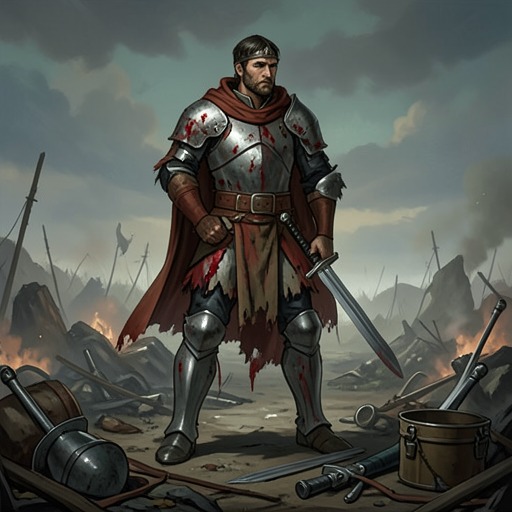
The killings are remembered not as a single duel or isolated attack, but as the destruction of a community. When Dorian searched the dead, he checked for signs of life and found none. He had never expected demigods to turn on their own kind; the memory emphasizes that the survivors of the violence were then killed by those who had brought them into the world. The perpetrators thus included both members of the threatened group and its divine parents.
Dorian had prepared a tonic intended to make death appear real, hoping he and Jasmine could escape the killings together. He was in his garden making it when the violence separated them: Jasmine became lost in the turmoil, while Dorian was cornered in a temple. He drank alone, relying on the appearance of death to keep those seeking to kill him from recognizing that he remained alive. His plan offered a narrow means of survival, but not a shared escape; the separation that defeated its purpose became inseparable from his grief over Jasmine.
Survival and Awakening
The toxin made Dorian appear dead. He woke days later and discovered that every other demigod had been slain. Survival was therefore not a victory over the massacre so much as a delay in discovering its full result. The means that saved him depended on concealment: to those who came to kill him, he seemed already dead, while in reality he remained alive long enough to wake into the aftermath.
That survival also left Dorian alone with the knowledge of what had happened. His account joins the discovery of the dead to the broader betrayal by the gods: he had not been spared because the demigods were protected, but because the toxin temporarily disguised him as one of the dead. The distinction between appearing dead and being dead is the event’s immediate mechanism of survival, while the loss of everyone else makes that mechanism profoundly incomplete.
Jasmine and the Aftermath
Jasmine’s death gives the mass killing its most intimate cost in Dorian’s memory. She had also used her powers to help mankind, and the two had been together for a short time before falling deeply in love. They had imagined working in temples of healing, where their gifts could serve people. Dorian also remembered a future they had pictured together: marriage, children, and growing old enough to die together in bed. The massacre extinguished that anticipated life as well as their hope of escaping it.
When Dorian finds Jasmine, he crosses the blood-covered ground to hold her body. He kisses her forehead and speaks a prayer for her soul to find peace in Elysium. He then makes a pyre for Jasmine and his fellow demigods, unwilling to leave them where they had fallen. These acts do not undo the killing, but they give the dead the care denied to them in life: Dorian searches for Jasmine, mourns her, and ensures that his kind are not simply left on the ground.
Memory and Significance
The massacre returns to Dorian as the nightmare he identifies as his worst memory. It begins in a familiar way, and he knows that he can only watch the events unfold again. The remembered scene thus preserves the difference between knowing the outcome and being unable to change it: even with the massacre already understood as the defining loss of his past, the dream offers no power to intervene.
The event’s contrasts organize its meaning. Humans without divine ancestry are given powers for protection, while the gods’ own children are abandoned; Dorian uses healing to serve mankind, yet cannot save Jasmine or the demigods; and the toxin preserves his life only by making him seem dead. His later ritual of mourning answers the destruction with care, not rescue. The massacre is consequently both the origin of Dorian’s survival and the loss that gives that survival its lasting weight.