The Pastor’s Hallucinogen Incident
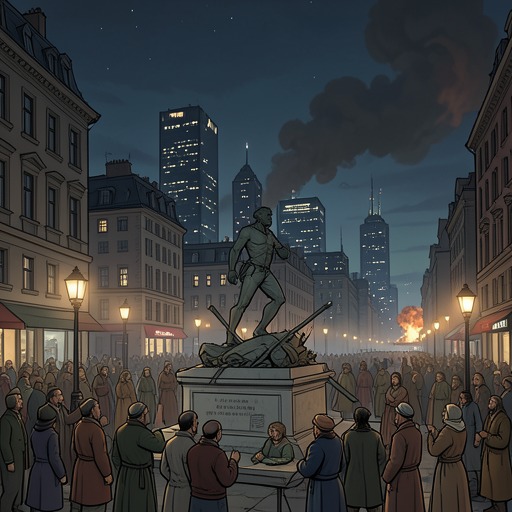
The Night CleanerThe Pastor’s Hallucinogen Incident is remembered as the catalyst for a civil war that had begun quietly but threatened to become impossible to contain. Its importance lies not only in the pastor’s act of giving hallucinogens to people with powers, but in the violence that followed and the fragile civic order later scenes show giving way to panic, sabotage, and emergency evacuation.
The Incident and Its Immediate Context
Esme recalls the incident while preparing for a hospital night shift. She describes a pastor giving a hallucinogen to people with powers and says that, ever since that night, a quiet civil war had been taking place in the streets. The conflict was quiet only for the moment: Esme expected it would not remain so. Her account places the incident before the escalating violence, without detailing the pastor’s identity, the drug’s effects, or the exact events of that night.
The memory frames the crisis against Esme’s routine of care. She worked hospital shifts and also served part-time as a nurse at Hero Society Headquarters, helping people with powers and preparing to examine heroes’ blood samples for anomalies, diseases, and vulnerabilities. That ordinary medical work continued beside a society already showing signs of fracture; the danger was not yet a single open battle, but an instability that could reach patients, civilians, and the people trying to protect them.
From Street Conflict to Urban Emergency
Later, the conflict surrounding powered people expands into a direct attack on the city’s infrastructure. In the early morning, with the bridge empty, Ajax and Monica destroy the bridge that provides the only way onto the island. The blast sends its pieces into the water. The destruction is followed immediately by a citywide blackout, with electricity failing block by block as the sun begins to rise.
The loss of power turns an attack on infrastructure into a broader emergency. Police sirens and fire trucks respond, but their efforts cannot restore order. A mandatory curfew is imposed; news of the destroyed bridge spreads, panic deepens, and looting, fighting, and fires take over. These events are not described as occurring on the night of the pastor’s act. Instead, they show how far the conflict has developed from the quiet street war Esme first recalls: violence now reaches the island’s only access route and the systems the city depends on.
Evacuation and Significance
As danger gathers around Griffin Enterprises Tower, Leon reports that boats have been secured, while Lilith helps keep people calm and load them aboard. Esme directs frightened groups toward the harbor, where they can leave the island; a nearby police officer repeats her instructions. Leon then runs to pull the tower’s fire alarms, drawing people out. Their response shows that, even amid a breakdown in public order, the heroes remain trusted by some civilians and can still organize a practical rescue.
The evacuation also reflects an uneven response to the approaching danger. Some residents had already fled inland after Dorian’s warning on television, while people who had been rioting and looting were no longer in the area. Esme hopes they have heard the instructions to reach the water and find physical safety, while recognizing that survival would not erase the mental anguish of what had happened. In retrospect, the incident marks the beginning of a conflict whose costs spread beyond the powered people who were given the hallucinogen: later scenes make infrastructure, civilian safety, and mutual aid part of the same escalating crisis.