1857 Siege of Delhi
The North WaterThe 1857 Siege of Delhi is recalled as a defining episode in Patrick Sumner’s past: an assault he witnessed near Cashmere Gate and a sustained test of his work as a surgeon. The novel presents the siege through scenes of bombardment, overwhelmed medical care, and Sumner’s efforts to treat the wounded while danger advances through the city.
Background and Narrative Frame
Sumner identifies the assault near Cashmere Gate as the setting for his experience on the first day of the attack. The episode returns later as a memory while he is feverish aboard a ship bound north and west; under the influence of opium, his thoughts drift back to Delhi. The framing makes the siege a remembered ordeal rather than a continuous account of the campaign, and locates its importance in the experience that Sumner carries away from it.
The Field Hospital
In Sumner’s recollection, casualties arrive at the hospital in a relentless stream. He works through the morning alongside the assistant surgeons Wilkie and O’Dowd, probing wounds, sawing, and suturing as one operation gives way to the next. The injured include men he had seen laughing and boasting only hours earlier. The volume of suffering leaves little room for anything beyond continuing the work.
The hospital’s staff must make decisions under pressure. Corbyn, the staff surgeon, determines which limbs require immediate amputation and which might be saved. Price, an orderly, sorts those brought in, separating the dead from the wounded and directing the living into the treatment queue. Their distinct duties show a medical operation stretched to its limits: triage and surgical judgment are necessary simply to keep the work moving.
Bombardment and Local Decisions
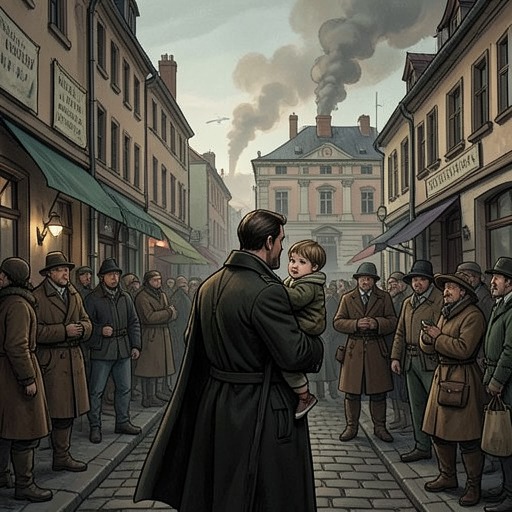
A separate scene in Delhi shows the attack pressing closer as British troops advance street by street. After the bombardment resumes at first light, the explosions grow louder, the room shakes, and damage appears in its ceiling. Sumner and a wounded boy shelter inside, with Sumner urging them to wait rather than expose themselves to the fighting. As gunfire and movement outside draw nearer, he nevertheless rises and approaches the doorway with the boy.
The danger exists alongside a competing pursuit. Corbyn stays with the boy while directing three men and Price to accompany a man seeking treasure; he tells them to arm themselves and return if the situation looks unsafe. He proposes shares for the group and a payment for Price, while suggesting that the prize agents need not learn of the proceeds. The juxtaposition places medical responsibility and the prospect of private gain within the same besieged setting: Corbyn remains with the vulnerable boy, even as he organizes a concealed expedition.
Significance in Sumner’s Story
The siege establishes the conditions under which Sumner’s professional identity was formed. His recollection emphasizes not a single decisive battlefield encounter but the repeated demand to act amid casualties, uncertainty, and inadequate respite. The later scene of bombardment brings that military danger down to the scale of a room, a wounded child, and a decision about whether to stay sheltered or move. Together, the memories make Delhi a lasting reference point for Sumner’s experience of medical duty under violence.