Four crewmen perish after leaving winter camp
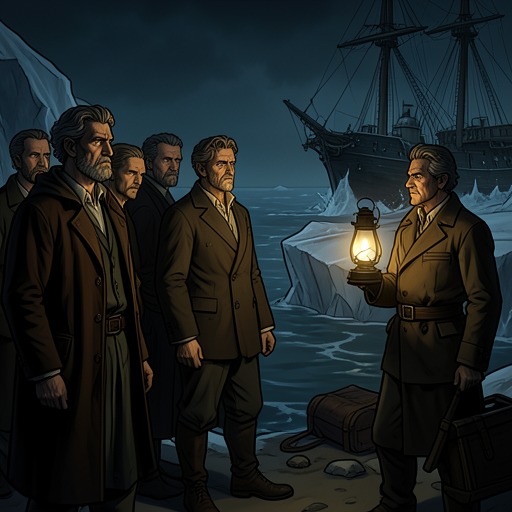
The North WaterFour crewmen perish after leaving winter camp when Webster, Samuel McKendrick, the cook, and a Shetland sailor depart despite warnings that they may not survive beyond a night in the open. Their deaths are learned only later, through hunters who find the men frozen in a ruined tent. The episode makes the split within the stranded party concrete: leaving is an act of refusal, but the country beyond camp offers little chance of safety or return.
Causes and Conditions
The immediate dispute grows from the men’s exhaustion and anger at the expedition’s orders. Webster says that they have followed orders since leaving Hull and that obedience has brought them to their present desperate situation. When others urge them to stay, he refuses to remain even an hour longer. Samuel McKendrick, the cook, and the Shetland sailor join him, turning his individual decision into a four-man departure.
The danger is made explicit before they go. Patrick Sumner warns Webster that the men have no tent, furs, or familiar landmarks to guide them; even if the winter camp is nearby, they may never find it. Sumner judges that they might survive one night in the open, but not two. The warning is practical rather than abstract: the men will leave without the basic shelter and clothing needed to endure the journey, in a place without roads or recognizable tracks.
Departure from Camp
The men’s decision is accompanied by visible strain. Webster gathers his possessions with stiff, jerky movements, while Samuel McKendrick’s face is wet with tears and open sores mark his face and neck. The cook is shivering. Otto tries to persuade them to wait, eat at the tent, and set out at first light, but they ignore him; when pressed, they raise their fists, and Webster threatens to knock down anyone who tries to stop them.
They leave shortly afterward without ceremony or extended farewell. Patrick Sumner gives each man a share of frozen seal meat, and Otto provides Webster with a rifle and cartridges. The departing men and those who remain exchange brief handshakes but do not try to soften the implications of the separation. Their dark outlines recede into the blank landscape, leaving the camp’s warnings unanswered by any further negotiation.
Discovery and Aftermath
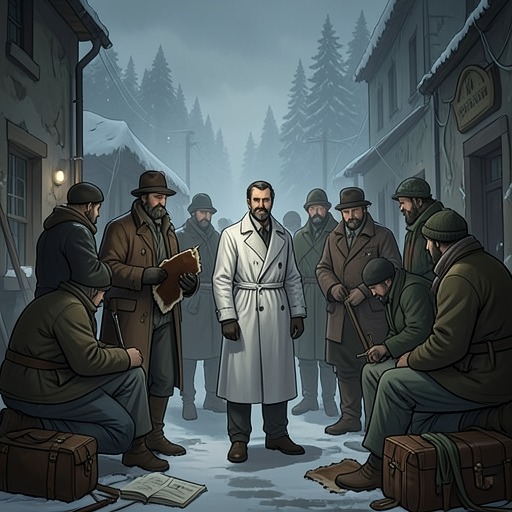
Half a week later, two hunters arrive by sledge at the mission station. They tell the priest that they found a ruined tent a day’s journey away, with four dead white men frozen inside. The salvaged objects they show him—knives, ropes, a hammer, and a grease-stained Bible—confirm that they have encountered a camp, not simply bodies scattered on the route. The account does not establish the precise cause or timing of each man’s death, only that the four who left were found dead together in the ruined shelter.
The hunters decline to return for the bodies, explaining that they must continue hunting. They try to trade the Bible to the priest; when he refuses, they give it to Anna. Anna then tells the priest that the hunters also found two dead men at the white men’s camp. They had been stripped, and one had been killed with a knife. These additional deaths deepen the account of violence surrounding the abandoned camp, but the hunters’ report does not identify who was responsible.
Significance
The departure is both a rupture in the group and a test of how far individual refusal can go in an environment where survival depends on shelter, supplies, and cooperation. The men reject the authority of the orders that brought them north, yet their choice does not free them from the conditions imposed by the Arctic. Sumner and Otto offer food and a weapon, but cannot make the route safe or ensure that the four can find their way back.
The delayed discovery also shapes the episode’s effect: the departure is first presented as an unresolved separation, then retrospectively fixed as a fatal one by the hunters’ report. The ruined tent and the objects recovered from it provide the few material traces of the men’s last days. Their fate stands beside, but remains distinct from, the report of the two other men found dead at the camp.