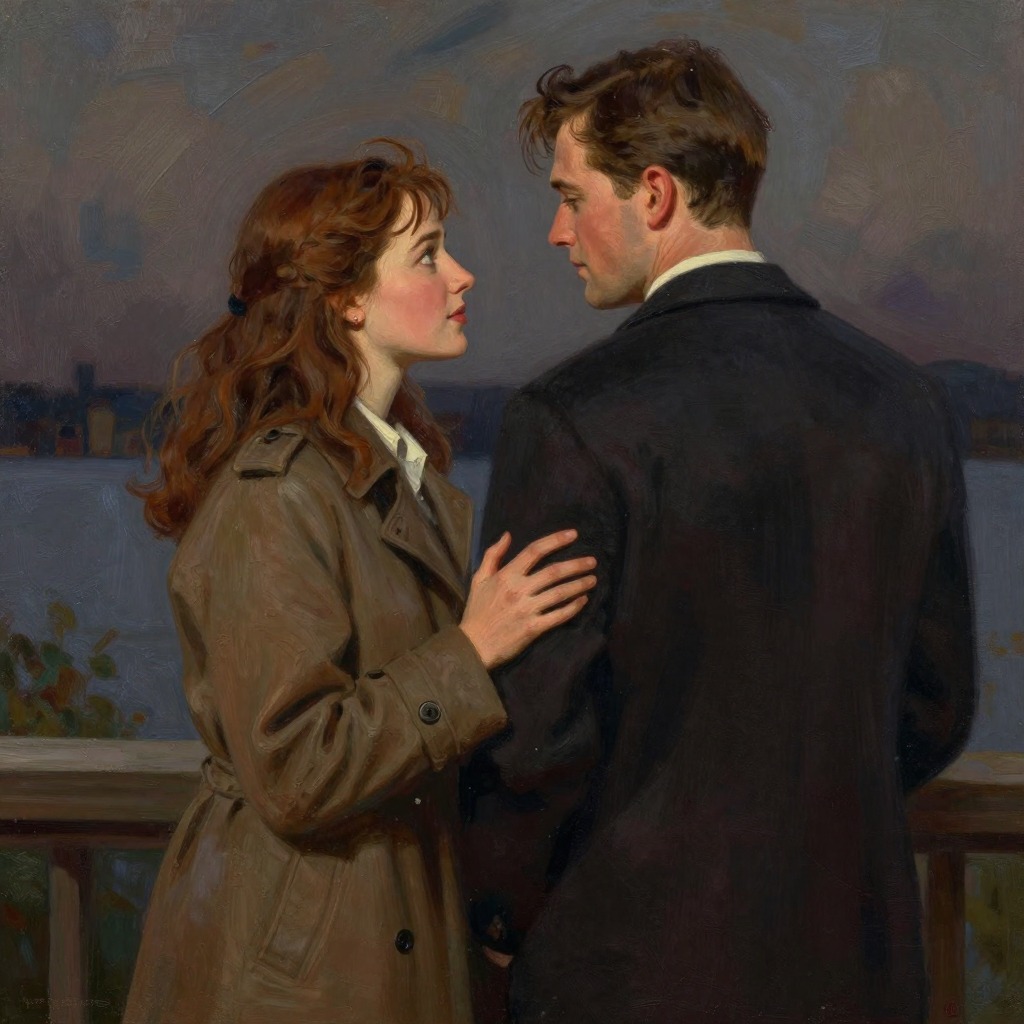
Engagement Revealed
The NotebookAllie Nelson reveals to Noah Calhoun that she is engaged to Lon Hammond Jr., a disclosure that reopens the wound of their lost summer and forces both to confront the fourteen years that have passed.
The Revelation
After a tentative reunion on the porch of Noah's restored plantation home, Allie and Noah take a walk along the riverbank. The conversation is cautious, filled with small talk and the weight of unspoken history. When Noah asks what she has been up to, Allie hesitates, then answers in a long moment: "I'm engaged." Noah looks down, feeling suddenly weaker. He forces out a "Congratulations" and asks when the big day is. "Three weeks," she replies. "Lon wanted a November wedding." She identifies her fiancé as Lon Hammond Jr., and Noah nods, recognizing the name of one of the most powerful and influential families in the state—cotton money, a world far removed from his own.
The Weight of Class and Family
The engagement is not merely a personal commitment; it is the culmination of a social destiny that Allie's parents had always envisioned for her. Fourteen years earlier, during the summer of 1932, Allie's mother, Anne Nelson, had made it clear that Noah was from a different class, too poor, and that she would never approve if her daughter became serious with someone like him. Allie had protested, saying, "I don't care what my parents think, I love you and always will," but in the end, the letters Noah wrote went unanswered—hidden, as they later learn, by her mother. Now, standing before Noah, Allie embodies the choice she made: a life of status, security, and a respectable place in society. Yet when Noah asks, "Does he treat you well?" she answers, "Yes. He's a good man, Noah. You'd like him," but her voice is distant, and Noah wonders if his mind is playing tricks on him.
The Unspoken Truth
As they walk, Noah presses further. "Allie, do you love him?" She answers automatically: "Yes, I love him." But the words hurt, and Noah hears something in her tone, as if she is saying it to convince herself. He stops and gently takes her shoulders, making her face him. "If you're happy, Allie, and you love him, I won't try to stop you from going back to him. But if there's a part of you that isn't sure, then don't do it. This isn't the kind of thing you go into halfway." Her answer comes almost too quickly: "I'm making the right decision, Noah." He stares for a second, wondering if he believes her, then nods, and they continue walking. The revelation hangs between them, a barrier that neither can fully dismantle.
The Ghost of the Past
Later, as they sit on the porch, Allie admits that she has thought about Noah ever since that summer. He reveals that he wrote dozens of letters over two years without receiving a single reply. She slowly shakes her head, realizing that her mother must have intercepted them. "It was wrong of her to do that, Noah, and I'm sorry she did," she says, but she also acknowledges that they are not the same people they were then. When Noah asks if she thinks they would have made it, she hesitates, then says, "I don't know, Noah. I really don't, and you don't either. We've changed. Both of us." Yet she adds, almost in a whisper, "But yes, Noah, I think we would have. At least, I'd like to think we would have." The engagement, once revealed, becomes the central fact that defines the limits of their reunion, a reminder of the class divide and the years of silence that have shaped their separate lives.