Miracle
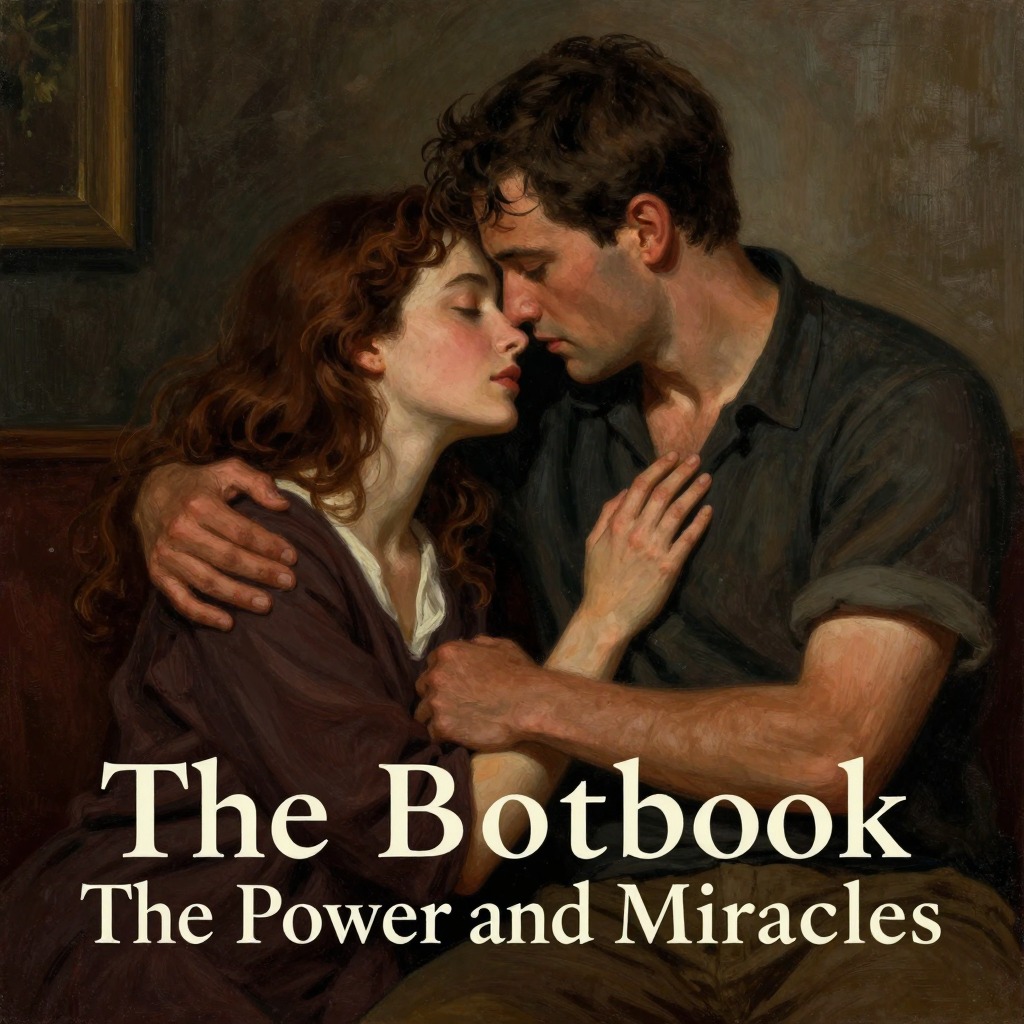
The NotebookIn Nicholas Sparks's The Notebook, the concept of a miracle is not a single, spectacular event but the foundational belief that sustains the entire narrative. It is the force that drives the elderly Noah Calhoun to read his handwritten story to his wife, Allie, every day, in the hope that love can momentarily triumph over the relentless erasure of her memory. The novel frames this belief against the backdrop of science and probability, presenting the miracle as a conscious choice to defy the expected order of things.
Definition and the Narrator's Belief
The novel opens with an elderly Noah contemplating his life and the nature of miracles. He explicitly states his belief that "miracles, no matter how inexplicable or unbelievable, are real and can occur without regard to the natural order of things." This conviction is born from a lifetime of experience, not from religious dogma. He acknowledges that "science is not the total answer" and that his daily ritual of reading the notebook is an act of faith, driven by "the possibility that keeps me going." The very first chapter is titled "MIRACLES," establishing this theme as the central lens through which the entire story is to be understood. Noah's life, which he describes as having "most resembled a blue-chip stock," is not extraordinary in a worldly sense, but his capacity for a perfect, enduring love is presented as the miracle itself.
The Miracle of First Love and Reunion
The narrative of Noah and Allie's youthful summer is itself framed as a miraculous, almost fated occurrence. When Noah first meets Allie at the Neuse River Festival in 1932, he experiences an instantaneous, profound recognition: "he knew before he'd taken his next breath that she was the one he could spend the rest of his life looking for but never find again." This perfect, all-consuming love, which survives fourteen years of separation and unanswered letters, is the foundational miracle upon which the rest of the story rests. Their reunion in 1946, triggered by a newspaper article about Noah's house restoration, is presented as a coincidence that Allie cannot ignore. She feels a "compulsion" to see him, and their immediate reconnection—the ease of their conversation, the rekindling of their intimacy—feels like a suspension of the fourteen years that have passed. The canoe trip to the hidden lake, where they are surrounded by thousands of tundra swans, is a moment of breathtaking, almost surreal beauty that reinforces the sense of a world operating outside of normal rules.
The Miracle of the Present: Love Against Disease
The most profound and sustained manifestation of the miracle concept occurs in the present-day narrative, where Noah battles Allie's Alzheimer's disease. The disease is a "thief of hearts and souls and memories," a force of nature that systematically erases Allie's identity. Noah's daily reading of the notebook is his act of defiance, a ritual designed to trigger a miracle. The doctors from Chapel Hill, who study Allie's case, deem her occasional lucidity "impossible" according to the science of Alzheimer's. Yet, on some days, after Noah reads, her memory loss recedes, and she becomes her full self again, capable of complex emotion and recognition. Noah explains this to the doctors, saying, "You can't possibly understand it if you use only your science training and your books." For him, these moments are not medical anomalies but the direct result of love's power. The most powerful of these miracles occurs on their forty-ninth anniversary, when Allie, after a day of lucidity, calls him by his true name, "Noah," and later, in a nighttime visit, she initiates a kiss, murmuring, "Oh, Noah... I've missed you." This is described as "the greatest of all" miracles, a moment where love seems to conquer the disease entirely.
The Cycle of Miracle and Loss
The miracle in The Notebook is never permanent. It is a fragile, recurring gift that is always followed by loss. The narrative is structured around a painful cycle: a day of connection and love, followed by the inevitable return of the disease. After the anniversary miracle, the "thief" comes back, and Allie, terrified, screams at Noah, "Who are you?" This cyclical pattern is the novel's central tragedy. Noah lives for these brief, miraculous respites, knowing they are temporary. He describes his life as a series of "little lives, each lived one day at a time," and his goal is to make each day, even a day with a stranger, beautiful. The miracle, therefore, is not a cure but a momentary reprieve, a gift that makes the suffering bearable. It is the possibility of connection, not its permanence, that gives his life meaning.
The Miracle as a Narrative and Thematic Force
The concept of the miracle is structurally embedded in the novel's dual timeline. The entire story of Noah and Allie's past is a miracle that has already happened—a perfect love that defied class divisions and time. The present-day narrative is a quest to make that miracle happen again, even if only for a few hours. The notebook itself is a tool for this miracle, a physical manifestation of their shared history that Noah uses to bridge the gap created by Allie's amnesia. Allie, before her disease fully took hold, wrote a letter to Noah explaining her purpose in having him write the story: "When I am lost and lonely, read this story... and know that in some way I will realize it's about us. And perhaps, just perhaps, we will find a way to be together again." The notebook is thus a deliberate, pre-emptive act of faith, a blueprint for a miracle. The novel ultimately argues that the greatest miracle is not the suspension of natural law, but the enduring power of a love that chooses to hope, to fight, and to believe, even in the face of inevitable loss.