Amphinomus
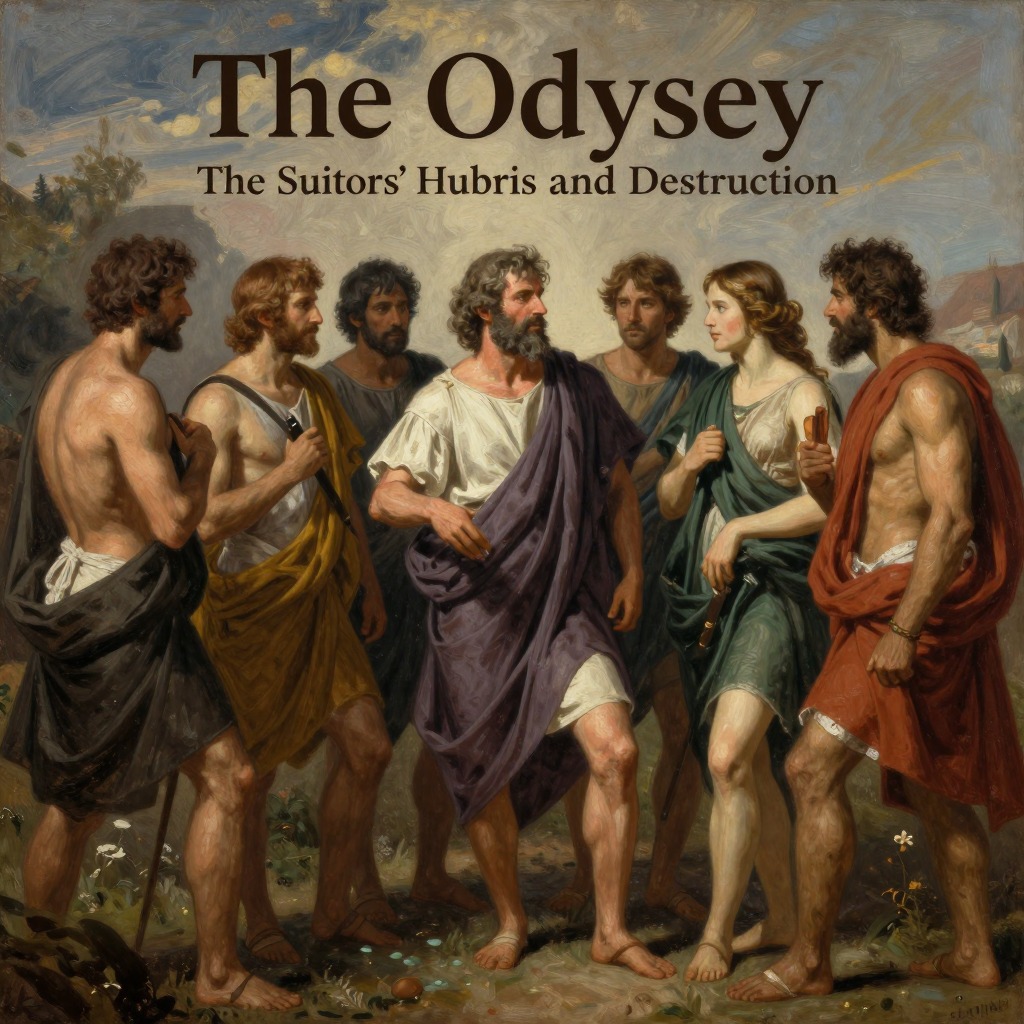
The OdysseyAmphinomus, son of Nisus of Dulichium, stands apart from the other suitors of Penelope as the one whose natural goodness and clear-sightedness make him a tragic figure. He is the only suitor who counsels against violence, who treats the disguised Odysseus with genuine hospitality, and who receives an explicit prophecy of doom—yet he does not escape, and his death at the hands of Telemachus marks the moment when the slaughter claims a man who did not deserve it.
Identity and Background
Amphinomus is the son of Nisus, who is himself the son of King Aretias. He comes from Dulichium, a wheat-growing and well-grassed island, and is described as foremost among all the suitors from that place. His conversation is more agreeable to Penelope than that of any other suitor, for he is a man of good natural disposition. When the suitors gather in the house of Odysseus, Amphinomus takes his place among them, but his character is consistently marked by moderation and a sense of right.
Key Actions and Moral Stance
Amphinomus's defining act comes when the suitors, furious that Telemachus has escaped their ambush, debate whether to kill him outright. Antinous urges murder, but Amphinomus rises to speak plainly and in all honesty. He declares that he is not in favor of killing Telemachus, calling it a heinous thing to kill one of noble blood. He insists that they first take counsel of the gods, and only if the oracles of Zeus advise it will he help kill the young man. His words please the others, and they set aside the plan for the moment. This intervention, grounded in piety and a sense of justice, is unique among the suitors.
Later, when the disguised Odysseus sits begging in his own hall, Amphinomus is the one who shows him kindness. After Odysseus has beaten the beggar Irus, Amphinomus takes two loaves from the bread-basket and brings them to the stranger, pledging him in a golden goblet of wine and wishing him better times. Odysseus, moved by this decency, responds with a grave warning. He tells Amphinomus that man is the vainest of creatures, that he himself was once rich and did wrong in his pride, and that the suitors are wasting the estate of a man who will soon return. He urges Amphinomus to go home quietly before the day of reckoning comes, so that he may not meet Odysseus in that hour. Amphinomus walks away serious and bowing his head, for he forebodes evil.
Relationships and Conflict
Penelope herself distinguishes Amphinomus from the other suitors. When she rebukes Antinous for plotting against Telemachus, she singles out Amphinomus only by implication—but the narrative makes clear that his conversation is more agreeable to her than that of any other suitor. He is the one man among the crowd whom she does not hate. Yet even his decency cannot save him. The narrator states plainly that, despite his foreboding, he does not escape destruction, for Athena has doomed him to fall by the hand of Telemachus.
Death and Ending
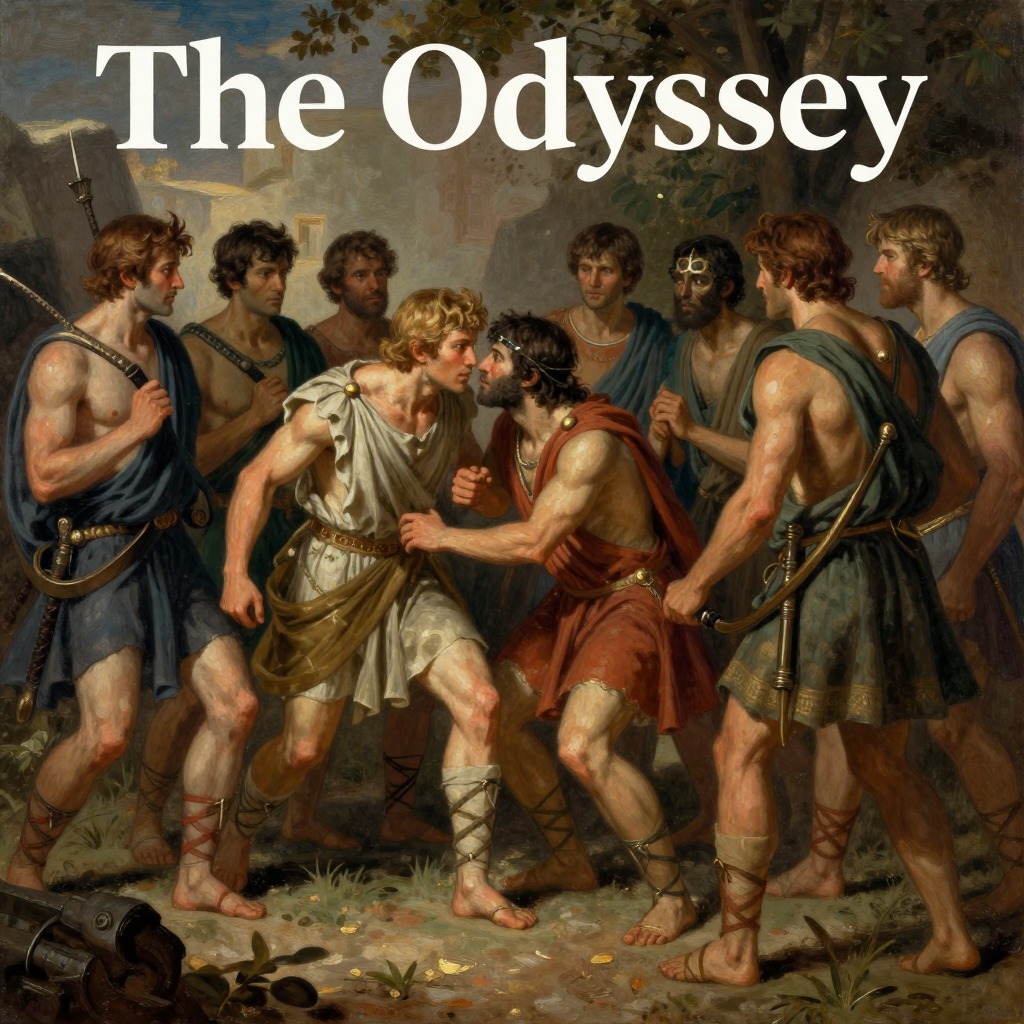
During the slaughter of the suitors, Amphinomus draws his sword and makes straight at Odysseus, trying to force his way from the door. But Telemachus is too quick for him. Striking from behind, Telemachus drives his spear between Amphinomus's shoulders, and the point goes right through his chest. He falls heavily to the ground and strikes the earth with his forehead. Telemachus springs away, leaving his spear in the body, and runs to his father's side. Amphinomus thus dies not at the hands of Odysseus, who had warned him, but at the hands of the son—a death that fulfills the prophecy he had sensed but could not escape.
Thematic Significance
Amphinomus embodies the tragedy of decency in a world of collective guilt. He is the one suitor who listens to conscience, who shows hospitality, and who receives a direct warning from the man he is unknowingly wronging. Yet he remains with the others, bound by social pressure or inertia, and perishes with them. His death underscores the poem's moral logic: even the good among the guilty are swept away when a house must be cleansed. He is a foil to the other suitors, proving that the capacity for right action existed among them, but also that it was not enough to save a man who did not act on his foreboding.