Anticlea
The OdysseyAnticlea, daughter of the master thief Autolycus and wife of Laertes, is the mother of Odysseus. Though she dies of grief during her son's long absence, her ghost appears in Book XI of the Odyssey during Odysseus's journey to the Underworld, where their meeting becomes one of the poem's most poignant explorations of maternal love, mortality, and the insubstantial nature of the dead.
Identity and Background
Anticlea was the daughter of Autolycus, the son of Hermes, who was renowned as the most accomplished thief and perjurer in the world. It was Autolycus who named the infant Odysseus, choosing a name that signified "the child of anger" because he was displeased with many people. When Odysseus was a young man, he visited his grandfather on Mount Parnassus to receive promised gifts, and there he was wounded by a wild boar, leaving a scar that would later serve as a crucial token of his identity. Anticlea herself died not from illness or old age but from her overwhelming longing for her absent son. As her ghost later tells Odysseus, "my longing to know what you were doing and the force of my affection for you—this it was that was the death of me." Her death is also confirmed by the swineherd Eumaeus, who reports that Laertes was aged more by the loss of his wife than by anything else, and that she came to an unhappy end through sorrow for her son.
Encounter in the Underworld
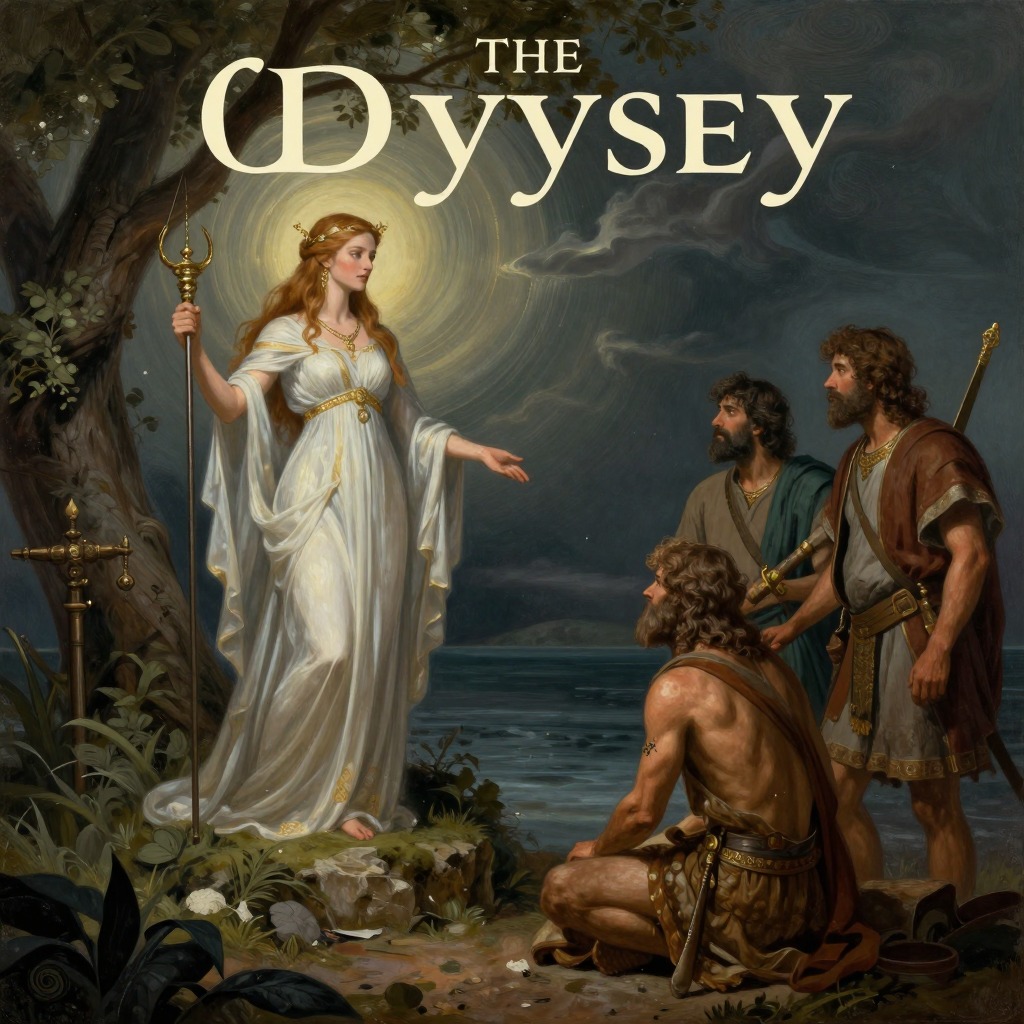
When Odysseus reaches the house of Hades, he digs a trench and pours drink-offerings of honey, milk, wine, and water to the dead, promising sacrifices. Among the first ghosts to appear is that of his comrade Elpenor, who begs for burial. Then comes the ghost of Anticlea. Odysseus is moved to tears at the sight of her, but he does not allow her to approach the blood until he has consulted the prophet Teiresias. After Teiresias has delivered his prophecy and departed, Anticlea comes forward, drinks the blood, and immediately recognizes her son. She speaks to him with fondness, asking how he came to the abode of darkness while still alive, for between the living and the dead lie great and terrible waters. Odysseus explains that he was forced to come to consult Teiresias, and then asks her about the manner of her death, about his father Laertes, his son Telemachus, his property, and his wife Penelope. Anticlea answers that Penelope remains in the house, grieving and spending her time in tears, that Telemachus still holds the lands undisturbed, and that Laertes lives in the country, sleeping on the floor in winter and on a bed of leaves in summer, grieving continually for his son's absence. She then reveals that she herself died not from illness but from her longing for him.
The Nature of Death and the Ghost
When Odysseus tries three times to embrace his mother's ghost, each time she flits from his arms like a dream or shadow. Odysseus, touched to the quick, asks if Persephone is mocking him with a phantom. Anticlea explains that this is the nature of all the dead: the sinews no longer hold flesh and bones together, for these perish in the fire of the funeral pyre, and the soul flits away like a dream. She urges him to return to the light of day and to remember all these things so that he may tell them to his wife hereafter. This scene establishes the Homeric conception of the dead as insubstantial shadows who retain memory and emotion but lack physical substance, and it underscores the finality of death even as it allows for a moment of connection between the living and the dead.
Thematic Significance
Anticlea's appearance in the Odyssey serves multiple thematic functions. Her death from longing for Odysseus emphasizes the human cost of his long absence, a cost that extends beyond his own suffering to those who love him. Her ghost's inability to be embraced dramatizes the unbridgeable gap between the living and the dead, a gap that even the hero's journey to the Underworld cannot overcome. Her report of the situation in Ithaca—Penelope's faithfulness, Telemachus's precarious position, Laertes's decline—provides Odysseus with crucial information that shapes his subsequent actions. Finally, her presence in the Nekyia, surrounded by the ghosts of famous women, places her within a larger pattern of female figures whose stories illuminate the poem's concerns with marriage, fidelity, and the consequences of heroic action.