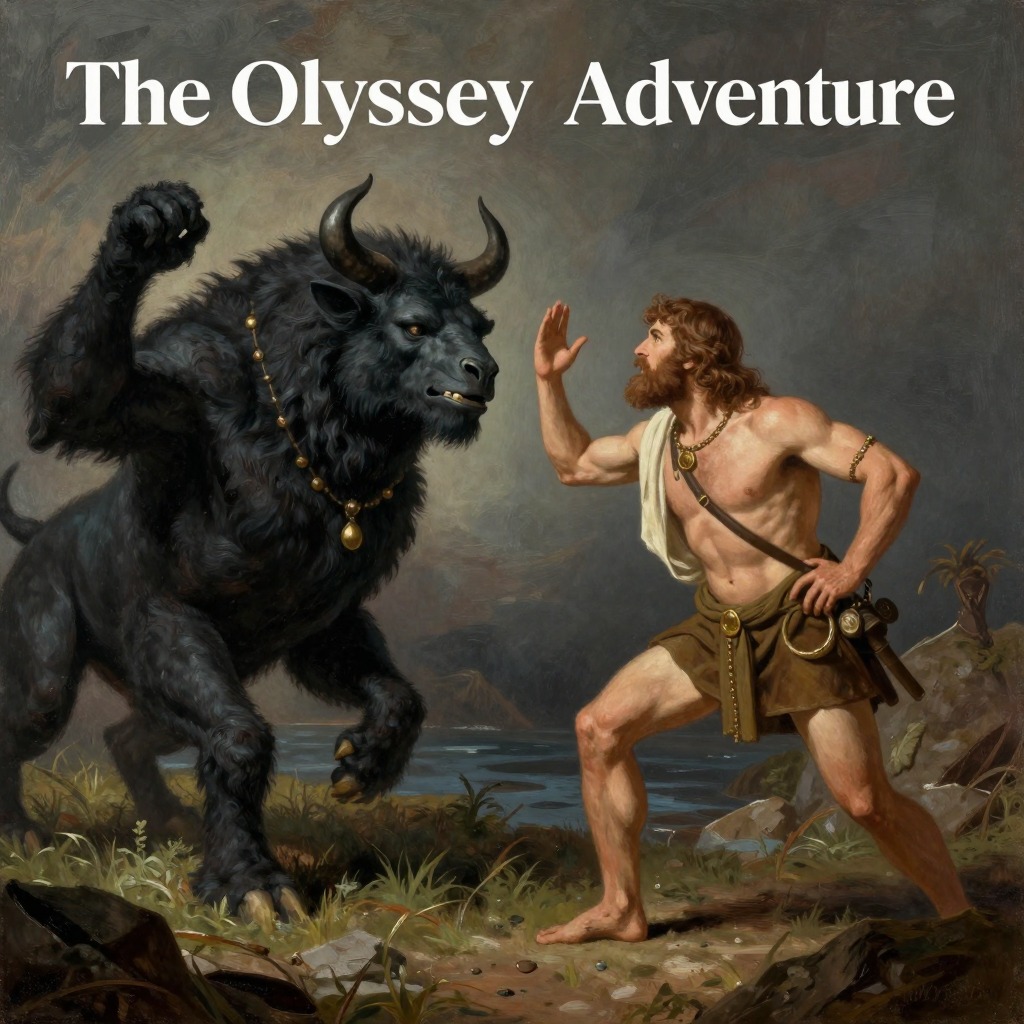
Cyclopes
The OdysseyThe Cyclopes are a race of gigantic, one-eyed beings who embody a form of primitive, lawless existence that stands in stark contrast to the civilized Greek world Odysseus represents. Their most famous member, Polyphemus, becomes the catalyst for Poseidon's relentless persecution of Odysseus, making the Cyclopes a pivotal force in the poem's central conflict between human cunning and brute, divinely-backed power.
Identity and Way of Life
The Cyclopes are described as a lawless and inhuman race who neither plant nor plow, but trust in providence, living on wild wheat, barley, and grapes that grow without cultivation. They have no laws, no assemblies of the people, and each Cyclops is lord and master in his own family, taking no account of his neighbors. They live in caves on the tops of high mountains, and their society is characterized by a complete absence of the communal structures that define Greek civilization. The Cyclopes have no ships nor shipwrights, so they cannot travel from city to city or sail over the sea to one another's country, remaining isolated in their rugged land. Their strength is immense, and they openly disdain the gods: Polyphemus declares to Odysseus that the Cyclopes do not care about Zeus or any of the blessed gods, for they consider themselves much stronger than the immortals.
The Encounter with Odysseus
Odysseus and his men land on the island of the Cyclopes and enter the cave of Polyphemus, who is away shepherding. When Polyphemus returns, he traps them inside by rolling a huge stone across the entrance, then proceeds to devour several of Odysseus's men raw. Odysseus, using his characteristic cunning, gets the Cyclops drunk on the strong, unblended wine given to him by Maron, priest of Apollo. When Polyphemus asks his name, Odysseus tells him "Noman." After the Cyclops falls into a drunken sleep, Odysseus and his men drive a sharpened, red-hot olive-wood stake into his single eye, blinding him. When other Cyclopes hear Polyphemus's screams and ask who is harming him, he replies "Noman is killing me by fraud; no man is killing me by force," causing them to leave, believing he is ill. The next morning, Odysseus and his surviving men escape by clinging to the undersides of Polyphemus's sheep as they are let out to pasture.
Polyphemus's Curse and Poseidon's Wrath
As Odysseus sails away, he cannot resist taunting Polyphemus and revealing his true name. The blinded Cyclops then prays to his father, Poseidon, asking that Odysseus may never reach his home alive, or if he must, that he do so late and in sore plight after losing all his men, finding trouble in his house. Poseidon hears this prayer, and from that moment becomes the relentless enemy of Odysseus, constantly thwarting his return home. This curse is the direct cause of the many hardships Odysseus endures after leaving the Cyclopes' land, including the storm that destroys his raft and his long captivity on Ogygia.
Narrative and Thematic Significance
The Cyclopes episode serves as a foundational example of the poem's exploration of xenia (the law of hospitality) and its violation. Polyphemus's brutal treatment of his guests—eating them rather than offering them food and shelter—is the ultimate perversion of civilized behavior. The encounter also establishes Odysseus's defining trait of metis (cunning intelligence) as superior to brute strength, while simultaneously demonstrating the dangers of hubris, as Odysseus's pride in revealing his name brings down Poseidon's wrath. The Cyclopes are also referenced elsewhere in the poem: Alcinous mentions that the Phaeacians are as near of kin to the gods as the Cyclopes and the savage giants, and the Laestrygonians, another race of giant cannibals encountered by Odysseus, share similar characteristics of lawlessness and savagery, reinforcing the poem's contrast between civilized and monstrous peoples.