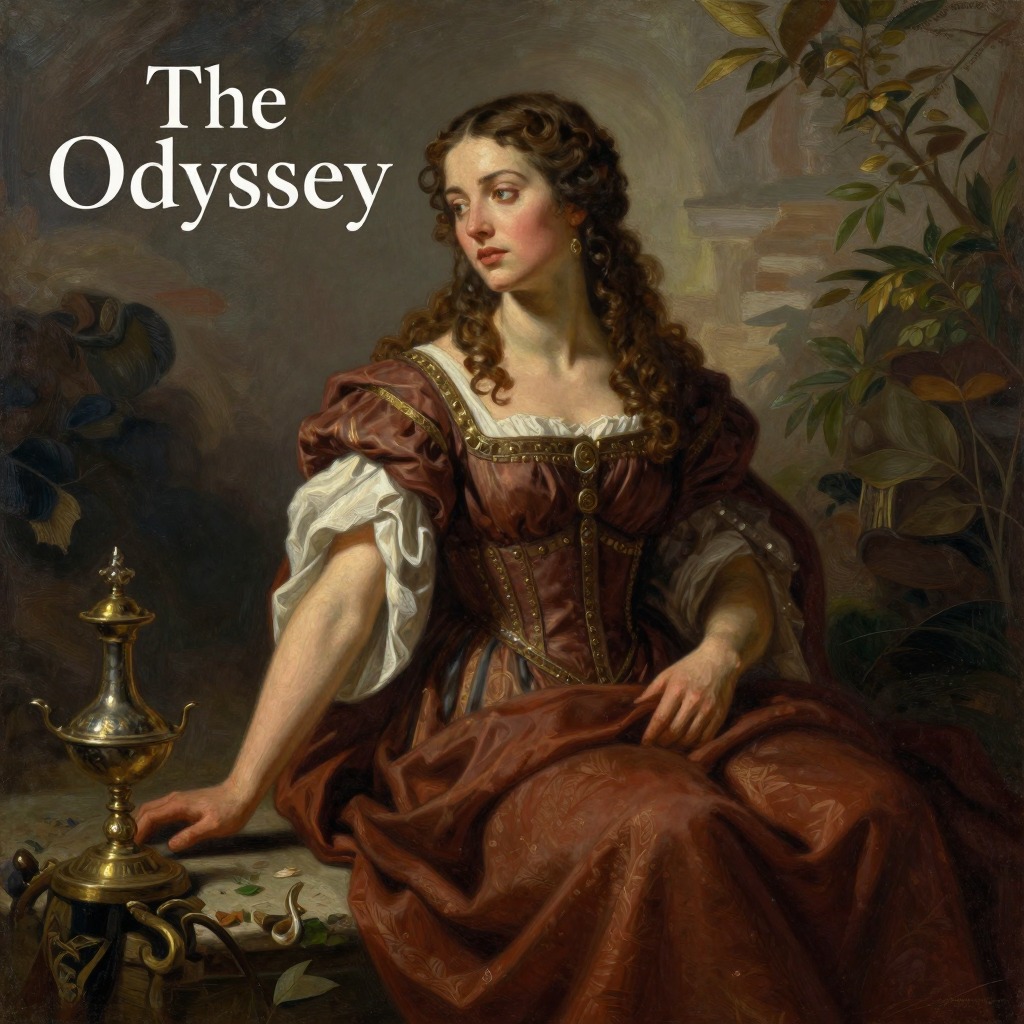
Euryclea
The OdysseyEuryclea, daughter of Ops and granddaughter of Pisenor, is the aged and utterly loyal nurse of Odysseus, purchased by Laertes for the price of twenty oxen when she was young. She was treated with the respect of a wife in the household, though Laertes never took her to his bed out of regard for his wife's feelings. She nursed both Odysseus and his son Telemachus, and her devotion to the family line is absolute. She is the keeper of the storeroom, the confidante of the queen, and the silent witness to the house's slow ruin by the suitors.
Role in the Household and Loyalty to Telemachus
Euryclea is the most trusted servant in Odysseus's palace, entrusted with the keys to the treasure-filled storeroom where gold, bronze, linen, and aged wine are kept. When Telemachus decides to sail to Pylos in search of news of his father, he goes to her alone, swearing her to secrecy. She draws off twelve jars of the best wine and fills leathern bags with barley meal for his voyage, all while weeping and begging him not to go, for she fears the suitors will murder him and divide the property. She keeps his secret from Penelope for ten or twelve days, as he commanded, only revealing it when the queen's grief becomes unbearable. Her love for Telemachus is maternal; she had nursed him as a baby and loves him better than any other woman in the house.
The Recognition of Odysseus
The most dramatic moment of Euryclea's life comes when she is ordered by Penelope to wash the feet of the ragged stranger who has appeared in the hall. As she pours water into the basin and takes hold of his leg, she instantly recognizes a scar—the wound a wild boar gave Odysseus during a hunt on Mount Parnassus with his grandfather Autolycus. The leg falls from her hands, the basin overturns, and water spills across the floor. Her eyes fill with tears of joy and grief, and she catches Odysseus by the beard, crying out that he is indeed her dear child. Odysseus seizes her by the throat with his right hand and draws her close, commanding her to silence on pain of death, for he will not have his identity revealed before the slaughter of the suitors. She promises to hold her tongue like stone or iron, and offers to list the disloyal maidservants, but Odysseus refuses, saying he will judge them himself.
Execution of Justice and Final Service
After the massacre of the suitors, Odysseus calls Euryclea to him. He stands among the corpses, bespattered with blood and filth like a lion that has just devoured an ox. She is about to cry out for joy, but he checks her, declaring it unholy to vaunt over dead men. He orders her to identify the women who have misconducted themselves. She tells him that of the fifty women in the house, twelve have been wanton, sleeping with the suitors and showing disrespect to her and to Penelope. Odysseus then commands Telemachus, Eumaeus, and Philoetius to make these women cleanse the hall of blood and corpses, and then to take them outside and execute them. Telemachus has them hanged in a row, their feet convulsing for a while before they die. Euryclea also witnesses the mutilation of the treacherous goatherd Melanthius. Finally, Odysseus orders her to bring sulphur and fire to purify the house, and to summon Penelope. She runs upstairs, her aged knees grown young with joy, to wake her mistress and announce that her husband has come home and killed the suitors. Penelope at first refuses to believe her, but Euryclea insists, revealing the proof of the scar. She then leads the queen down to the hall, where the long-delayed reunion begins.