Laertes
The OdysseyLaertes, the aged father of Odysseus, is a figure of profound grief and withdrawal, whose re-emergence in the final book of the Odyssey completes the hero's homecoming and the restoration of the Ithacan royal house. Living in isolation on his farm, worn down by sorrow and neglect, he is the last member of Odysseus's family to be reunited with the hero, and his recognition scene—triggered by the proof of the scar and the remembered orchard—provides the poem's final, deeply personal anagnorisis before the resolution of the civil conflict.
Identity and Withdrawal
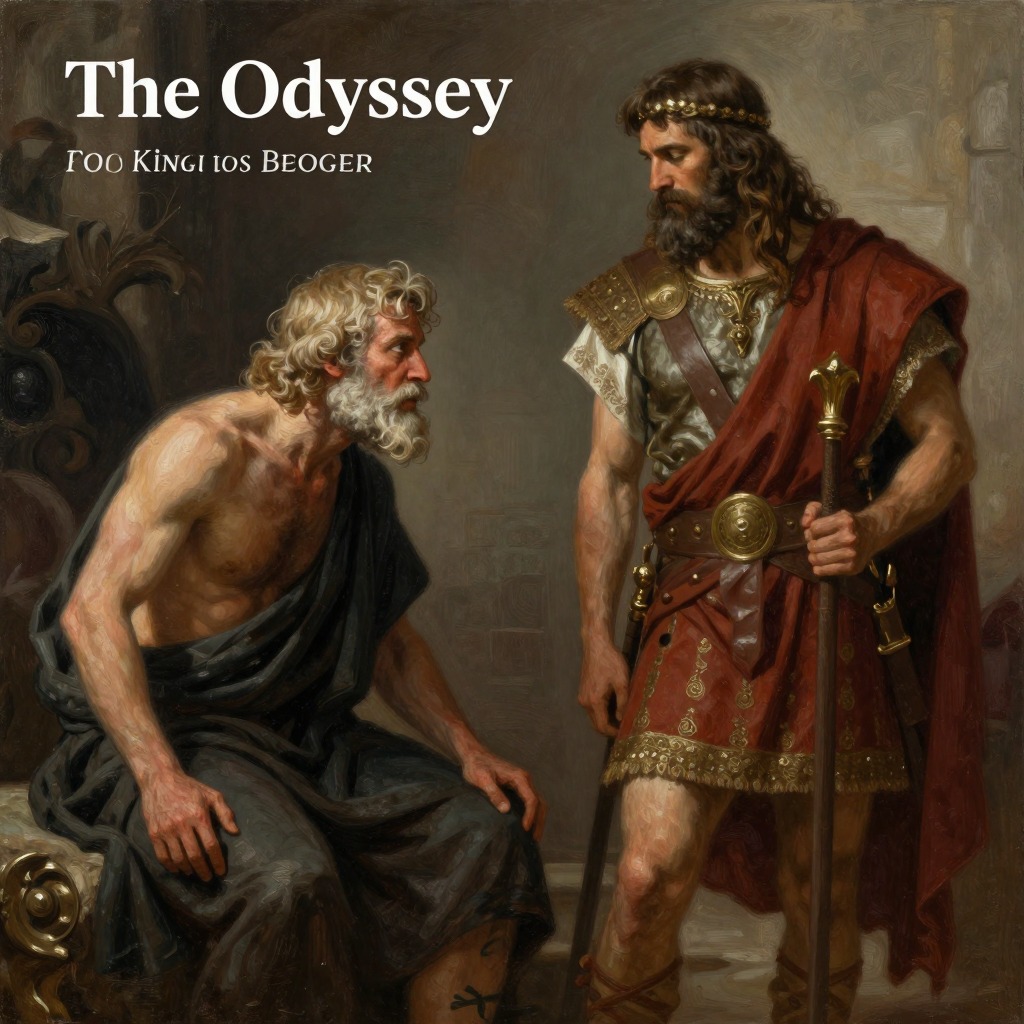
Laertes is the son of Arceisius and the father of Odysseus. Once a king who ruled among the Cephallenians and took the strong fortress of Nericum, he has long since retreated from public life. By the time of the Odyssey, he never comes to town, living by himself in the country, faring hardly, with only an old woman to look after him and get his dinner for him when he comes in tired from pottering about his vineyard. His appearance is that of a man utterly broken by his son's absence: he wears a dirty old shirt, patched and very shabby, his legs are bound with thongs of oxhide to save him from brambles, he wears sleeves of leather and a goatskin cap on his head, and he is described as looking very woe-begone. When Telemachus returns from his journey to Pylos and Sparta, the swineherd Eumaeus reports that from the day the young man set out, Laertes has neither eaten nor drunk as he ought to do, nor does he look after his farm, but sits weeping and wasting the flesh from off his bones. His wife, Anticlea, died of grief and longing for Odysseus, a loss that aged him more than anything else did.
Life and Plot Trajectory
Laertes appears in person only in the poem's final book. After the slaughter of the suitors, Odysseus leads Telemachus, Eumaeus, and Philoetius out of the town to the well-tilled farm that Laertes had reclaimed with infinite labour. Odysseus finds his father alone in the great orchard, hoeing a vine. The old man does not recognise his son, who has been gone for twenty years. Odysseus, testing him, spins a false tale of having once entertained a guest named Ulysses, describing the lavish gifts he gave him. Laertes, overcome, pours dust over his grey head and groans heavily. At this, Odysseus springs forward, embraces him, and reveals himself. When Laertes demands proof, Odysseus points first to the scar from the boar's tusk he received while hunting on Mount Parnassus with Autolycus, and then recites the exact trees his father gave him when he was a boy: thirteen pear trees, ten apple trees, forty fig trees, and fifty rows of vines. These proofs cause Laertes' strength to fail him; he throws his arms about his son and nearly swoons.
Key Actions and Objectives
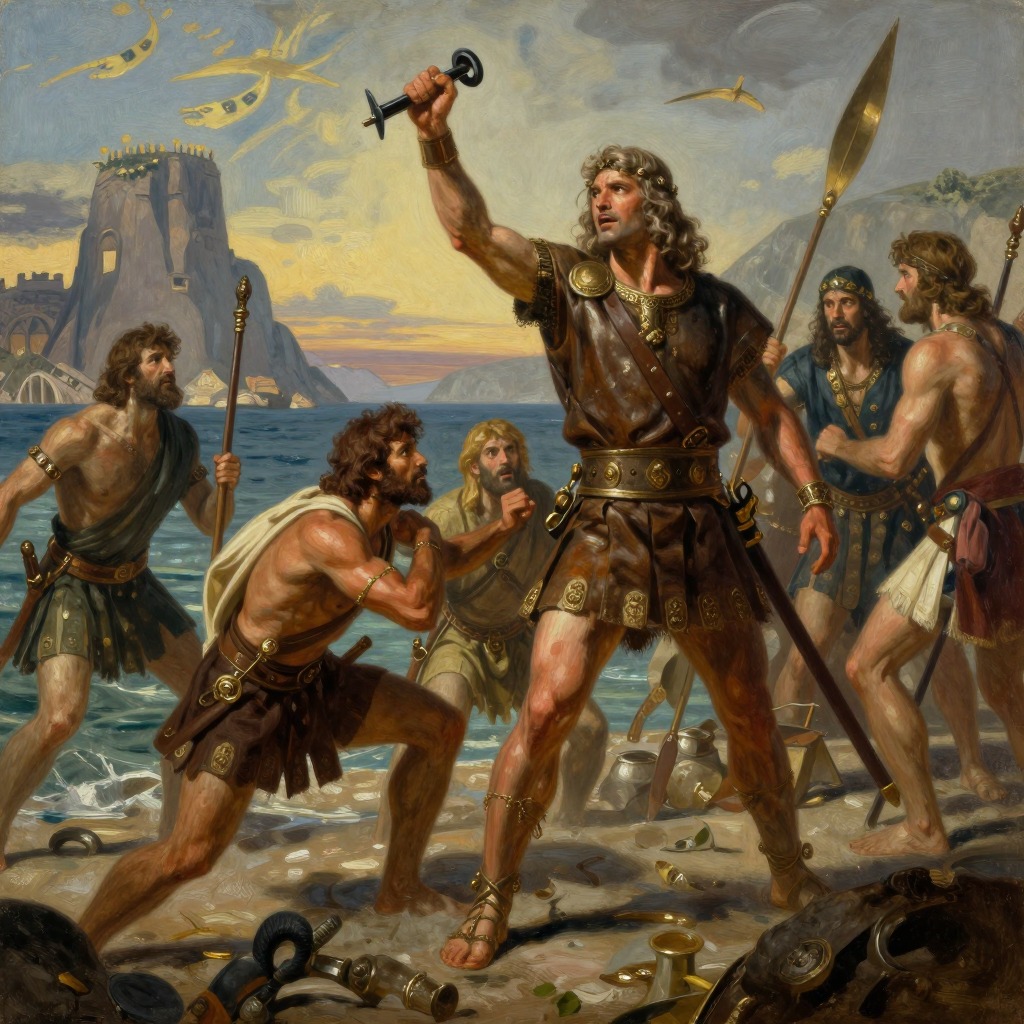
Laertes' primary objective throughout the poem is simply to endure his grief and await either his son's return or his own death. His only significant action in the narrative occurs after the reunion, when the Ithacan families, led by Eupeithes, march on Odysseus to avenge the suitors. Laertes, though grey-haired, arms himself alongside his son, his grandson, and the loyal servants. Athena comes to him, calling him "Son of Arceisius—best friend I have in the world," and infuses him with fresh vigour. He prays to her and to Zeus, poises his spear, and hurls it, striking Eupeithes through the helmet and killing him. This act of battle, at his extreme old age, demonstrates that the restoration of his house has revived not only his spirit but his martial strength.
Relationships and Conflict
Laertes' relationship with Odysseus is the emotional core of his role. The father's grief is so profound that he cannot believe his son will ever return, and the recognition scene is the most extended and intimate of the poem's several anagnorises. Laertes also has a warm relationship with his grandson Telemachus, though he is largely absent from the young man's life during the crisis. His conflict is not with any external enemy but with the slow erosion of hope and the physical decay of old age. He is a figure of the past, a king who has outlived his reign and his strength, and his re-emergence into action is a sign that the house of Odysseus is truly reborn.
Change and Ending
Laertes undergoes a dramatic transformation in the final book. From a man so diminished that he is unrecognisable even to his own son, he is restored by the reunion and by Athena's direct intervention: the goddess makes him taller and stouter, and gives him a more imposing presence, so that when he returns from being washed and anointed, Odysseus is surprised to see him looking like an immortal. After killing Eupeithes, he stands with his son and grandson as the goddess halts the battle and imposes a covenant of peace. His arc moves from isolation and despair to reintegration into the family and the community, and his final appearance is as a patriarch restored, standing beside his line as the poem closes.
Narrative Role and Evaluation
Laertes serves as the final, most difficult test of Odysseus's homecoming. The hero must prove his identity not through strength or cunning but through shared memory and intimate knowledge of the past. The orchard scene, with its precise catalogue of trees, grounds Odysseus's epic identity in the particular, domestic world of Ithaca. Laertes also functions as a foil to Odysseus: where the hero has endured twenty years of wandering, Laertes has endured twenty years of waiting, and his suffering is no less real for being static. His brief re-emergence as a warrior in the final battle underscores the theme that the restoration of order requires the participation of every generation. He is a figure of pathos and dignity, and his reunion with Odysseus is one of the most emotionally resonant moments in the epic.