Melanthius
The OdysseyMelanthius, the goatherd of Odysseus, is the most viciously disloyal servant in the Odyssey, a figure whose open alliance with the suitors and active betrayal of his master mark him as the antithesis of the faithful swineherd Eumaeus and the cowherd Philoetius. His role is defined by a series of escalating acts of treachery—verbal abuse, physical assault, and armed insurrection—that culminate in a punishment of exceptional brutality, making him the poem's clearest illustration of the consequences of violating the bond between master and servant.
Identity and Role
Melanthius is the son of Dolius, an old servant of Laertes, and is repeatedly identified as the goatherd who brings the best of his flock for the suitors' daily feasts. He is first encountered driving goats down from the countryside for the suitors' dinner, accompanied by two shepherds. His position gives him regular access to the household and its stores, a trust he systematically abuses. Unlike Eumaeus, who remains loyal in his master's absence, Melanthius actively courts the favor of the suitors, particularly Eurymachus, who likes him better than any of the other servants. The text emphasizes that he is not merely a passive collaborator but an eager participant in the suitors' regime.
Acts of Treachery and Violence
Melanthius's disloyalty manifests in three escalating phases. First, he verbally and physically assaults Odysseus while the king is still disguised as a beggar. On the road to town, Melanthius overtakes Eumaeus and Odysseus, reviles them with outrageous language, and kicks Odysseus on the hip out of pure wantonness. Odysseus barely restrains himself from killing the goatherd on the spot. Later, inside the house, Melanthius continues to mock the disguised Odysseus, telling him to beg elsewhere and threatening him with violence.
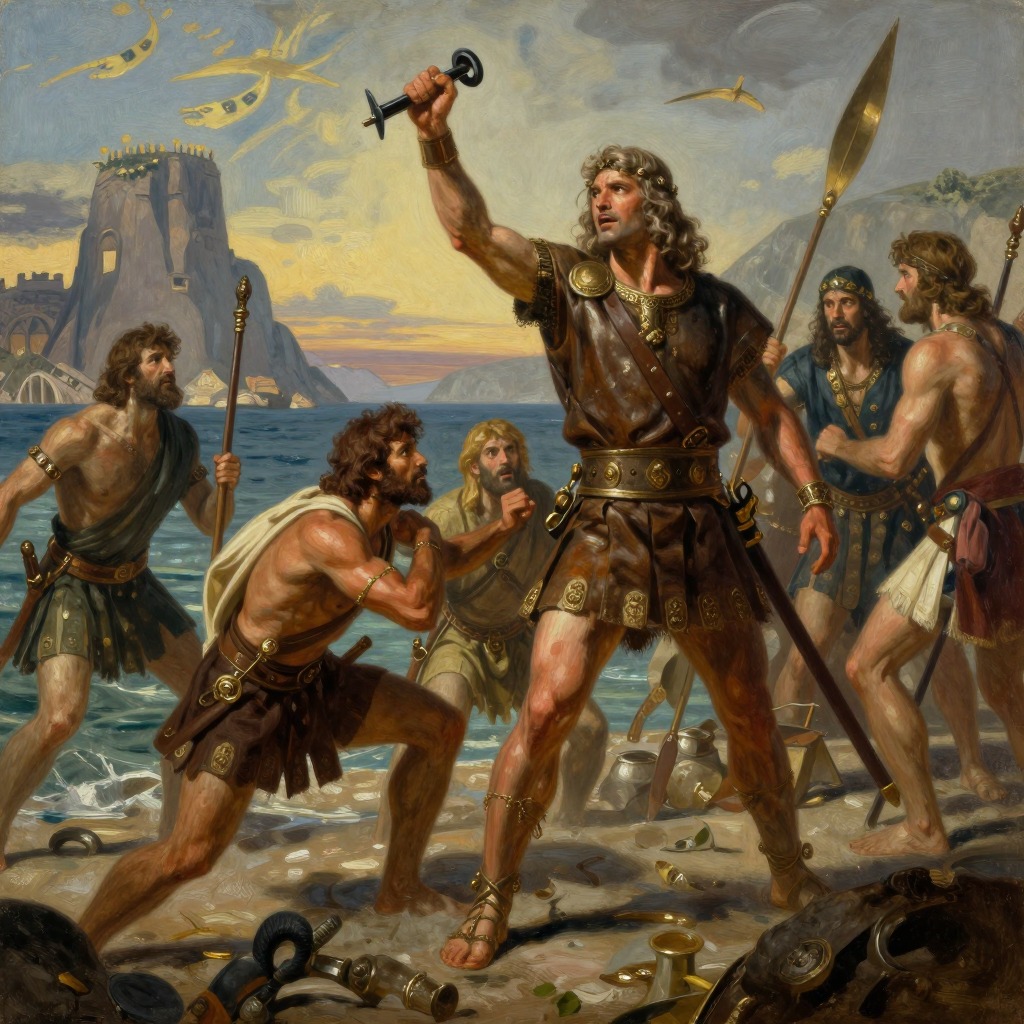
Second, during the contest of the bow, Melanthius actively aids the suitors' war effort. When the suitors realize that Odysseus and his allies have hidden the armor, Melanthius volunteers to fetch weapons from the store-room. He goes by back passages to the storeroom and brings back twelve shields, helmets, and spears, arming the suitors and turning the battle from a one-sided archery duel into a dangerous melee. This act of armed insurrection directly threatens Odysseus's life and forces him to acknowledge the gravity of the danger.
Third, when Eumaeus and Philoetius catch Melanthius attempting a second trip to the storeroom, they capture him, bind him painfully, and string him up from a high pillar near the rafters, leaving him in cruel bondage. Eumaeus taunts him, saying he will pass the night on a soft bed as he deserves.
Punishment and Death
After the suitors are killed, Odysseus orders the execution of the disloyal maids but reserves a far more gruesome fate for Melanthius. Telemachus, Eumaeus, and Philoetius take the goatherd into the inner court, cut off his nose and ears, draw out his vitals and give them raw to the dogs, and then in their fury cut off his hands and feet. This mutilation—a punishment that denies him a proper burial and leaves him to die slowly—is the most physically brutal act in the entire poem. It far exceeds the hanging of the maids and stands as a deliberate, ritualized assertion of the master's absolute power over the body of the traitorous servant.
Thematic Significance
Melanthius functions as the dark mirror of Eumaeus and Philoetius, embodying the chaos that results when the household's internal hierarchy is broken. His treachery is not merely personal but structural: by arming the suitors, he attempts to overturn the legitimate order of Odysseus's house. His punishment, therefore, is not just revenge but a re-establishment of that order through a spectacle of sovereign violence. The poem contrasts his fate with that of the loyal servants, who are promised wives, houses, and the status of brothers to Telemachus. Melanthius's end—mutilated, devoured by dogs, unnamed in his final agony—is the ultimate negation of the social bond, a warning inscribed on the body itself.