Philoetius
The OdysseyPhiloetius, the stockman of Odysseus, is one of the few servants who remains utterly loyal to his master throughout the twenty years of Odysseus's absence. Introduced as he brings in a barren heifer and goats for the suitors' dinner, he is immediately distinguished by his grief for his lost master and his longing for Odysseus's return. His role culminates in the final battle, where he fights alongside Odysseus and Telemachus, proving his unwavering allegiance and earning a promise of reward and brotherhood.
Identity and Background
Philoetius is the cowherd of Odysseus, responsible for the master's cattle. He is first seen arriving at the palace with a barren heifer and goats, brought over by the boatmen who ferry people across the water. Upon seeing the disguised Odysseus, he is moved to tears, remarking that the stranger reminds him of his master, whom he fears is wandering in similar rags. He reveals that he has been in Odysseus's service since he was young, among the Cephallenians, and that his herds have prospered under his care, breeding like ears of corn. Despite his success, he is deeply troubled by the suitors' consumption of the cattle and his own powerlessness, having often considered fleeing to another chief but for the hope that Odysseus will return and drive the suitors out.
Loyalty and Service
Philoetius's loyalty is tested daily by the suitors' depredations. He laments that he must bring in the best of his herd for others to eat, who show no regard for Telemachus or fear of heaven. His devotion is so strong that he has remained in his post despite the temptation to leave, solely because he believes his master will yet return. When the disguised Odysseus swears by Jove and the hearth of Odysseus that the king will return within the year, Philoetius immediately prays for this to happen and vows to fight with all his might to help him. This readiness to act on his faith distinguishes him as a man of action and deep loyalty.
Role in the Slaughter of the Suitors
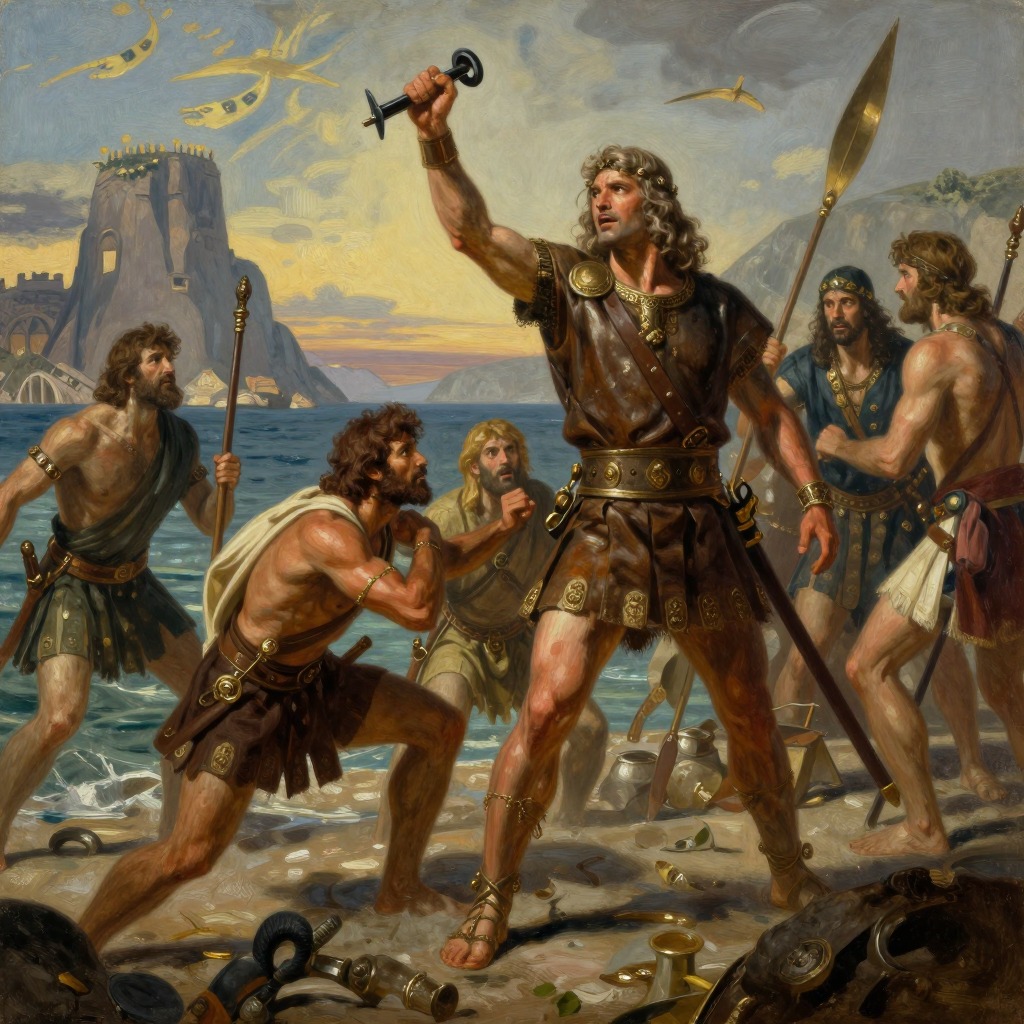
Philoetius's moment of greatest significance comes during the contest of the bow and the subsequent massacre. After Odysseus reveals himself to Philoetius and Eumaeus by showing the scar from the boar's tusk, he entrusts them with crucial tasks. Philoetius is ordered to make fast the doors of the outer court, binding them securely so that no suitor can escape. During the battle, he fights alongside Odysseus, Telemachus, and Eumaeus, armed with a shield, spear, and helmet. He kills the suitor Pisander and later taunts Ctesippus, the man who had thrown an ox's foot at the disguised Odysseus, before striking him down. His participation is not merely passive; he is an active and effective warrior in the climactic struggle.
Relationship with Odysseus and Reward
Odysseus's trust in Philoetius is absolute. After testing his loyalty, Odysseus reveals his identity and promises him a future of honor: he will find him a wife, give him a house and holding close to his own, and treat him as a brother to Telemachus. This promise elevates Philoetius from a mere servant to a member of the household, a status earned through his unwavering fidelity. After the suitors are killed, Philoetius helps cleanse the hall and then, along with Eumaeus and Telemachus, accompanies Odysseus to the farm of Laertes, where he continues to serve his master in the final reconciliation with the Ithacans.
Thematic Significance
Philoetius embodies the theme of loyalty rewarded, a counterpoint to the disloyal servants like Melanthius and the maids who consort with the suitors. His steadfastness, despite hardship and temptation, highlights the moral order of the poem: those who remain faithful to the rightful master are ultimately vindicated and elevated. His role also underscores the importance of the oikos (household) and the bonds between master and faithful servant, which are essential to the restoration of order in Ithaca.