Pisistratus
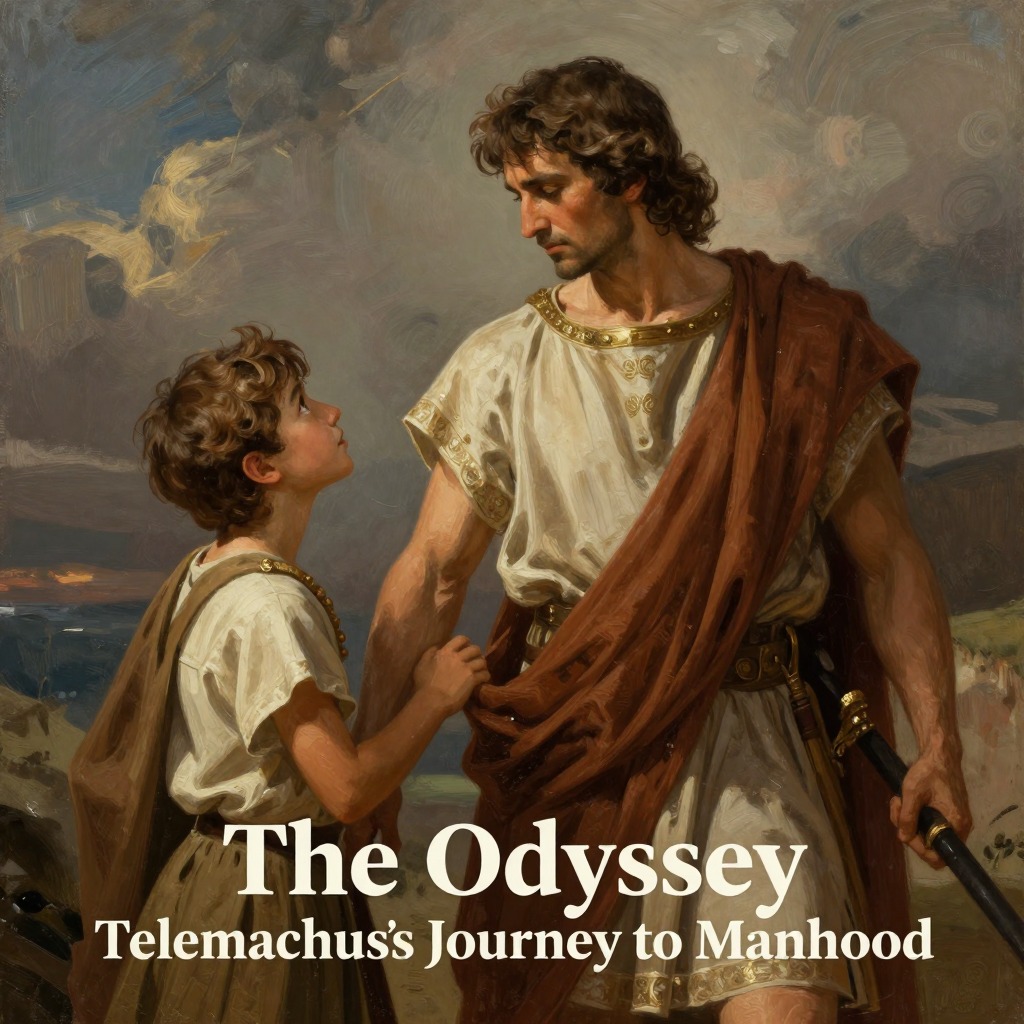
The OdysseyPisistratus, the youngest unmarried son of King Nestor of Pylos, is the prince who escorts Telemachus on his journey to Sparta and back, acting as a model of princely courtesy, tact, and loyalty. His role is crucial to the Telemachy, the section of the Odyssey that follows Telemachus's quest for news of his father: without Pisistratus's guidance, Telemachus would lack both the social access and the emotional support needed to navigate the courts of Nestor and Menelaus. He is the living embodiment of the xenia (hospitality) that the poem holds up as an ideal, and his steady friendship provides a counterpoint to the chaos and greed of the suitors back in Ithaca.
Identity and Background
Pisistratus is the youngest son of Nestor, the aged king of Pylos, and his wife Eurydice. He is the only one of Nestor's six sons who remains unmarried at the time of Telemachus's visit, a detail that Nestor himself notes when he puts Pisistratus to sleep in the same room as Telemachus. His brothers are named as Echephron, Stratius, Perseus, Aretus, and Thrasymedes. Pisistratus is distinguished by his good sense and his ability to speak with a discretion beyond his years, a quality that Menelaus explicitly praises. He is also deeply affected by the memory of his older brother Antilochus, who was killed at Troy by the son of the Dawn, and he weeps when Menelaus's words remind him of this loss.
Role as Telemachus's Host and Guide
When Telemachus and Athena (disguised as Mentor) arrive at Pylos during a great sacrifice to Poseidon, it is Pisistratus who first welcomes them. He takes them by the hand, seats them on soft sheepskins, and offers them portions of the inward meats and wine, giving the first cup to Athena as a mark of respect. After the feast, Nestor arranges for Pisistratus to drive Telemachus in a chariot to Sparta. The two young men travel together, spending a night at the house of Diocles in Pherae, and Pisistratus handles the reins. Throughout the journey, he acts as a gracious intermediary, introducing Telemachus to Menelaus and explaining the purpose of their visit.
Conduct at the Court of Menelaus
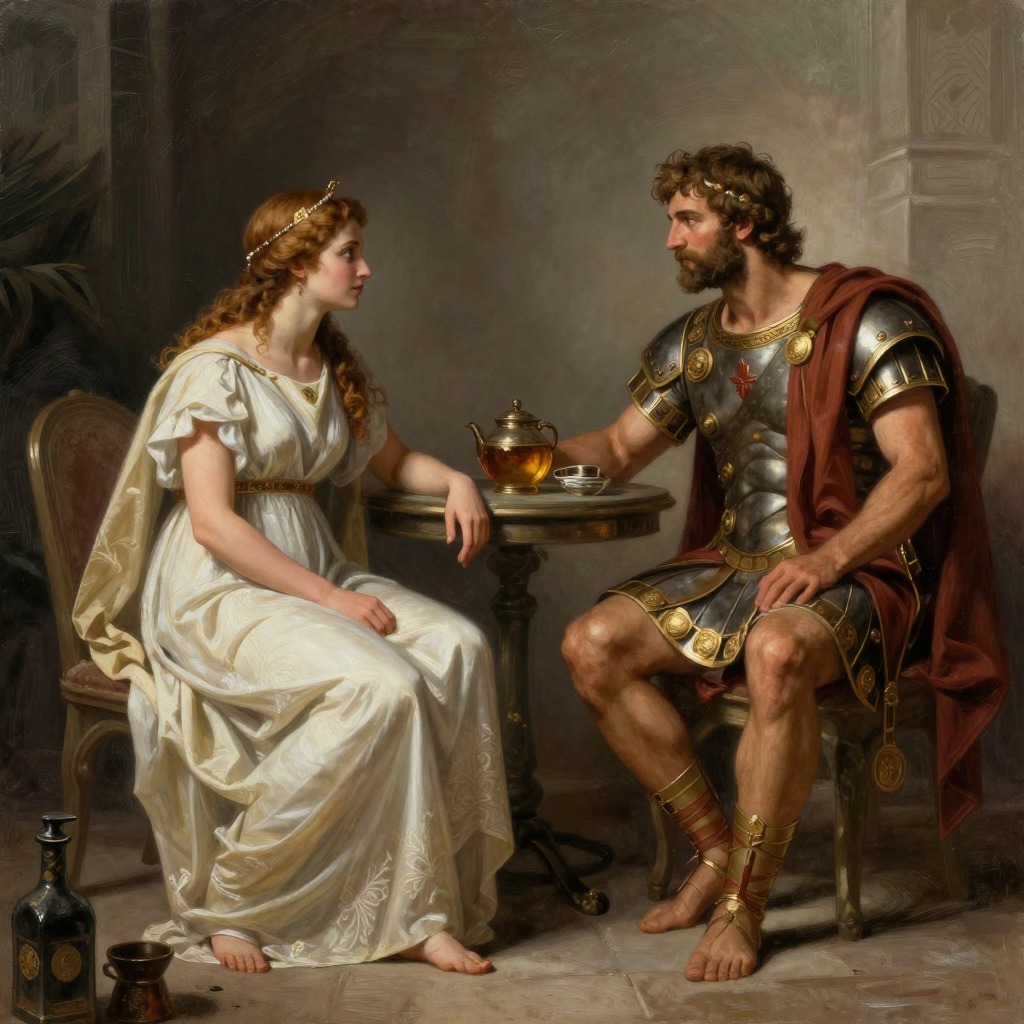
At Menelaus's palace in Lacedaemon, Pisistratus continues to demonstrate his diplomatic skill. When Menelaus and Helen recognize Telemachus's likeness to Odysseus and begin to weep, Pisistratus is the one who speaks up to break the tension, reminding the company that it is not fitting to mourn excessively during a feast. Menelaus praises his discretion, saying it is beyond his years and a clear sign that he takes after his father Nestor. Pisistratus also reveals that he himself is moved by the memory of his brother Antilochus, but he insists that morning is the proper time for grief. Later, when Telemachus is eager to leave, Pisistratus counsels patience, advising him to wait for Menelaus to give his presents and say a proper farewell, for a guest should never forget a host who has shown him kindness.
Friendship and Loyalty
Pisistratus's loyalty to Telemachus is unwavering. When they return to Pylos, Telemachus asks to be left at his ship rather than going to Nestor's house, fearing his father's insistence on further hospitality. Pisistratus agrees, understanding his friend's urgency, and helps load the presents from Menelaus into the ship. He then drives back to the city alone, knowing that Nestor will be angry but respecting Telemachus's wishes. This act of quiet compliance shows that Pisistratus values his friend's needs over his own convenience or his father's expectations.
Thematic Significance
Pisistratus represents the ideal of aristocratic friendship and the proper exercise of xenia. He is a flat character in Forster's sense, built around a single set of virtues—courtesy, tact, loyalty, and emotional restraint—but he is not a mere stereotype; his genuine grief for Antilochus and his willingness to accommodate Telemachus's haste give him a quiet depth. In a poem that contrasts the chaos of the suitors' house with the order of the courts of Nestor and Menelaus, Pisistratus is the human face of that order, a young man who knows how to honor guests, speak appropriately, and act with both warmth and dignity. His presence ensures that Telemachus's journey is not only informative but also formative, providing the prince with a model of how a noble youth should behave.