Polyphemus
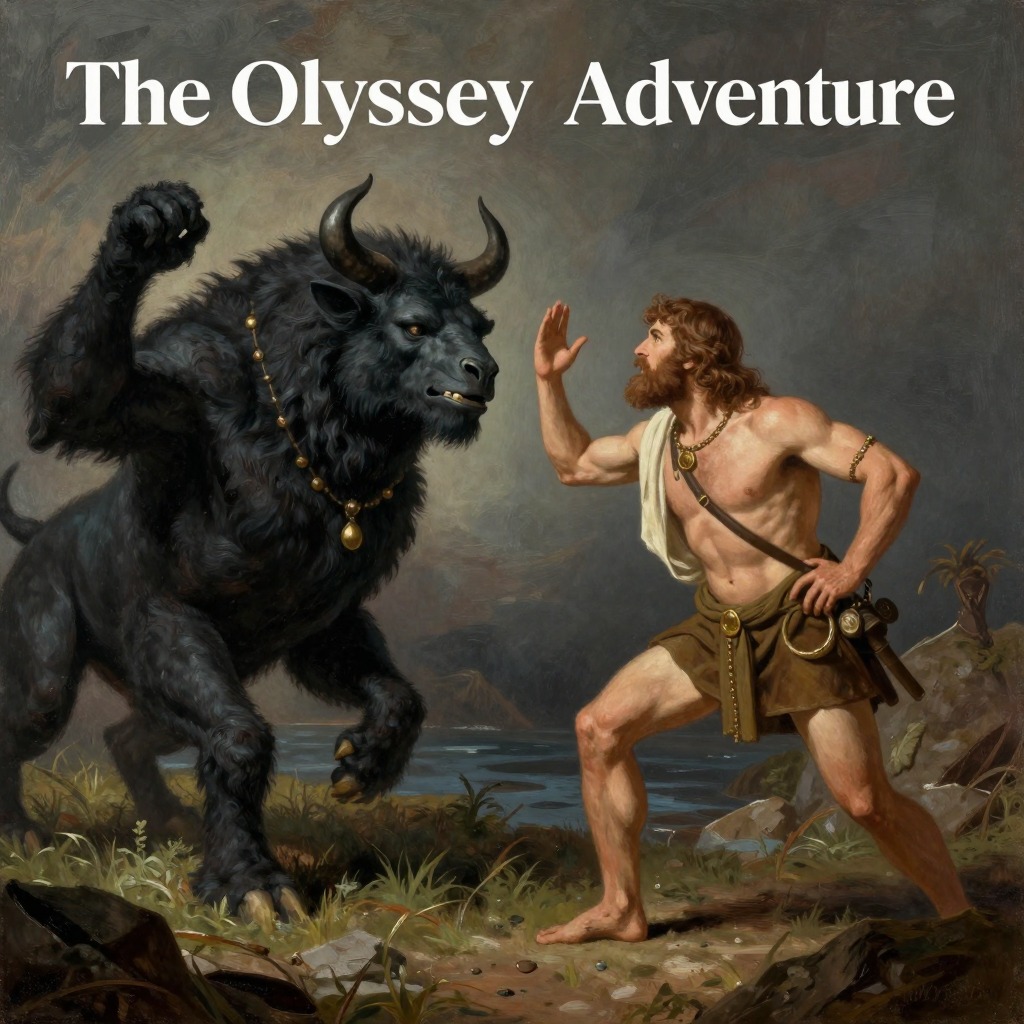
The OdysseyPolyphemus, the gigantic one-eyed son of Poseidon and the sea-nymph Thoosa, is the most memorable antagonist Odysseus faces during his wanderings. A lawless shepherd who lives apart from other Cyclopes in a cave on a remote island, he violates every rule of Greek hospitality by trapping Odysseus and his men, devouring six of them raw, and threatening the rest. The blinding of Polyphemus—a feat of cunning rather than strength—becomes the pivotal event that earns Odysseus the undying enmity of Poseidon, prolonging his journey home by a decade and shaping the entire narrative of the Odyssey. More than a mere monster, Polyphemus serves as a dark mirror: his brutishness highlights Odysseus's intelligence, his isolation underscores the Greek value of community, and his curse, once fulfilled, demonstrates the power of divine justice and the cost of human pride.
Identity and Background
Polyphemus is introduced not through the main narrator but through Odysseus's own retrospective tale, told to the Phaeacian court in Book 9. He is the son of Poseidon, god of the sea and earthquakes, and the nymph Thoosa, daughter of the sea-king Phorcys. This divine parentage is crucial: it means that any harm done to Polyphemus will be avenged by a god of immense power. The Cyclopes as a race are described as lawless and inhuman—they neither plant nor plough, have no laws or assemblies, and each lives as lord in his own cave, taking no account of neighbors. Polyphemus embodies this savagery in its most extreme form. His home is a great cave overhung with laurels, with a yard walled by stones and trees, where he keeps vast flocks of sheep and goats. He is a "horrid creature, not like a human being at all, but resembling rather some crag that stands out boldly against the sky on the top of a high mountain." This description establishes him as a force of nature, beyond the reach of moral or social law.
The Encounter in the Cave
Odysseus, driven by curiosity and a desire for guest-gifts, takes twelve of his best men to explore the Cyclops's cave despite his crew's pleas to steal cheese and lambs and flee. When Polyphemus returns at evening with his flocks, he seals the entrance with a stone so huge that twenty-two wagons could not move it—a detail that underscores the hopelessness of the men's situation. His first act is to seize two of Odysseus's companions, dash them against the ground, and devour them "like a lion in the wilderness, flesh, bones, marrow, and entrails, without leaving anything uneaten." He repeats this atrocity the next morning with two more men. Odysseus's initial impulse to kill the sleeping giant is checked by the realization that they could never move the stone; this moment of strategic restraint defines his heroism as intellectual rather than merely physical.
The Blinding and the "Noman" Trick
Odysseus devises a plan that relies on wine, fire, and wordplay. He offers Polyphemus a bowl of exceptionally strong wine given to him by Maron, priest of Apollo at Ismarus. The Cyclops, delighted, drinks three bowls and asks Odysseus his name. Odysseus replies, "My name is Noman; this is what my father and mother and my friends have always called me." Polyphemus, now drunk, promises to eat "Noman" last as his guest-gift, then collapses into a stupor. Odysseus and his men heat a sharpened olive-wood stake in the fire and drive it into the Cyclops's single eye, twisting it like a shipwright's auger. The boiling blood scalds his eyelids, and his hideous screams bring the other Cyclopes to the cave mouth. When they ask who is harming him, Polyphemus roars, "Noman is killing me by fraud; no man is killing me by force," and they depart, convinced he is ill. This pun—the most famous trick in the Odyssey—saves Odysseus and his remaining men, but it also plants the seed of future disaster.
The Curse and Its Consequences
As Odysseus sails away, his pride gets the better of him. Despite his men's pleas for silence, he shouts his true name back at the blinded giant: "Cyclops, if any one asks you who it was that put your eye out and spoiled your beauty, say it was the valiant warrior Ulysses, son of Laertes, who lives in Ithaca." This revelation transforms a personal injury into a named affront. Polyphemus, recalling a prophecy by the seer Telemus that he would be blinded by Odysseus, prays to his father Poseidon: "Hear me, great Neptune; if I am indeed your own true begotten son, grant that Ulysses may never reach his home alive; or if he must get back to his friends at last, let him do so late and in sore plight after losing all his men." Poseidon hears this prayer, and it becomes the engine of the entire poem—the god's wrath that keeps Odysseus wandering for ten more years, costs him all his remaining companions, and forces him to return home alone and in disguise.
Thematic Significance
Polyphemus functions as a complex symbol within the Odyssey's moral universe. He represents the absolute violation of xenia, the sacred law of hospitality: he eats his guests rather than feeding them, and offers death instead of gifts. His lawlessness defines by contrast the civilized values Odysseus fights to restore. At the same time, the episode dramatizes the double-edged nature of metis, or cunning intelligence. Odysseus's trick saves his life, but his subsequent boast—an act of hubris—nearly destroys him. The Cyclops's curse, fulfilled through Poseidon, demonstrates that even a monster has a claim to divine justice, and that the hero's greatest strength (his cleverness) can become his greatest weakness when not tempered by self-control. Polyphemus also serves as a foil to the civilized hosts Odysseus later encounters—Alcinous, Nestor, Menelaus—whose lavish hospitality contrasts sharply with the Cyclops's savagery. Finally, the episode establishes a pattern that recurs throughout the poem: Odysseus's encounters with monstrous or alien beings force him to rely on disguise, deception, and narrative itself as tools of survival, preparing him for the ultimate test of reclaiming his household in Ithaca.