Poseidon
The OdysseyPoseidon, the earth-shaker and god of the sea, stands as the most persistent divine obstacle in Odysseus's journey home. His unappeasable anger, rooted in a personal injury to his son, dictates the rhythm of the hero's wanderings and nearly undoes him at the threshold of Ithaca. More than a mere force of nature, Poseidon embodies a cosmic principle of retribution that operates alongside, and often in tension with, the more favorable designs of Athena and Zeus.
Identity and Divine Role
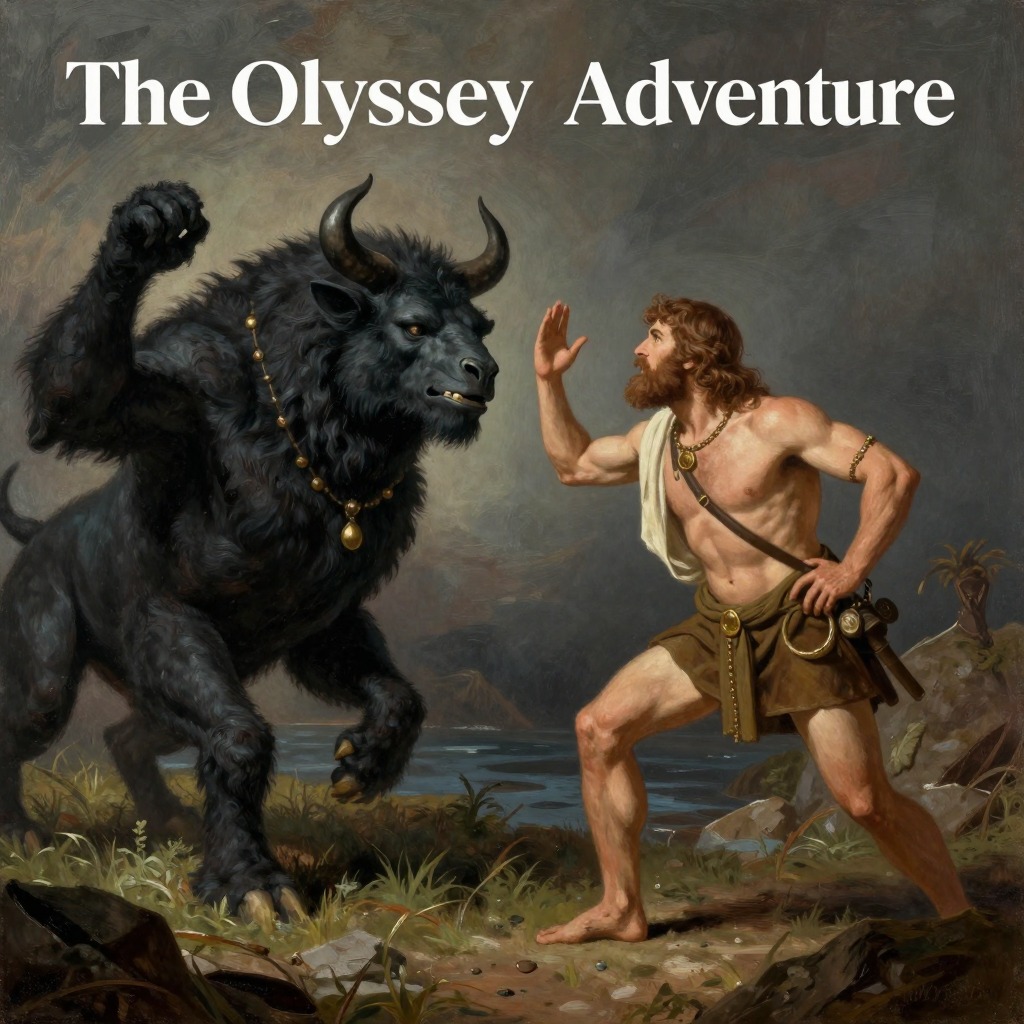
Poseidon is the brother of Zeus and Hades, and his dominion is the sea, over which he rules with absolute authority. He is also the god of earthquakes, capable of shattering land and sea alike. His power is immense and his temper formidable; he is not easily swayed by the other gods. He is the father of Polyphemus, the Cyclops, by the nymph Thoosa, daughter of the sea-king Phorcys. This paternal bond is the direct cause of his enmity toward Odysseus, for when Odysseus blinds Polyphemus, he makes a personal enemy of the god. Poseidon's role in the poem is thus defined by this familial grievance, which he nurses with a persistence that even Zeus acknowledges and accommodates.
The Wrath and Its Consequences
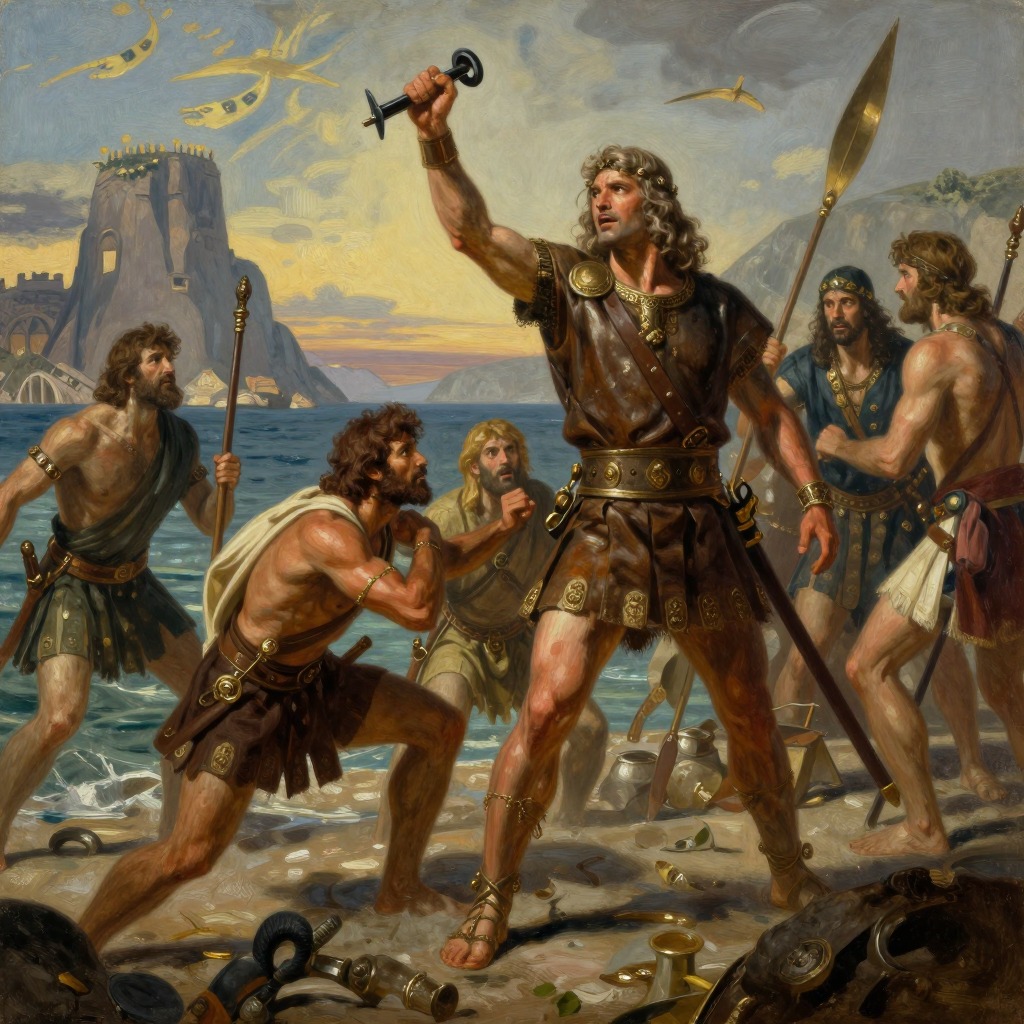
Poseidon's anger is the engine of Odysseus's suffering. While the other gods, led by Athena, eventually agree that Odysseus must return home, Poseidon remains implacable. As Zeus explains to Athena, "Neptune is still furious with Ulysses for having blinded an eye of Polyphemus king of the Cyclopes." Though he will not kill Odysseus outright, he torments him by preventing him from getting home. This divine grudge manifests in the most violent storm of the poem. As Odysseus sails away from Calypso's island on his raft, Poseidon, returning from the Ethiopians, catches sight of him and mutters, "Good heavens, so the gods have been changing their minds about Ulysses while I was away in Ethiopia... Still, he shall have plenty of hardship yet before he has done with it." He then gathers his clouds, grasps his trident, and stirs up a hurricane from every quarter, shattering the raft and nearly drowning Odysseus. Only the intervention of the sea-goddess Ino, who gives Odysseus her enchanted veil, and the calming of the winds by Athena, allow him to survive and reach the shore of Scheria.
The Curse of Polyphemus and the Prophecy
Poseidon's wrath is not merely a spontaneous reaction; it is formalized through a curse. After Odysseus blinds him and reveals his true name, Polyphemus prays to his father: "Hear me, great Neptune; if I am indeed your own true begotten son, grant that Ulysses may never reach his home alive; or if he must get back to his friends at last, let him do so late and in sore plight after losing all his men." The prayer is heard, and Poseidon's subsequent actions are a direct fulfillment of this curse. The god's power is such that even the prophecy of Teiresias in the underworld is framed around the necessity of appeasing him. Teiresias tells Odysseus that his return will be hard because of Neptune's grudge, and that even after killing the suitors, he must undertake a final journey inland, carrying an oar until he finds a people who know nothing of the sea, and there sacrifice to Poseidon to finally make peace.
Conflict with the Other Gods and the Phaeacian Punishment
Poseidon's will is not absolute; it operates within the larger framework of divine politics. Zeus, while sympathetic to Poseidon's grievance, ultimately decrees that Odysseus shall return. Poseidon cannot defy this decree, but he can make the journey as difficult as possible. This tension is most visible in the episode of the Phaeacians, who, at Athena's prompting, give Odysseus a safe passage to Ithaca. Poseidon is furious at this perceived slight from his own people and complains to Zeus: "I shall no longer be held in any sort of respect among you gods, if mortals like the Phaeacians, who are my own flesh and blood, show such small regard for me." Zeus gives him permission to punish them, and Poseidon turns their returning ship to stone and threatens to bury their city under a mountain. This act demonstrates that while he cannot prevent Odysseus's homecoming, he can and will exact a terrible price from those who aid him.
Narrative Significance and Thematic Role
Poseidon functions as the embodiment of the chaotic, untamable forces of nature that oppose human will and intelligence. He is the counterweight to Athena's guiding wisdom and the primary source of the epic's central conflict: the struggle of a man to return home against the opposition of a god. His wrath provides the narrative with its most dramatic and perilous moments, from the shipwreck off Scheria to the final, desperate swim to shore. Thematically, Poseidon represents the principle of nemesis, or divine retribution, that is a cornerstone of the Homeric world. Odysseus's blinding of Polyphemus was an act of both self-defense and hubris, and Poseidon's persecution ensures that the hero pays a heavy price for his victory. The eventual prophecy of a final sacrifice to Poseidon suggests that even the most cunning hero must ultimately acknowledge and appease the untamed powers of the world.
Poseidon's role as a divine antagonist has been echoed in various musical adaptations of the Odyssey. In Robert W. Smith's second symphony for concert band, the second movement titled "The Winds of Poseidon" directly evokes the god's wrathful storms that hinder Odysseus's voyage. Claudio Monteverdi's opera Il ritorno d'Ulisse in patria (1640) and Gabriel Fauré's Pénélope (1913) both incorporate the sea god's opposition as a driving force in the narrative. More recent works, such as Jorge Rivera-Herrans' Epic: The Musical, also feature Poseidon as a key adversary whose anger shapes the hero's prolonged journey.