moly
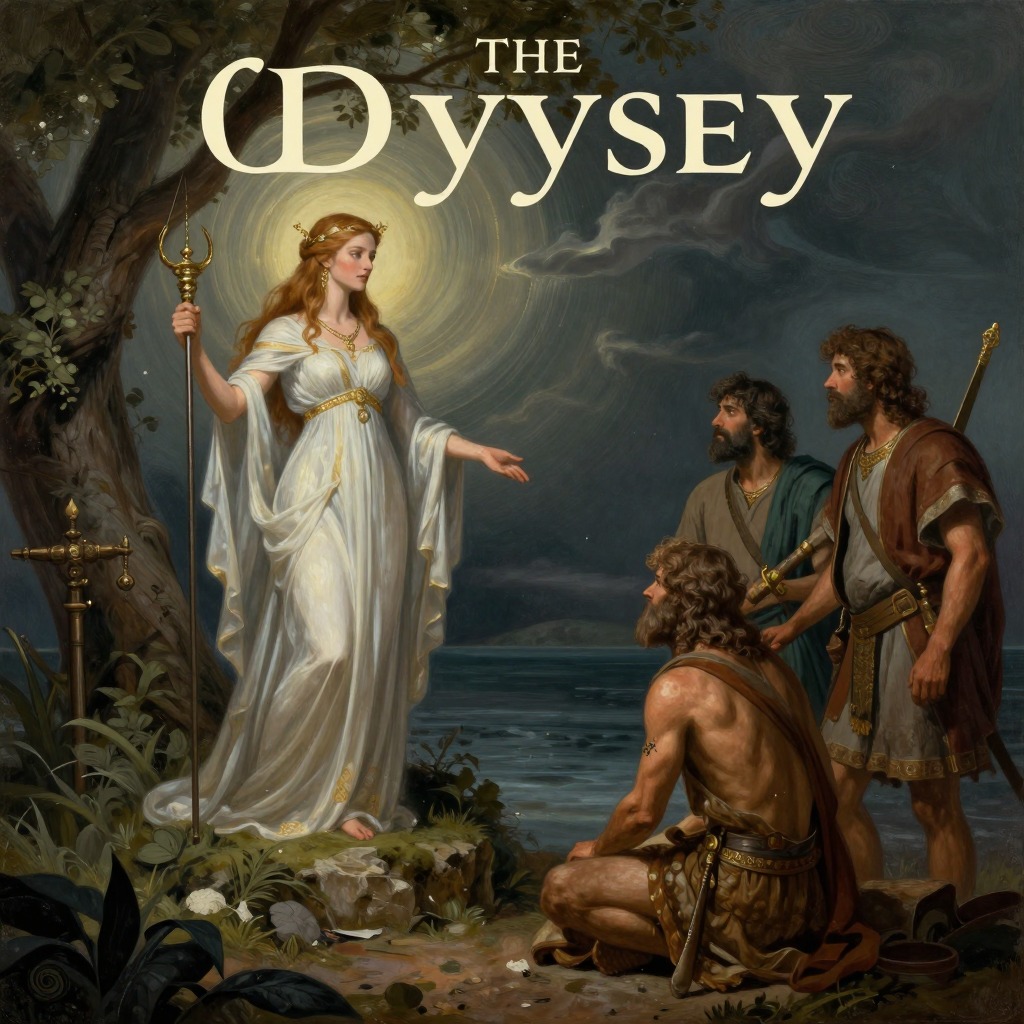
The OdysseyMoly is the magical herb that Hermes gives to Odysseus on the Aeaean island to immunize him against the enchantments of the goddess Circe. Its appearance marks the decisive moment when Odysseus, who has just learned that Circe turned half his crew into pigs, is equipped to confront her power directly. Without moly, Odysseus would have shared his men's fate; with it, he becomes the only mortal ever to withstand Circe's drugs and force her to release his companions. The herb thus functions as a divine counter-charm that shifts the balance of power between the hero and the sorceress, and it stands as one of the most vivid examples in the poem of a god intervening to supply a mortal with a specific, material means of overcoming supernatural danger.
Appearance and Divine Origin
Hermes meets Odysseus as he approaches Circe's house, disguised as a young man with the first down on his face, and takes him by the hand. He warns Odysseus that Circe will drug his wine and then strike him with her wand, but promises that the herb he is about to give will prevent her spells from working. Hermes then pulls the plant from the ground and shows it to Odysseus. The root is black, while the flower is as white as milk; the gods call it moly, and mortal men cannot uproot it, but the gods can do whatever they like. This description establishes moly as a substance that belongs to the divine realm—its very unearthly coloring and the fact that only a god can harvest it mark it as a tool of the immortals, not something a human could obtain on his own. Hermes's role as the giver of the herb aligns with his function as the god of travelers, boundaries, and cunning, all qualities that Odysseus will need in the coming encounter.
Function and Effect in the Circe Episode
When Odysseus reaches Circe's house, she welcomes him, seats him on a richly decorated silver-inlaid chair, and mixes him a drugged potion in a golden goblet. She adds her wicked poisons to make him forget his home, but the moly renders the drug powerless. After Odysseus drinks without being charmed, Circe strikes him with her wand and commands him to go to the pigsty. Instead of transforming, Odysseus draws his sword and rushes at her as though to kill her. Circe screams, falls at his knees, and immediately recognizes him as the man Hermes had foretold would one day arrive. The herb thus does not merely block the drug's effect; it also prevents the wand's transformative power from working, making Odysseus the first person Circe has ever encountered who is completely immune to her magic. This immunity forces Circe to negotiate rather than dominate, and Odysseus extracts from her a solemn oath that she will plot no further harm against him before he agrees to go to bed with her. The moly, therefore, is the instrument that transforms the encounter from a trap into a partnership, allowing Odysseus to secure the release of his men and gain Circe as a helpful ally rather than a hostile enchantress.
Thematic Significance: Divine Aid and Human Cunning
Moly embodies the intersection of divine assistance and human resourcefulness that runs throughout the Odyssey. Hermes provides the herb, but Odysseus must still have the presence of mind to follow the god's instructions—to drink the drugged wine without fear, to draw his sword at the right moment, and to demand a binding oath before trusting Circe. The herb is necessary but not sufficient; it enables Odysseus's own cleverness to operate. In this sense, moly functions as a physical manifestation of the metis (cunning intelligence) that Athena and Hermes both represent and that Odysseus himself embodies. The black root and white flower also carry symbolic weight: the contrast between dark and light may suggest the herb's power to see through illusion, to distinguish truth from deception, just as Odysseus must see through Circe's friendly facade to the danger beneath. Unlike other magical objects in the poem—such as Ino's veil, which saves Odysseus from drowning but must be thrown back into the sea—moly is consumed internally and leaves no trace; its power is absorbed into the hero's body, making him proof against transformation from within. This internalization of divine protection mirrors the way Odysseus's own character, tested by suffering, becomes increasingly resistant to the temptations and threats that would destroy lesser men.