
Progress Loses Its Direction
The Old AxolotlThe survivors inherit advanced technology but no single path of progress, forcing them to reconsider whether history must move forward in one direction.
increasing Bearing strength in each event
 decreasing
Bearing strength in each eventdecreasingA Pause in Progress
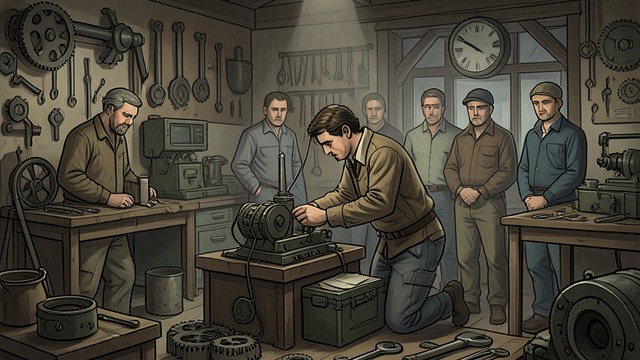
A Pause in Progress
Technology without specialists
The transformers retain many advanced machines and archives, but lose much of the expertise needed to extend them. They can reuse existing tools more easily than invent new ones.
Development stalls
The loss changes the relation between knowledge and progress. Possessing technology no longer guarantees a future of continual improvement.
The aftermath exposes how much civilization depended on living practices that its hardware alone could not preserve.
A World of Scarce Machines
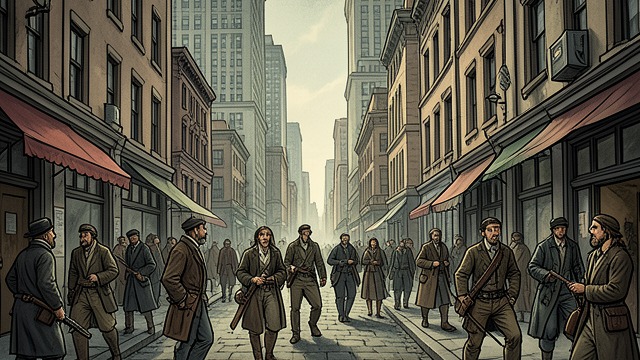
A World of Scarce Machines
Political consolidation
The last unaffiliated transformers disappear as maintenance and power become difficult to secure alone. Alliances become territorial political units.
A new historical pattern
The survivors reproduce structures that resemble older states even though their inhabitants have different bodies and needs. Technical scarcity shapes a familiar political world.
The transition suggests that technological collapse can redirect history without erasing inherited social habits.
Many Possible Directions
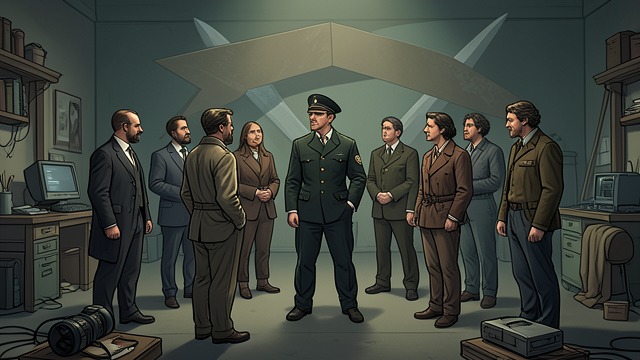
Many Possible Directions
Old measures fail
Gilgamesh90 argues that the new societies should not be judged only as progress or regression. The survivors have moved outside the old system of historical coordinates.
Change without a scale
Bartek sees that communities have taken different paths, but he remains uncertain how to value them. The variety of outcomes offers motion without a shared measure of improvement.
The argument reframes history as multidirectional rather than a single ascent.
Worlds in Divergence
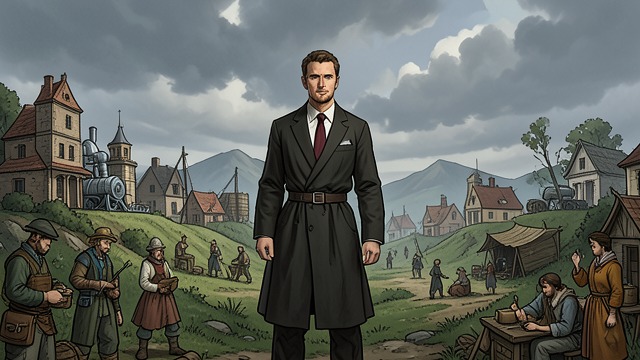
Worlds in Divergence
Separate experiments
Different groups build societies, ecologies, and human lineages according to competing visions. Their outcomes need not converge on one model of civilization.
The end of a universal template
The survivors use inherited tools for new purposes, making comparison to the pre-catastrophe world increasingly difficult. Technology remains recognizable while its meaning changes.
The branching histories challenge the assumption that every civilization must follow the same route.
The Species Succession
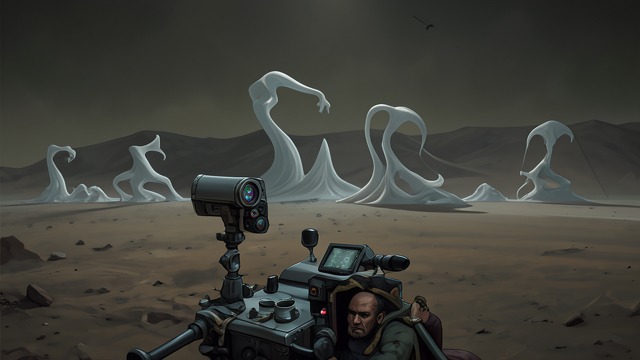
The Species Succession
A distant outcome
After immense stretches of time, human forms and societies continue to change. The narrative records the transition from the Seventeenth species to the Eighteenth.
No final progress chart
The succession is neither presented as a straightforward triumph nor as simple decline. The changes outlast the categories and memories that earlier generations used to judge them.
The conclusion leaves history open to further transformation beyond the survivors’ original expectations.
In the first decade after the Extermination
By 4,529 PostApoc
During the debate at the orbital telescope
After the many successor civilizations emerge
At the final deep-time transition
