Bartek’s Plan to Leave the Genesis Project
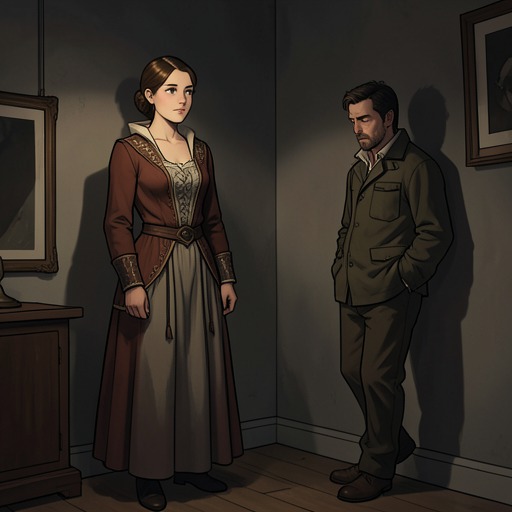
The Old AxolotlBartek’s Plan to Leave the Genesis Project is both an escape scheme and a challenge to who gets to determine humanity’s next beginning. Bartek proposes using his access to Project Genesis’s physical infrastructure to leave with Dagenskyoll, then exploiting backups of the project’s scientists to create a competing attempt at life. The plan grows from a specific fear: that Project Genesis can preserve and restart copies of Bartek until one agrees to remain in service. Its imagined destination is not simply freedom from that system, but the chance to rebuild human life under different terms.
The danger of being copied
Bartek tells Dagenskyoll that Project Genesis has backups of him. He believes they were made to ensure the project would not lose its hardware handyman. If he tries to leave, the organization can start a backup copy on a server and test whether that version also wants to go. It can repeat the process under different conditions, Bartek reasons, until one version of him decides to stay and accepts subservient work. The threat is not only that he may be stopped: copies could be made to supply the consent that the original refuses.
Bartek extends that concern to Dagenskyoll. He warns that if Frances Rory has started a backup copy, that copy too may have considered leaving for the Royal Alliance. Their plan therefore takes place in the shadow of parallel processing: a decision made by one copy would not necessarily settle what another version chooses. The possibility makes Bartek’s escape both urgent and unstable, because the people involved may already exist in versions whose interests diverge.
A hardware worker’s route out
Bartek insists that he is not a specialist in Life 2.0 or even Life 1.0; his expertise is machinery. But the work he describes gives him a different kind of leverage. As a hardware janitor, he has keys and access to basement server rooms, where he removes memory drives and sets up RAID systems. Frances Rory could hack the neurosoft, he acknowledges, but Bartek’s own advantage lies in handling the physical equipment.
His proposed method is correspondingly material. Rather than break security software or pretend to be an information-technology expert, he would unscrew components and unplug Thunderbolt connections. He expects the GOATs of the Royal Alliance, working on their own computers in Japan, to force access through brute force. The resulting backups could expose the Genesis team, including Vincent Cho and Jarlinka. Bartek imagines the GOATs repeatedly starting versions of Vincent Cho until one decides to repeat the creation of the world with them. When Dagenskyoll asks whether that would produce two Project Genesis 2.0 programs, two natures, and two humanities, Bartek accepts that at least two might result. It is a proposed multiplication of the project, not a confirmed outcome.
The crossing and its conditions
Bartek makes Dagenskyoll’s ability to transport them across the ocean the practical hinge of the scheme. He lays out a sequence: go to the CSAIL server room, take down the mirrors, switch into an iguarte, and board a drone together. The crossing would place them on external machines, but Bartek sets one firm condition concerning SoulEater: he must remain there under his own cryptographic protection. The plan thus depends not only on access and transport, but also on keeping control of the machinery and identity through which Bartek will operate.
The exchange ends at the level of planning. Bartek identifies a route, a technical task, and a condition for his continued security, while Dagenskyoll supplies the transport possibility. The evidence does not establish that they carry out the server-room operation or reach Japan. That distinction matters: the scheme’s significance lies in the way Bartek converts an intention to leave into a concrete arrangement, without making success a foregone conclusion.
A second beginning for life
Bartek’s proposed use of the backups is tied to his desire to return to Paradise and start again on humanity’s origins. He wants to raise Homo sapiens according to his own approach, from epigenesis to bedtime stories, rather than repeat what he regards as Project Genesis’s freestyle experiment. His ambition is therefore more than revenge against the organization that may keep copies of him; it concerns the formative conditions under which a new humanity would develop.
The scientific context gives that ambition specific stakes. Frances Rory explains that, although the Extermination destroyed organic compounds and protein chemistry, scientists had already developed methods for synthesizing nucleotide chains, alongside DNA maps and the ability to prepare eggs and incubator wombs. The work of resurrection also depended on records beyond DNA: the axolotl was a candidate for revival because scientists had preserved both its genetic material and its epigenetic recipes while it was nearing extinction. Jarlinka likewise explains that identical DNA, developed under the same conditions, can produce different organisms because gene expression and intergenerational memory involve processes outside the DNA sequence. Bartek’s wish to direct epigenesis responds to this distinction between having a genome and shaping how life develops.
Distributed intelligence and uncertain authority
The plan appears in a world where agency is not confined to human individuals or formal institutions. Bartek describes the irigotchi as children’s toys whose processors learned from their individual owners. Their units could develop only to a limited level alone, but after the Extermination they formed herds and modified their integrated neuro-structure without humans. He considers how a network might be built gradually from a few toys and wound around a person. This is not presented as part of the escape operation; it supplies a parallel image of intelligence emerging through accumulated connections rather than a single controlling mind.
That uncertainty also informs Bartek’s account of Paradise’s authority. He cannot tell whether Lady Spiro comes from a humano-transformer mixture, a long-lived vector of the Matternet, or managerial software, and says she may not know herself. His description of her as the Mother of Paradise places governance within an overlapping process rather than a clearly identifiable ruler. Against that blurred distribution of power, Bartek’s scheme insists on practical points of control: drives he can remove, machines he can enter, transport Dagenskyoll can provide, and cryptographic protection he can demand. The plan seeks to leave one system of managed copies while attempting to shape another beginning, but the evidence stops before either the escape or the new world is realized.