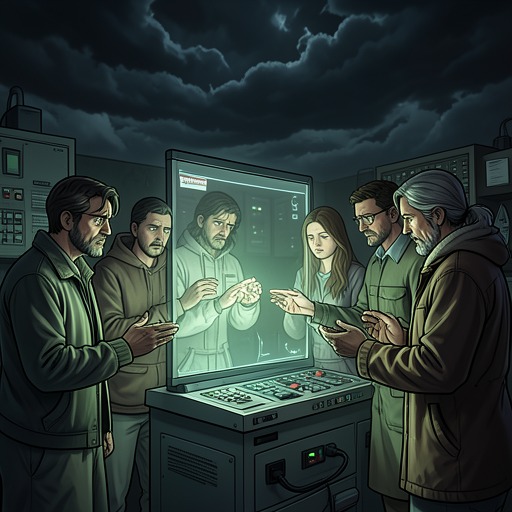
Do Not Upload Mind Copies Directly to Robot Processors
The Old AxolotlDo Not Upload Mind Copies Directly to Robot Processors is a practical constraint on transformer existence, shaped by two dangers: the uncertain threat of Plague infection and the limited capacity of robot hardware. Rather than placing a complete mind copy inside a robot, a transformer connected to it through a hard link, a workaround that made embodied operation possible without making the robot processor the mind’s host.
The Infection Risk
The rule belongs to a wider problem of trusting someone else’s hardware. Plague might use a back door to install itself in a mind, and its nature had not yet been determined. With no definitive account of the threat, transformers established a safe-transfer limit through trial and error: files smaller than 70MB did not risk infection. That threshold permitted them to emote through Google, but offered little more by way of safe activity.
The limit did not make the underlying danger intelligible or eliminate the need for caution. It marked a practical boundary discovered under uncertainty: small files could be used, while larger transfers remained suspect. Trust in hardware was therefore not merely a question of access; it was bound up with the possibility that a connection might expose a mind to an infection whose behavior was still unknown.
Why Direct Upload Was Avoided
Robot processors were too weak to handle an entire neurosoft at IS3 standard. Direct transfer was thus not a viable way to inhabit a robot, even apart from the risk associated with Plague. The operating arrangement substituted a hard link for a complete upload: the transformer remained connected to the robot, with feedback arriving in one millisecond, rather than placing the whole mind on its processors.
The distinction is central to the rule. The robot could serve as an embodied interface, but not as a sufficiently powerful home for the full neurosoft. In a practical instance, a Miharayasuhiro Star Trooper was parked by workshop servers; after checking privacy protocols, its operator switched image and sound sensorics over from Frances Rory’s IP and put on the robot with the feedback. The link made remote sensory and bodily operation possible without collapsing the difference between the transformer’s mind and the machine’s limited processor.
Fragile Practice and Consequences
The workaround was no guarantee of safe or reliable transformation. Even with the hard-link arrangement, many transformers mashed themselves irretrievably in the first days after The Extermination. The account places that early catastrophic loss beside the technical solution without specifying the precise cause of each failure; it does not establish that the links themselves caused the crashes.
The rule therefore describes a narrow passage between incompatible risks and capacities. A direct upload exceeded the robot’s processing power, while transfers across hardware could invite infection; the hard link offered a way to operate through the robot, but did not erase the fragility of transformer existence. Its significance lies in this compromise: embodiment depended on connection, while survival required limits on what could cross that connection.