Iguarte Zodiac
The Old AxolotlThe Iguarte Zodiac turns the software used to transform minds into a horoscope for transformers: a proposed map of recurring tendencies that begins as an attempt to explain shared experience and becomes a tool for judging people. Its tension lies in the distance between patterns Ernesto Iguarte claimed to find in thousands of cases and the much larger conclusions others drew from them—about character, politics, and who should be allowed into an alliance.
Construction and Claims
Before Ernesto Iguarte went completely insane, he had catalogued several thousand transformers from different alliances and countries according to the neurosoft they had used to IS before The Extermination. Hundreds of IS3 cheats had circulated at the time. The most popular versions appeared often enough, in his view, to reveal regularities among their users. Ernesto Iguarte assigned the cheats to star constellations and posted a version of the Moscow Transformer List ordered according to this software Zodiac. The astrological format gave a name and arrangement to what he presented as a large comparative record.
The claims attached to particular programs varied in kind. Ernesto Iguarte said that people who had IS’d on the Chinese UltraBurner could not tolerate humanoid mechs, with Cho offered as a textbook example. Users who had transformed through Pyroxyna 6.1, he claimed, tended sooner or later to auto-delete. The account says he had statistics to support these assertions; it does not establish that the statistics proved an underlying cause. The Zodiac therefore rests on a distinction that becomes important later: recurring outcomes in a software group may look like evidence of a tendency, but they do not by themselves explain why that tendency exists or show that it defines every person in the group.
Bartek’s Recognition and Doubt
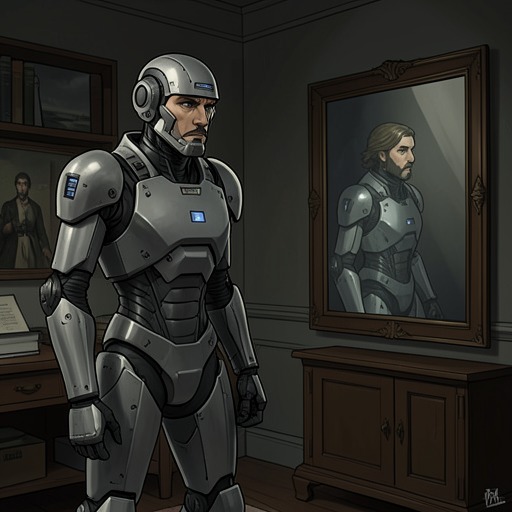
Bartek initially gave the theory some credence because its horoscope seemed to explain his own depressive deceleration. Transformers who had IS’d through programs written by the Ural Team reportedly shared the same affliction: roughly every hundred days, they sank into a heavy depression and slowed to a few kilohertz. The frequency and specific processor slowdown made his experience appear legible within the Zodiac. For a time, the classification offered a recognizable pattern where Bartek had previously lacked an explanation.
That apparent fit did not last. Bartek realized that the horoscope had not explained why processor speed should affect emotional states. Naming a recurring interval and connecting it to a software group described when the depression arrived and whom it seemed to affect; it did not account for the relationship between mechanical deceleration and feeling. The Zodiac’s explanatory promise thus narrowed under scrutiny. What had seemed like an account of Bartek’s experience remained a correlation whose most puzzling feature was still unresolved.
From Pattern to Social Typing
The more consequential change came when followers of Ernesto Iguarte’s thought used the Zodiac to infer far more than software-linked tendencies. They began deriving transformers’ political beliefs and entire life paths from the IS3 program each had used. A classification first arranged around neurosoft consequently became a means of treating a technical history as a personal and political identity. The list did not merely sort information: its categories invited users to read a person’s future and character from the program associated with that person’s transformation.
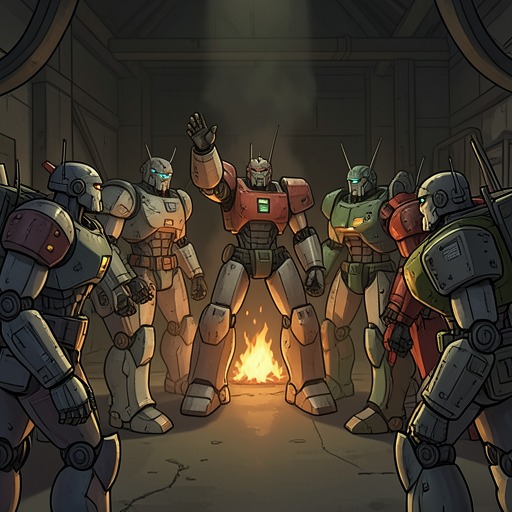
The Xers, who had IS’d via the Xbox 6x666, show the concrete cost of that inference. They were banned from most alliances after two transformers in the group had either deliberately or accidentally opened local servers to the Plague, an act of sabotage. The group’s association with those incidents was then treated as an innate quality of the software. The movement from two acts to a supposed software-born disposition erased the distinction between what particular transformers had done and what the whole category was said to be. In the Zodiac’s social use, a pattern could harden into a verdict, and the verdict could determine access to alliances.
Bartek’s Rejection and the Returning Clock
Bartek regarded this extension as blatant neuro-profiling and refused to identify himself with any predefined Ural personality. His refusal distinguishes acknowledging a repeated experience from accepting a fixed identity built from it. The Zodiac could appear useful when it named his roughly hundred-day cycle, yet its followers’ broader claims converted group-level associations into predictions about individual lives. Bartek rejects that conversion without claiming to have solved the original problem of why his processor’s speed and emotional state seemed to move together.
The classification retains its hold in the final image of this sequence. The clock for Bartek’s sign in the Iguarte Zodiac clearly indicates that the time has come for his next deceleration. The forecast is presented as an impending recurrence, not as a resolution of its cause. That ending preserves the system’s double character: it gives Bartek a schedule by which to recognize his suffering, while leaving him unconvinced that the Zodiac explains it—and unwilling to let its categories define who he is.