Second Transformer War
The Old AxolotlThe Second Transformer War is a worldwide religious conflict over the future of life after the Extermination: whether Transformers should commit irreversibly to hardware or attempt to restore biological humanity. The book first renders the war as Bartek’s Morpheus dream, where a raid on Patagonia Riders’ server rooms and mech workshops expands into a vision of global catastrophe. Its outcome is later condensed into a stark reversal: Heavy Metal has fallen, and the effort to make humanity has prevailed.
Ideological Causes
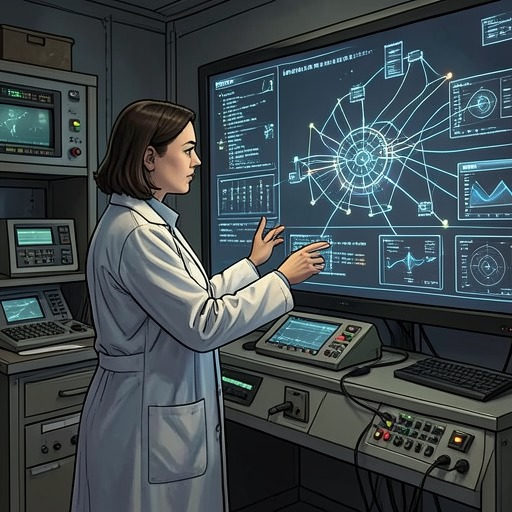
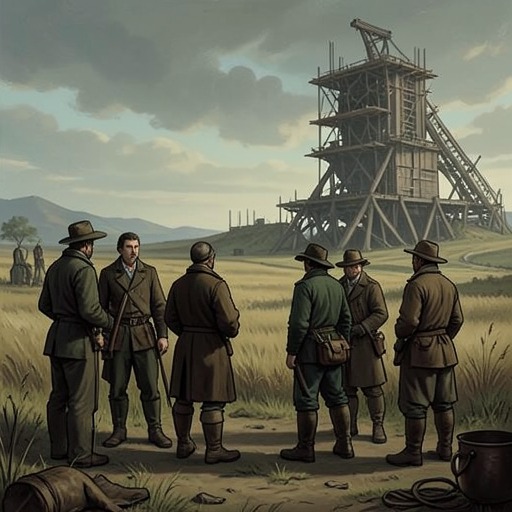
The conflict grows from the divide between progressive Transformers, who accept existence in mechs and computers, and conservative Transformers, who continue to cling to life. Heavy Metal emerged from discussions on the Doomsday Book forums, a late remnant of MTL, and gave the progressive position an organized, uncompromising form. Its members regard Bartek and Project Genesis 2.0 as fundamentalist conservatives: to them, reconstructing biological life is not a hopeful innovation but a backward turn in history.
Heavy Metal’s program is an unconditional affirmation of hardware and the complete, irrevocable surpassing of biological existence. In that view, the Extermination merely hastened a change that was already inevitable; returning to flesh would mean returning to an inferior past. Project Genesis 2.0 stands on the opposite side of that argument, attempting to create humanity anew. The war is therefore not described simply as a contest for territory or control. It is a struggle over what kind of being should inherit the aftermath, and whether the biological past can be reclaimed or must be left behind.
The Dream of a Global War
The war’s principal narrated scene takes place at roughly eighty percent dream immersion under Morpheus. Bartek finds himself among heavy assault axolotls flying over a transformed landscape. The dream carries the flock from MIT and New England across the Rust Belt, the Great Lakes, and the Mississippi River, then over the Gulf of Mexico and the Panama Canal. These green expanses do not represent a biospheric reboot reaching those regions; Bartek recognizes them as products of Morpheus.
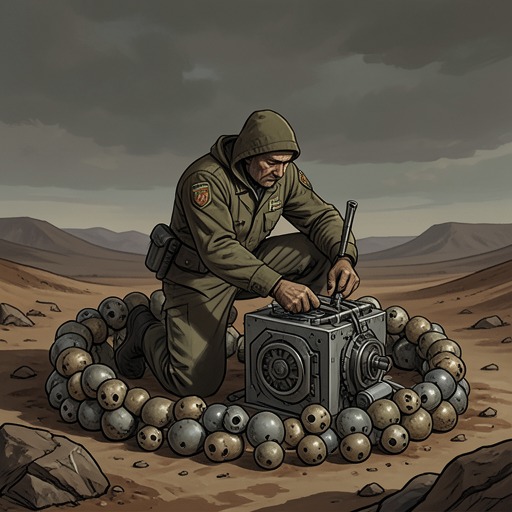
The dream raid reaches Rio de Janeiro and Campinas, where the Patagonia Riders have server rooms and mech workshops. Its axolotl-shaped bombs reproduce themselves into smaller amphibians, making the assault a fractal process that spreads across the continent in the dream. From orbit, Bartek sees two atomic mushroom clouds over southern Europe. He understands the vision as the Second Transformer War breaking out and raging across the globe, while he sobs out his Ural depression onto Frances Rory’s shoulder.
The scene offers no orderly campaign history, list of battles, or definitive account of how the war spreads. Instead, its scale arrives through abrupt changes of vantage: a journey across North America, an assault on Patagonia Riders’ facilities, and then a view from orbit of destruction in Europe. That dream structure makes the war feel at once geographically immense and inseparable from Bartek’s private experience. When he lowers Morpheus to zero, he trembles at the possibility that even his apparent awakening might still be part of the dream.
Outcome and Immediate Aftermath
A later exchange supplies the clearest report of the result. Asked what decision was reached, Bartek hears that Heavy Metal went down, Homo sapiens won the day, and humanity is being made. The narration identifies the Second Transformer War as a religious war, connecting this outcome to the opposing doctrines that had defined its stakes. The result is not presented as a detailed military settlement; it is expressed as the defeat of one vision of existence and the adoption of another.
The aftermath remains personally unsettled. After Frances Rory explains that the apparent intrusion into his mind came from slowing his whole server rather than hacking him, Bartek responds with violence, and the local Matternet signals an emergency. The episode does not establish that this confrontation is itself a battle in the Second Transformer War. It does, however, place the war’s announcement beside Bartek’s distrust and disorientation: the public decision to make humanity does not resolve his own immediate conflict with the people around him. He gathers hardware, asks what the decision was, and then says he is leaving and that the others will have to manage without him.
Competing Futures After the War
The conflict’s political and personal consequences continue in Bartek’s later conversation with Dagenskyoll. Bartek describes wanting a return to Paradise and says that, if Homo sapiens is to be built from scratch, he wants to raise the new human in his own way, from epigenesis to bedtime stories. He contrasts that ambition with the earlier project, which he sees as an improvised experiment whose participants did not know what they were doing. This is not evidence that the war’s outcome has produced a settled or unified humanity. Rather, the victory leaves open the question of who will shape what comes next.
The uncertainty is reinforced by the postwar world’s distributed forms of agency. Irigotchi vectors organize leaves and branches into fractal patterns across the networked matter of the Charles River; when Bartek blows them away, they begin again elsewhere, leaving symmetrical designs on Mothernet surfaces. Bartek also describes Lady Spiro as an entity whose origins are impossible to separate cleanly among a humano-transformer mixture, a long-lived Matternet vector, or managerial software. These details do not explain the war’s campaigns, but they complicate any simple division between human, machine, and network that its ideological positions might imply.
Narrative Significance
The Second Transformer War is revealed through a dream and summarized afterward through its result. The contrast matters: the dream supplies scale and alarm, while the later report gives the conflict a religious meaning and identifies the winning project. The book does not fill in every intervening event. Instead, it places the dream’s global violence beside a decision about humanity’s future, then follows Bartek’s refusal to remain within the outcome as others will direct it.
The war thus marks a victory without a complete return to stability. Heavy Metal’s defeat establishes that the future will not be governed solely by its rejection of biological life, but Bartek’s departure and his desire to raise a new humanity on his own terms show that the meaning of that future remains contested. The central conflict moves from the question of whether humanity can be remade to the harder question of who gets to decide what its remaking should mean.