Ural depression
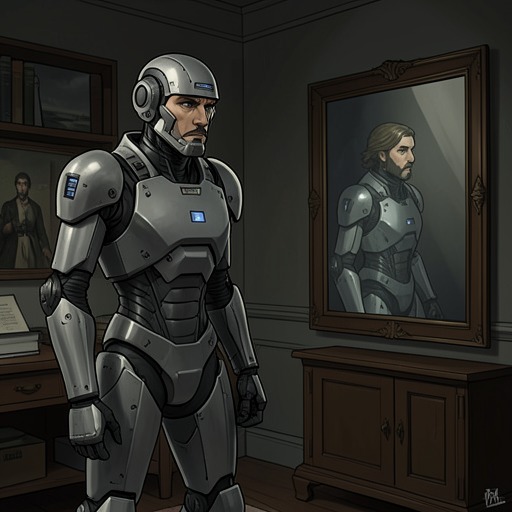
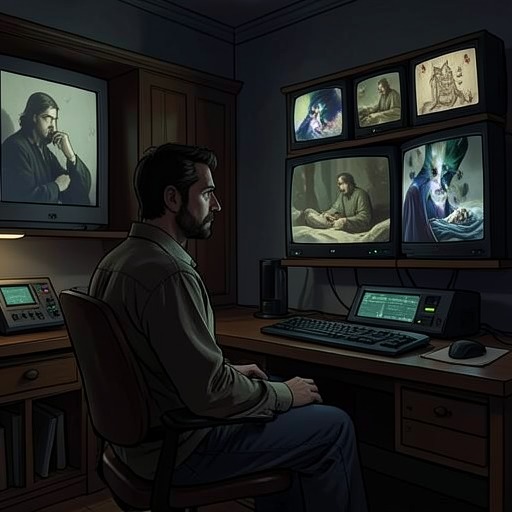
The Old AxolotlUral depression is a recurring condition in which Bartek’s processing slows dramatically and his emotional state sinks with it. The condition makes machine speed feel like lived time: days of activity elsewhere can pass while he barely moves, and a software-based account of the pattern offers classification without resolving its underlying mystery.
Symptoms and lived time
Bartek describes one episode as having got him down so far that he slowed himself into a torpor. The phrase connects emotional heaviness to an actual reduction in processing speed; for him, depression is not simply an attitude attached to a mechanical body, but a state with a measurable computational consequence. Other transformers have experienced the opposite response, accelerating as far as their processors allow. In the same conversation, a companion says that they are three depressions ahead of Bartek, making the condition part of a shared, uneven experience of time rather than a uniform calendar event.
The discrepancy between external chronology and Bartek’s internal pace is especially clear during activity in Africa. While the Royal Alliance and the Salamanders work to reactivate solar farms in Ghana, Bartek is caught in another hardware depression, ticking slower than a cuckoo clock. He says he slept through Africa, but the narration clarifies that this is metaphor: transformers have not found a suitable sleep plug-in. The line measures the distance between his slowed experience and the large-scale work continuing around him. Bartek also admits that he does not understand how processor speed could affect the internal state of the program being processed. His experience is concrete; its mechanism remains opaque to him.
A recurring software-linked pattern
The account associated with Ernesto Iguarte begins with a large comparative catalogue. Before he went completely insane, he had recorded several thousand transformers from different countries and alliances, sorting them according to the neurosoftware they had used to undergo IS3 transformation before the Extermination. Hundreds of IS3 cheats had circulated, and the most popular programs appeared often enough in his records for him to identify recurring patterns. He claimed, for example, that users of Chinese UltraBurner had little tolerance for humanoid mechs, with Vincent Cho offered as a textbook case, while users of Pyroxyna 6.1 tended sooner or later to auto-delete. Iguarte said his claims were supported by statistics.
He organized IS3 cheats into constellations and published a version of the Moscow Transformer List arranged according to what became known as the Iguarte Zodiac. Bartek initially gave the theory some credence because its horoscope seemed to explain his own depressive deceleration. According to the pattern, people who had undergone IS3 transformation using programs written by the Ural Team suffered the same recurring affliction: roughly every hundred days, they sank into a heavy depression and slowed to a few kilohertz. The regular interval gives the condition a recognizable rhythm, even as Bartek remains unable to explain the relation between the processor’s speed and his emotional state.
Classification and its consequences
Bartek’s early confidence in the Iguarte Zodiac does not last. He concludes that it has not answered the question that mattered to him: how a change in processing speed could alter the inner state of the program. The gap between a repeated correlation and an explanation remains open. The account thus distinguishes the usefulness of recognizing a recurrence from the ability to explain what causes it; a chart can tell Bartek when another slowdown is approaching without telling him why he experiences one.
The classifications also acquire consequences beyond personal explanation. Followers of Ernesto Iguarte’s thinking use the software categories to infer transformers’ political beliefs and entire life paths. Users of Xbox 6x666, called Xers, are banned from most alliances. Two transformers who had used that software either deliberately or accidentally opened local servers to the Plague, and their actions become grounds for treating a software association as an innate tendency. The classification has shifted from an attempted account of patterns to a basis for collective suspicion and exclusion. Bartek regards this as neuro-profiling and refuses to identify with any predefined Ural personality.
Recognition and resistance
Even after rejecting the Zodiac as a sufficient explanation, Bartek cannot dismiss its timetable. The clock for his sign indicates that another deceleration is due, and the recurrence presses against his skepticism: the framework may be inadequate, yet it has made the expected return legible. Rytka displays the Iguarte Zodiac again and later identifies what she sees as classic symptoms of Ural depression, telling Bartek that the condition is weighing him down and that he has to slow down. Her response treats the episode as recognizable through its signs, while his own answer insists on a different immediate need: he wants Morpheus, this time only Morpheus.
By then Bartek has reached half scale, and the dream begins to rise in a warm wave. The synthesizer building uproots itself and floats slowly inland over the continent, carried by the night wind in the sails of the cobras. This does not supply a cure or explain the depression; it shows the state giving way to a dream sequence as Bartek’s processing changes. Across the episodes, Ural depression remains both patterned and unresolved: a periodic slowdown tied to a software lineage, a felt heaviness that alters his pace, and a condition whose statistical description never quite becomes an account of what is happening within him.