Cienfuegos
The Old Man and the SeaCienfuegos, a city on the southern coast of Cuba, enters the narrative of The Old Man and the Sea not as a physical setting but as the origin of a defining figure in Santiago's past: the great negro from Cienfuegos, who was known as the strongest man on the docks. This man is the opponent in the most significant contest of Santiago's life, a hand-wrestling match that took place in a tavern in Casablanca. The memory of this event becomes a vital source of confidence and a measure of his own will as he endures his epic battle with the marlin far out at sea.
The Hand Game and the Champion
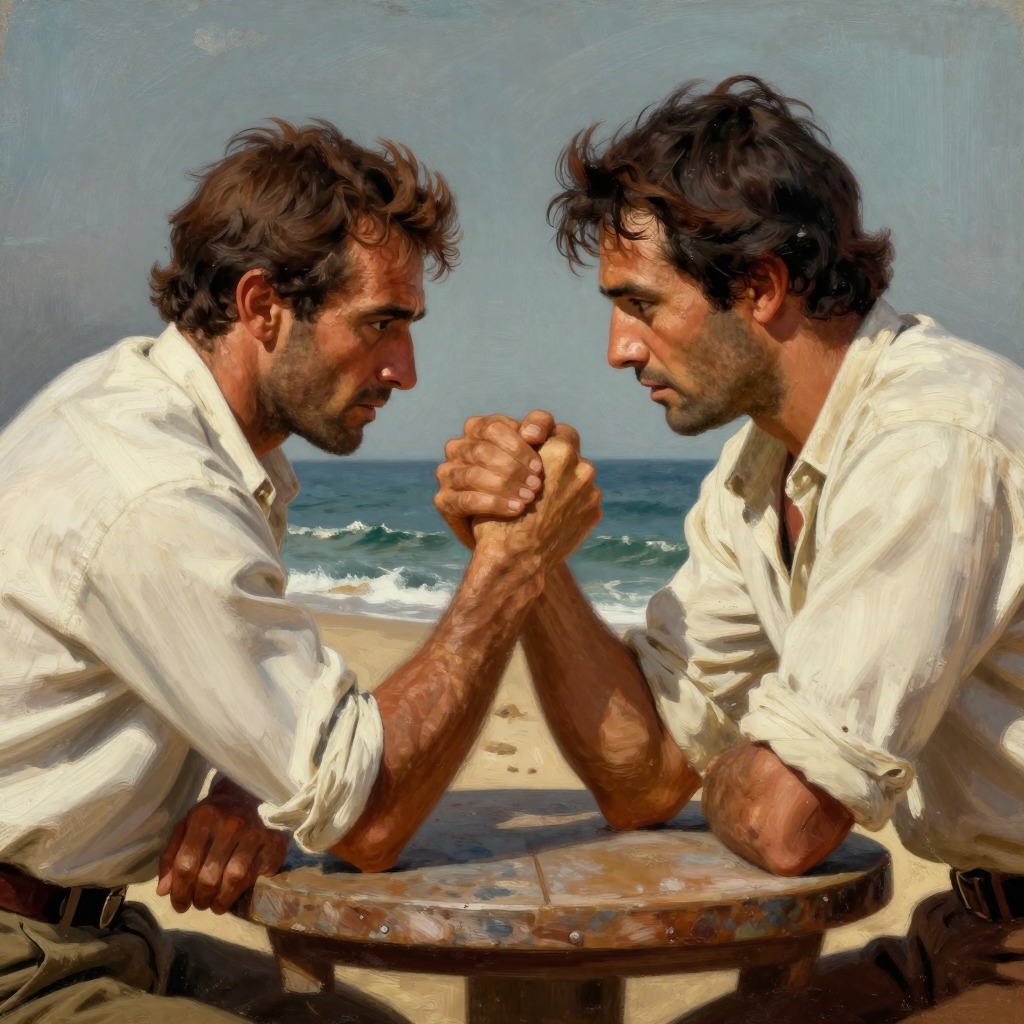
The match against the negro from Cienfuegos was a monumental test of strength and endurance. The two men sat at a table with their elbows on a chalk line, their forearms straight up and hands gripped tight, each trying to force the other's hand down. The contest lasted for a full day and a night, from a Sunday morning until a Monday morning. The room was filled with bettors who came and went under kerosene lights, and the referees were changed every four hours so they could sleep. The strain was so intense that blood came out from under the fingernails of both men. At one point, after being fed rum and having cigarettes lit for him, the negro nearly had Santiago beaten, forcing him almost three inches off balance. But Santiago, who was not an old man then, raised his hand back to dead even. At daylight, when the bettors were asking for a draw because they had to go to work loading sacks of sugar or at the Havana Coal Company, Santiago unleashed his effort and forced the negro's hand down onto the wood. For a long time after that, everyone called him The Champion. A return match was held in the spring, but Santiago won it quite easily, having broken the confidence of the man from Cienfuegos in the first match.
The Memory as a Source of Strength
Santiago recalls this victory during the most desperate moments of his struggle with the marlin, using it to bolster his own flagging spirit. As the sun sets on the second day of his ordeal, he remembers the hand game to give himself more confidence. The memory of his triumph over the strongest man on the docks directly informs his resolve to endure the physical agony of holding the line. He decides that he could beat anyone if he wanted to badly enough, but he also notes that he stopped having matches because he decided it was bad for his right hand for fishing. This recollection is not mere nostalgia; it is a deliberate act of self-encouragement, a way of proving to himself that he is still capable of extraordinary feats of will. The man from Cienfuegos, though never seen in the present of the story, looms as a symbolic rival whose defeat established Santiago's identity as a man of unmatched resolution, a quality he must now summon again.
Narrative Role and Significance
Cienfuegos, as the home of Santiago's greatest rival, functions as a geographical anchor for a key element of Santiago's personal mythology. The city itself is never visited in the story, but its name is inextricably linked to the memory of the hand game, which is one of the most important episodes in Santiago's life outside of his fishing career. This memory serves as a counterpoint to his current physical decline, reminding both him and the reader of the strength he once possessed. The fact that he won the match against the man from Cienfuegos, and then won the return match easily, establishes a pattern of triumph through sheer will that he attempts to replicate against the marlin. The city thus represents a past peak of physical prowess and a standard of personal victory that Santiago strives to live up to in his present struggle, making it a crucial, if unseen, location in the psychological landscape of the novel.