Santiago
The Old Man and the SeaSantiago is the aging Cuban fisherman at the heart of Ernest Hemingway's The Old Man and the Sea, a man whose epic three-day battle with a giant marlin becomes a profound test of endurance, pride, and the human spirit. His story is a meditation on struggle, brotherhood with the natural world, and the dignity found in striving against overwhelming odds.
Identity and Background
Santiago is an old man who fishes alone in a skiff on the Gulf Stream. He is thin and gaunt, with deep wrinkles on the back of his neck and brown blotches of skin cancer on his cheeks from the sun's reflection on the tropic sea. His hands bear deep-creased scars from handling heavy fish on cords, but none of these scars are fresh; they are as old as erosions in a fishless desert. Everything about him is old except his eyes, which are the same color as the sea and are cheerful and undefeated. He has gone eighty-four days without taking a fish, a run of bad luck that has led the parents of the boy Manolin to declare him salao, the worst form of unlucky. Santiago lives in a shack made of guano, the tough budshields of the royal palm, with a bed, a table, one chair, and a place on the dirt floor to cook with charcoal. On the walls hang a color picture of the Sacred Heart of Jesus and another of the Virgin of Cobre, relics of his deceased wife. He once had a tinted photograph of his wife, but he took it down because it made him too lonely to see it. He is too simple to wonder when he attained humility, but he knows he has attained it and that it carries no loss of true pride.
Life and Plot Trajectory
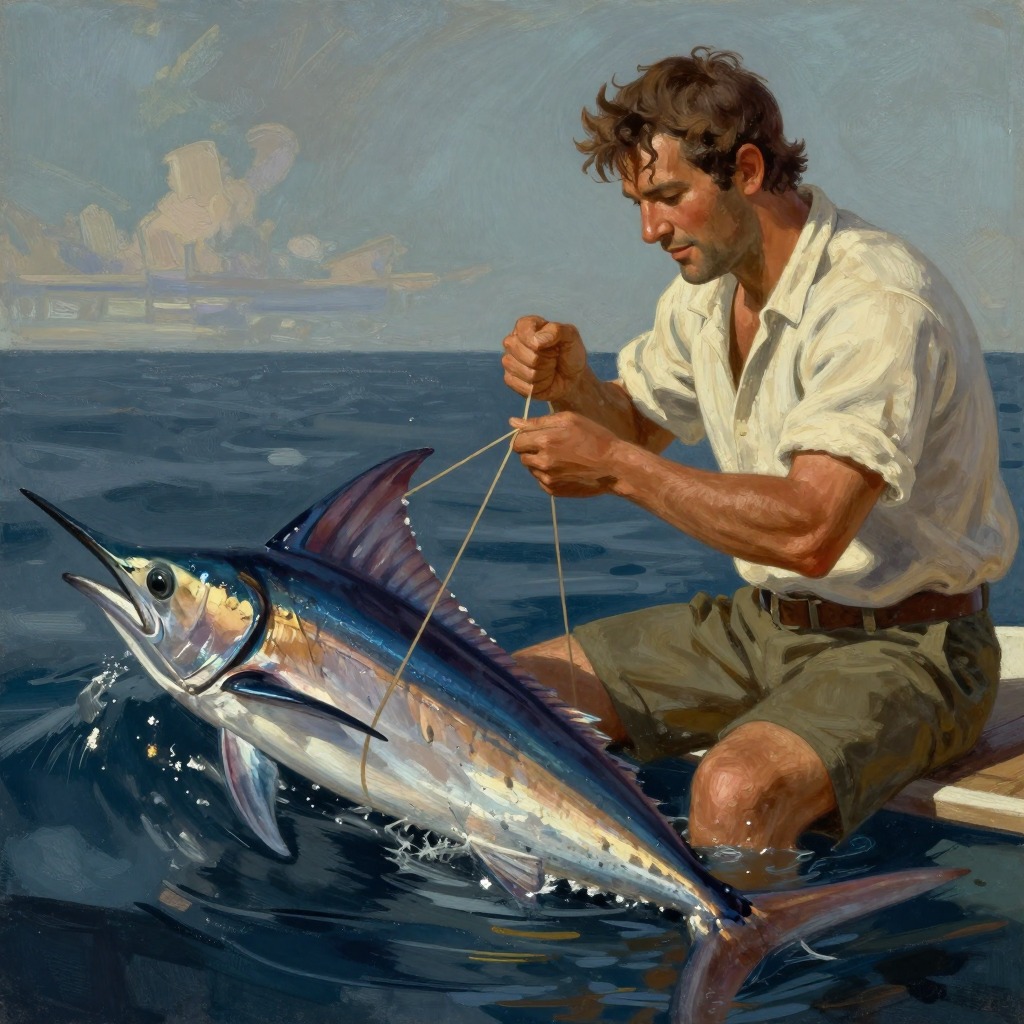
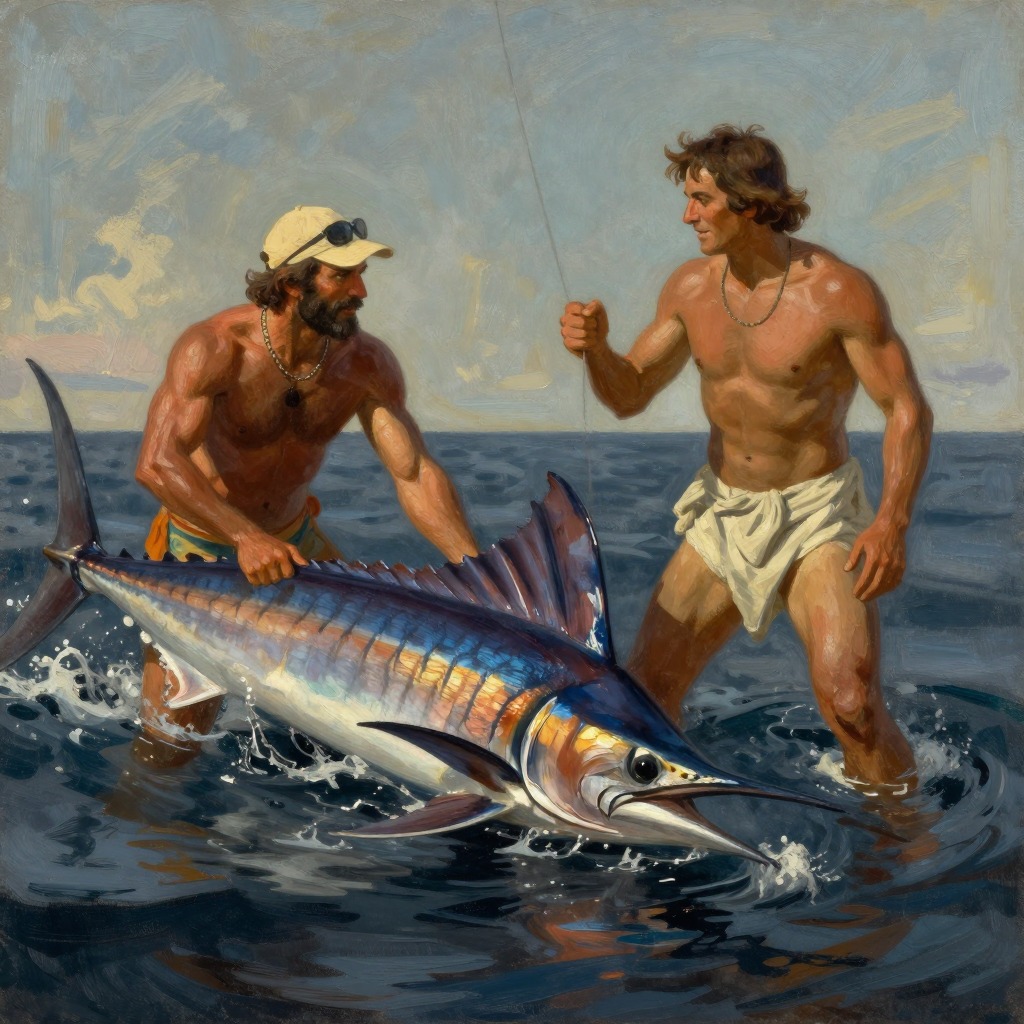
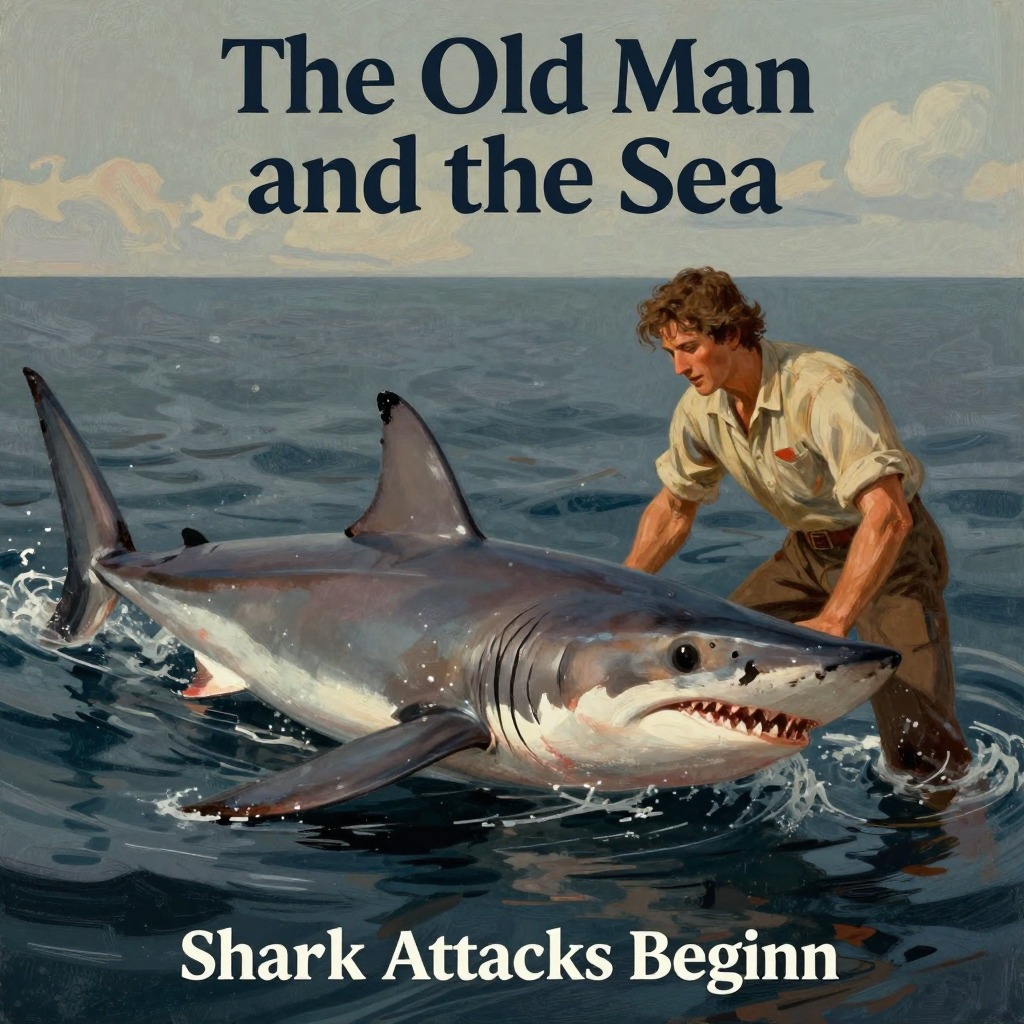
Santiago's life is defined by his struggle against the sea. After eighty-four days without a fish, he decides to go far out, beyond the other fishermen, to find a truly big one. He rows out before dawn, sets his baits with precision, and hooks a giant marlin. For three days and two nights, he holds the line across his back, enduring immense physical pain, a cramped left hand, and the loneliness of the open sea. He talks to himself, to the fish, and to the birds, and he remembers his youth, including his time as a sailor on a square-rigged ship that ran to Africa and his victory in a hand game against the great negro from Cienfuegos, which earned him the title Santiago El Campeon. He finally kills the marlin with a harpoon, lashing it alongside his skiff. On the journey home, sharks attack the carcass, and Santiago fights them with a harpoon, a knife lashed to an oar, a club, and finally the tiller, but they strip the marlin to a skeleton. He returns to the harbor exhausted, carrying only the mast, and collapses on his bed. The next morning, he tells Manolin, "They beat me. They truly beat me," but Manolin insists the fish did not beat him, only the sharks afterward.
Key Actions and Objectives
Santiago's primary objective is to catch a great fish, a goal that drives him far out to sea. He hooks the marlin and then commits to staying with it until he is dead, a vow he speaks aloud. He uses all his skill and knowledge, keeping his lines straighter than anyone else, and he improvises tactics, such as lashing two oars together across the stern to slow the fish at night. He eats raw bonito and dolphin to keep his strength, and he prays, promising to make a pilgrimage to the Virgin of Cobre if he catches the fish. When the sharks come, he fights them with whatever he has, declaring, "I'll fight them until I die." He kills the first Mako shark by driving the harpoon into its brain, but the shark takes the harpoon and rope. He then lashes his knife to an oar butt to fight the shovel-nosed sharks, breaking the knife on one. He uses a club and then the tiller, which also breaks, and he drives the splintered butt into the last shark. His actions are driven by a code of endurance and a refusal to be defeated, even when he knows the fight is useless.
Relationships and Conflict
Santiago's central relationship is with Manolin, the boy he taught to fish and who loves him. Manolin's parents forced the boy to leave Santiago's boat after forty days without a fish, but Manolin continues to help him, bringing him food, sardines, and baits, and caring for him after his ordeal. Santiago thinks of the boy constantly during his struggle, often saying, "I wish I had the boy." He also has a complex relationship with the marlin, which he calls his brother. He loves and respects the fish, saying, "I love you and respect you very much. But I will kill you dead before this day ends." He feels sorrow for the fish, thinking, "You are killing me, fish... But you have a right to. Never have I seen a greater, or more beautiful, or a calmer or more noble thing than you, brother." His conflict with the sharks is one of pure survival, and he kills them with resolution and complete malignancy. He also has a relationship with the sea itself, which he always thinks of as feminine, la mar, a being that gives or withholds great favors. He is connected to the community through the Terrace, where fishermen make fun of him without angering him, and where Martin, the owner, sends him food and beer.
Change and Ending
Santiago undergoes a profound physical and spiritual ordeal. He begins the story as a man of undefeated hope and confidence, but after the sharks destroy his prize, he is left exhausted and beaten. He tells Manolin, "They beat me. They truly beat me," and admits, "I am not lucky. I am not lucky anymore." Yet his defeat is not absolute. He has proven what a man can endure, and Manolin vows to fish with him again, saying, "The hell with luck. I'll bring the luck with me." The story ends with Santiago sleeping face down on the newspapers, dreaming of the lions on the beach, a recurring dream that represents his lost youth and his enduring spirit. The final image is of the marlin's skeleton, a great long white spine with a huge tail, which a tourist mistakes for a shark, underscoring the gap between Santiago's epic struggle and the world's inability to understand it.
Narrative Role and Evaluation
Santiago is the embodiment of Hemingway's code hero: a man who faces a hostile universe with grace, endurance, and a personal code of conduct. His story is a quest narrative that tests his physical and spiritual limits. He is a figure of immense dignity, even in defeat, and his famous declaration, "A man can be destroyed but not defeated," encapsulates the novel's central theme. His relationship with the marlin, which he calls his brother, and his love for the sea, which he thinks of as feminine, reveal a deep connection to the natural world that transcends mere hunting. He is also a figure of memory and regret, haunted by the photograph of his wife and dreaming of the lions of his youth. His victory in the hand game against the negro from Cienfuegos, which earned him the title El Campeon, establishes his past greatness and his capacity for willpower. Santiago is not merely a fisherman; he is a symbol of the human struggle against fate, the pursuit of excellence, and the dignity of striving even when the outcome is loss.