Terrace
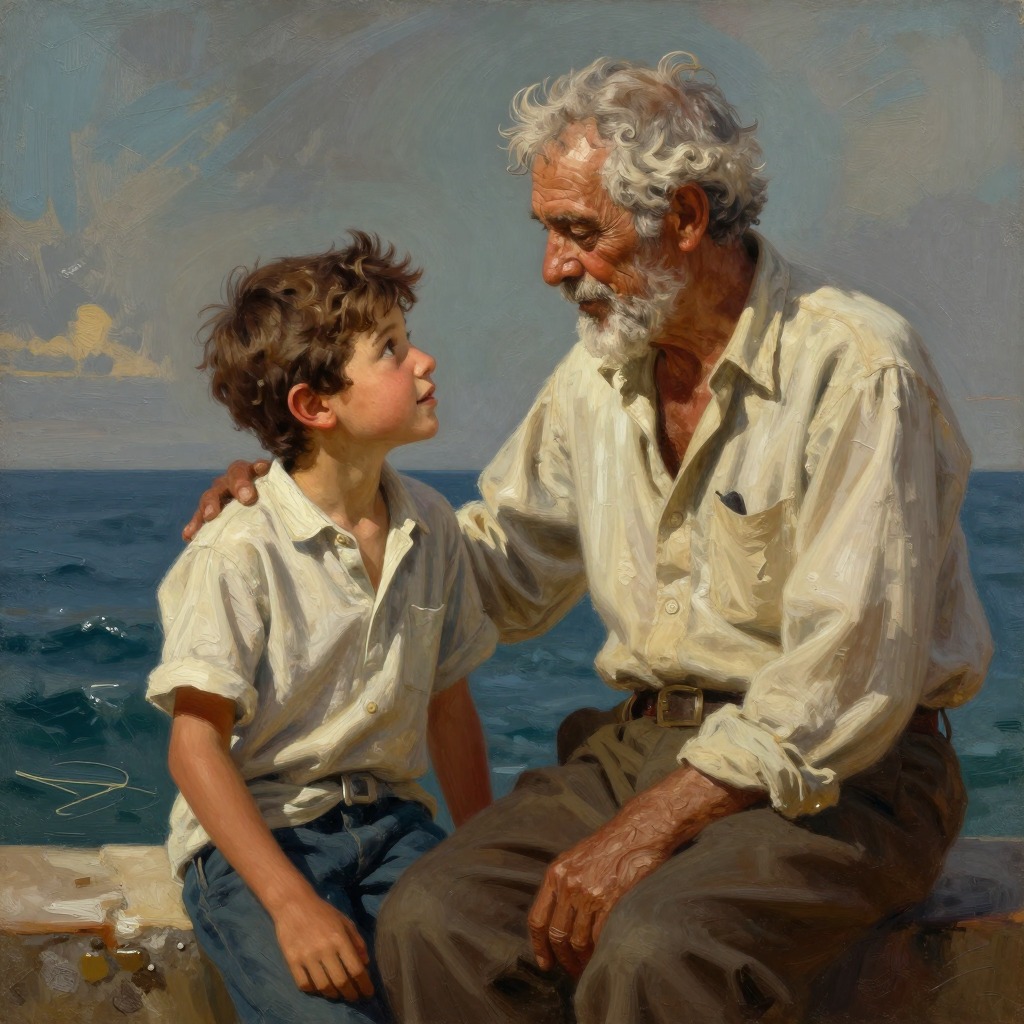
The Old Man and the SeaThe Terrace is the central social hub of the fishing village in The Old Man and the Sea, a place that defines the community's rhythms, exposes the economic and social gulf between Santiago and the successful fishermen, and serves as the primary setting for the relationship between the old man and the boy Manolin. It is where the fishermen gather after their day's work, where news and gossip are exchanged, and where the boy brings Santiago the only meals he can rely on. The Terrace is not merely a backdrop but an active force in the narrative, a space that measures Santiago's defeat and his enduring dignity against the backdrop of a working harbor.
Location and Social Function
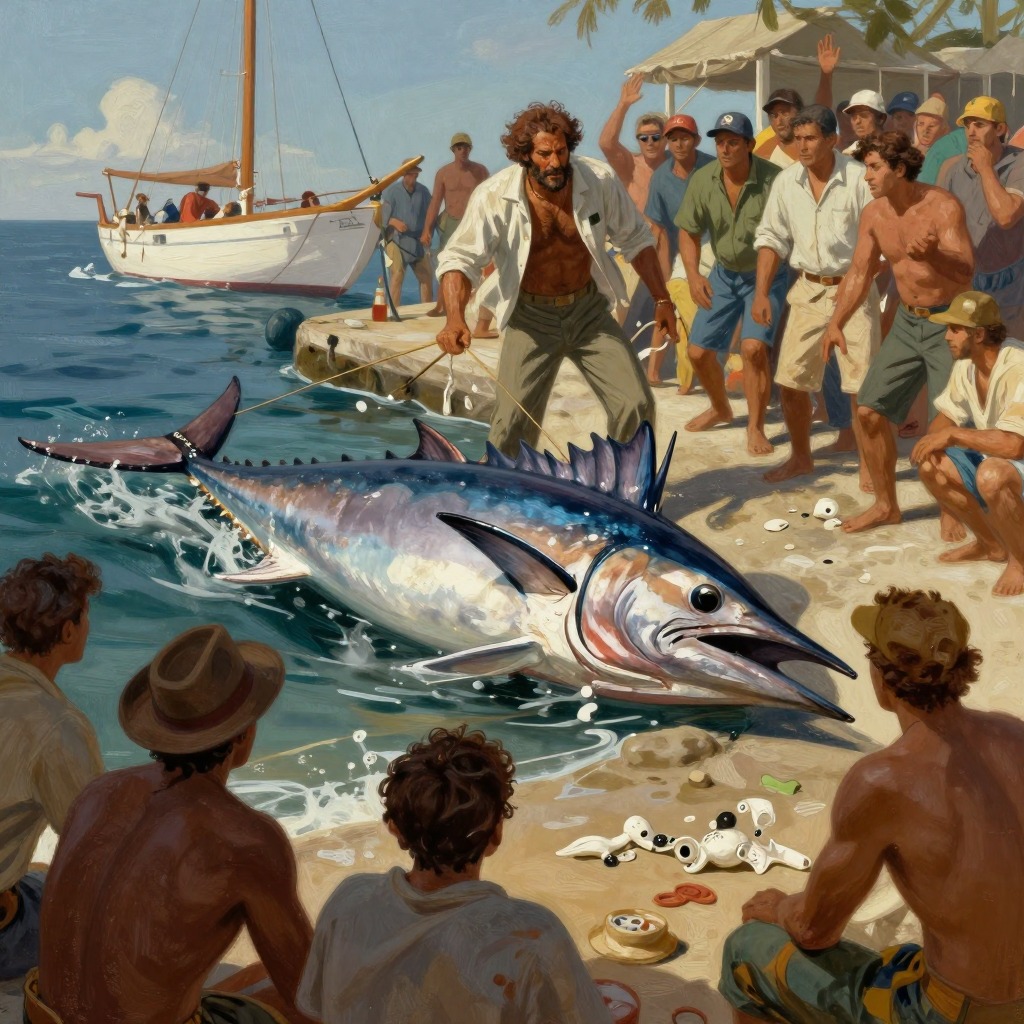
The Terrace is a restaurant or bar overlooking the harbor, where the fishermen congregate. It is here that the old man and the boy sit together after Santiago has returned from another empty-handed day. The atmosphere is a mixture of mockery and respect: many of the younger fishermen make fun of the old man for his eighty-four-day run of bad luck, but he is not angry. The older fishermen, who understand his skill and his history, look at him with sadness, though they do not show it, speaking instead politely about the current, the depths, and the weather. The Terrace is also the place where the successful fishermen of the day bring their catch, having butchered their marlin and carried them on planks to the fish house, while those who caught sharks have taken them to the shark factory on the other side of the cove. The smell from the shark factory sometimes reaches the Terrace, but on the day Santiago and Manolin sit there, the wind has backed into the north, leaving only a faint edge of the odor, and the Terrace is pleasant and sunny.
A Site of Generosity and Sustenance
The Terrace is the source of the only substantial meals Santiago receives. The owner, Martin, sends food to the old man through the boy, a gesture of kindness that Santiago feels deeply. On the evening before his great voyage, the boy brings a two-decker metal container from the Terrace containing black beans and rice, fried bananas, and stew, along with two bottles of Hatuey beer. Santiago insists he must thank Martin and promises to give him the belly meat of a big fish, recognizing that Martin has done this for them more than once. The boy, however, has already thanked him. The Terrace thus functions as a lifeline, a place where the community's charity is channeled through the boy's devotion and the owner's generosity, contrasting sharply with the mockery of the other fishermen.
The Measure of Santiago's World
The Terrace is the point of departure and return for Santiago's journey. It is from the Terrace that he and the boy walk to the old man's shack after their evening meal, and it is to the Terrace that the boy goes the morning after Santiago's ordeal to get a hot can of coffee with plenty of milk and sugar. The proprietor, Martin, expresses his sorrow for Santiago's suffering, and the boy, crying, tells him not to disturb the old man. Later that afternoon, a party of tourists at the Terrace looks down into the water and sees the great long white spine of the marlin's skeleton, with its huge tail lifting and swinging with the tide. A woman asks a waiter what it is, and he answers, "Tiburon"—shark—meaning to explain what had happened, but the tourists misunderstand, remarking on the beauty of the tail. The Terrace, which had been the site of Santiago's daily humiliation and the boy's care, becomes the final vantage point from which the world misreads the old man's epic struggle, reducing his monumental catch to a piece of garbage waiting to go out with the tide.