The lions on the beach
The Old Man and the SeaThe lions on the beach are the most persistent and emotionally charged dream image in Santiago's inner life, a vision that recurs throughout his ordeal at sea and frames the entire narrative. They represent a state of primal innocence, untroubled strength, and a connection to a wild, unspoiled world that stands in stark contrast to the old man's present reality of poverty, solitude, and physical decline. More than a mere memory, the lions become a touchstone for Santiago's undefeated spirit, a source of comfort and a symbol of the enduring vitality that his aged body can no longer express but his will still possesses.
Origin and Content of the Dream
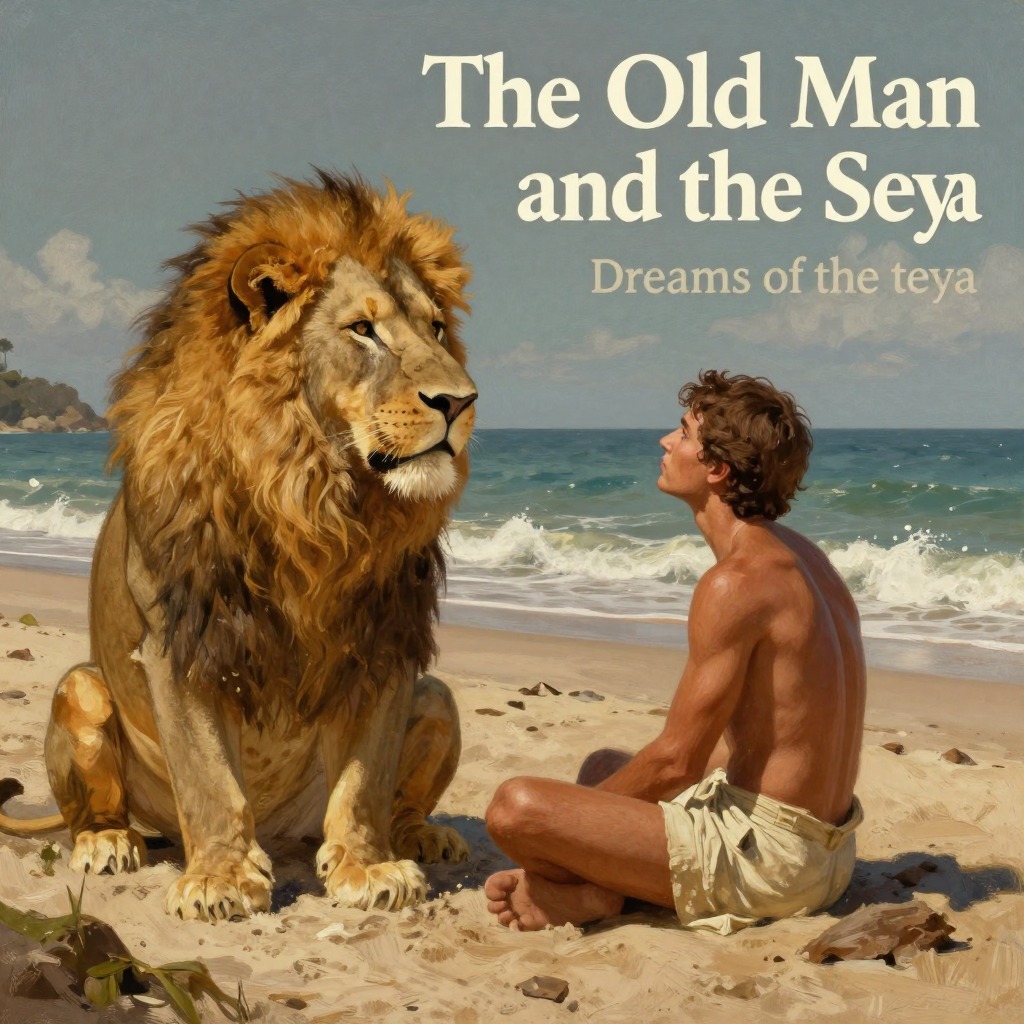
The dream originates from Santiago's youth, when he served as a boy before the mast on a square-rigged ship that sailed to Africa. He tells the boy Manolin, "I have seen lions on the beaches in the evening" . This experience has become the core of his dream life. In his shack, he sleeps on newspapers covering the springs of his bed and dreams of Africa: the long golden and white beaches, the high capes, the great brown mountains, and the lions that "played like young cats in the dusk" . He loves them as he loves the boy . The dream is so vivid that he lives along that coast every night in his sleep, hearing the surf roar and smelling the tar and oakum of the deck and the scent of Africa brought by the land breeze .
The Dream as a Refuge and a Contrast
As Santiago ages and his life narrows to a struggle for survival, his dreams simplify. He no longer dreams of storms, nor of women, nor of great occurrences, nor of great fish, nor fights, nor contests of strength, nor of his wife . He only dreams of places now and of the lions on the beach . This reduction of his dream world to the lions signifies a retreat to a core, uncomplicated source of joy and power. The lions are a private, internal sanctuary that his external circumstances cannot touch. During his exhausting battle with the marlin, when he is alone and suffering, he wishes he could sleep and dream about the lions, asking himself, "Why are the lions the main thing that is left?" . The question reveals that the lions have become the essential residue of his identity, a symbol of the strength and freedom he feels he is losing.
The Dream During the Ordeal at Sea
The lions appear at critical moments of Santiago's struggle, serving as a restorative force. After a long and painful night, he falls asleep while holding the line and does not dream of the lions at first, but instead of a vast school of porpoises and then of being cold in his bed . Only after that does he begin to dream of the long yellow beach and see the first lion come down onto it in the early dark, followed by others. He rests his chin on the wood of the bows and waits to see if there will be more lions, and he is happy . This dream sequence occurs precisely when he is most physically broken, and the vision of the lions provides a moment of pure, uncomplicated happiness. The dream is a psychological counterweight to the physical and emotional devastation he is enduring.
The Lions as a Symbol of Undefeated Spirit
The lions are inextricably linked to the novel's central theme of being "destroyed but not defeated" . Santiago's declaration, "I'll stay with you until I am dead" , and his resolve to "show him what a man can do and what a man endures" are the active, conscious expressions of his will. The dream of the lions is the unconscious, symbolic counterpart to that will. The lions are young, powerful, and playful—qualities Santiago himself embodies in his spirit even as his body fails. When he tells the fish, "I love you and respect you very much. But I will kill you dead before this day ends" , and later calls the fish his brother , he is operating within a code of dignified struggle. The lions, in their natural, unselfconscious power, represent the ideal state of being that this code strives to protect. The final image of the novel is not of the ruined marlin skeleton or the tourists' misunderstanding, but of the old man sleeping and dreaming about the lions . This ending affirms that his true, undefeated self resides in that dream, a realm beyond the reach of sharks, poverty, or physical defeat.
The Lions and the Narrative's Frame
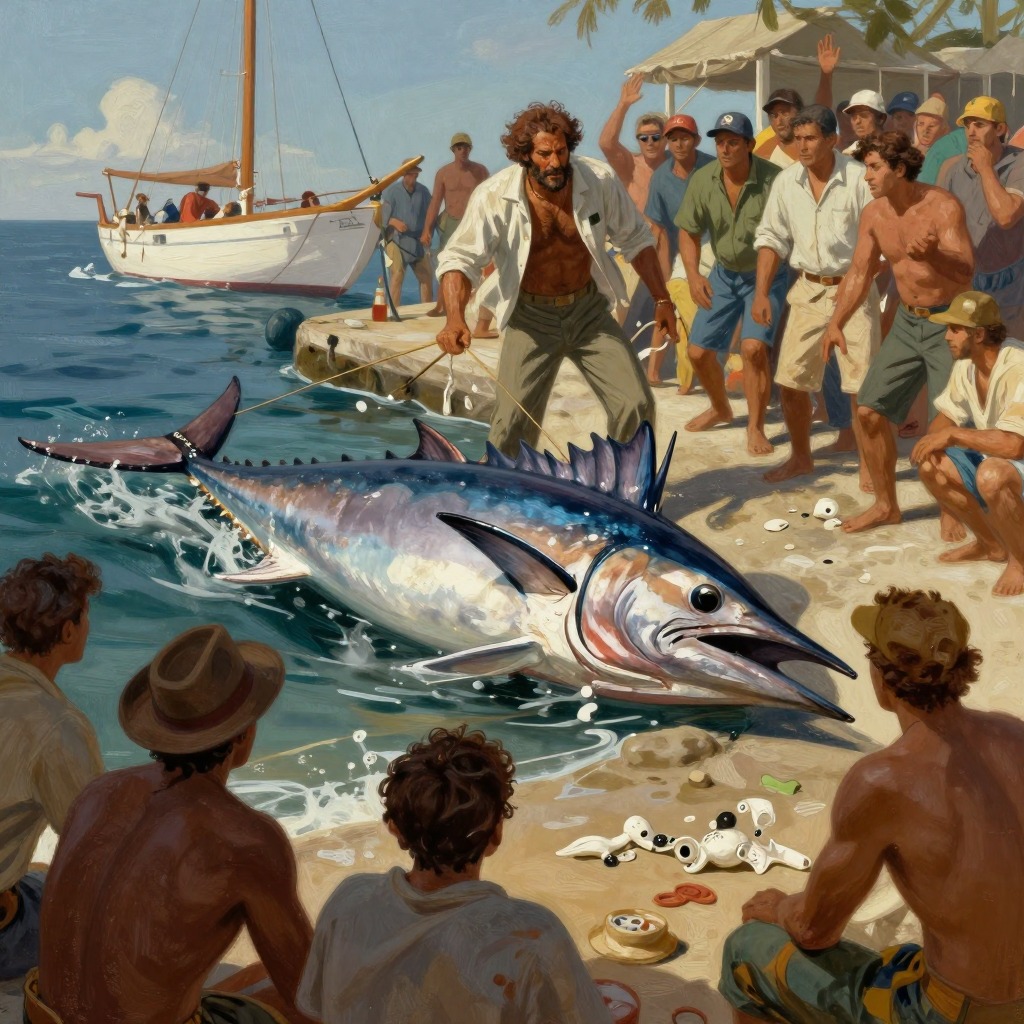
The lions on the beach also function as a framing device for the entire story. The narrative opens with Santiago's physical description—his wrinkles, scars, and the patched sail that looks like "the flag of permanent defeat" —and closes with his dream of the lions . This structure creates a powerful contrast between the external appearance of defeat and the internal reality of an undefeated spirit. The lions are the ultimate refutation of that flag. They are the image of a life lived fully and courageously, a life that cannot be measured by the day's catch or the market price. The dream is Santiago's final, silent victory, a private triumph that the world, represented by the tourists who mistake the marlin's skeleton for a shark's , cannot comprehend.